
 Wildlife
of Thailand
Acuminate Horseshoe Bat
Rhinolophidae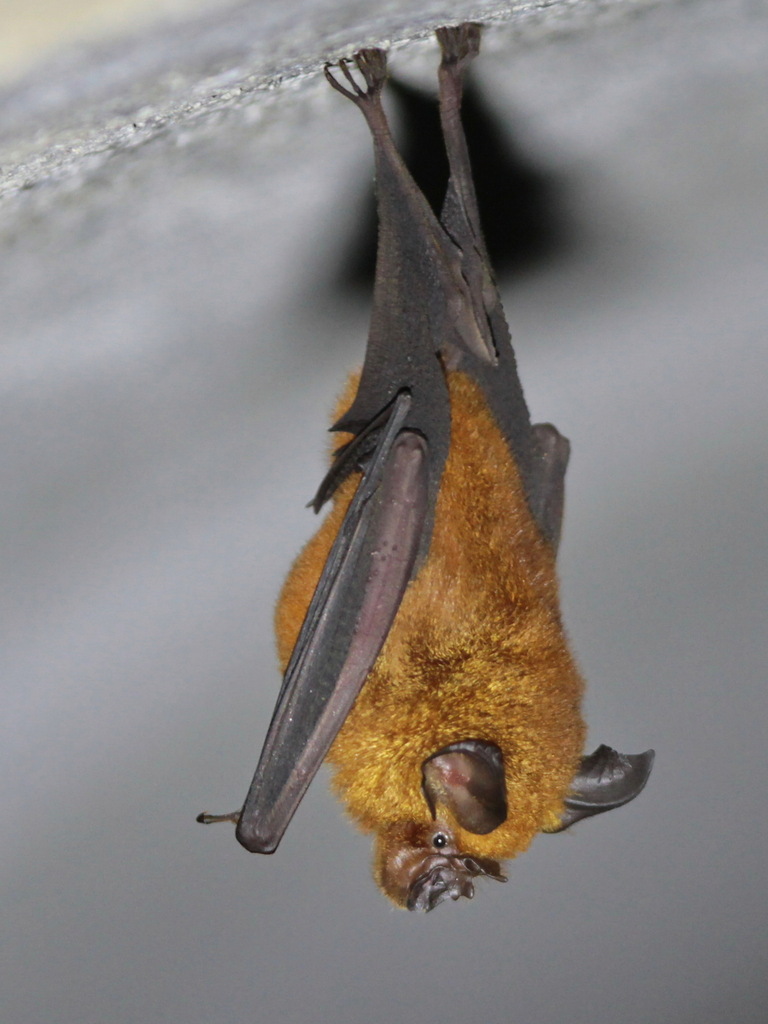
Photo: Ian Dugdale (iNaturalist) · CC BY 4.0 (May be cropped or resized)
Rhinolophus acuminatus
Basic stats
Habitat
Lowland to montane forest, caves and some buildings
Range
Southeast Asia
Size
Forearm 4.8–5cm
Weight
11.5–13.5g
The acuminate horseshoe bat is a medium-small insect-eating bat named for the pointed form of part of its complex noseleaf. Forearm length is about 4.8–5 cm and weight 11.5–13.5 g. A recent revision distinguishes it from the similar intermediate horseshoe bat by noseleaf structure and genetic evidence (species conservation profile and taxonomic revision).
It ranges widely across Southeast Asia from lowland dipterocarp forest to upper montane forest and even some urban settings. Small colonies roost in caves, buildings or beneath palm leaves, emerging at night to catch flying insects by constant-frequency echolocation. Disturbance and loss of roosting or foraging habitat are local pressures (species conservation profile). It is Nationally Least Concern (Thailand Red Data 2025).
Quick answers
- What habitat does the Acuminate Horseshoe Bat live in?
- Lowland to montane forest, caves and some buildings
- Where is the Acuminate Horseshoe Bat found?
- Southeast Asia
- How big is the Acuminate Horseshoe Bat?
- Forearm 4.8–5cm
- How much does the Acuminate Horseshoe Bat weigh?
- 11.5–13.5g