 Wildlife
of Thailand
Greater Short-nosed Fruit Bat
Bats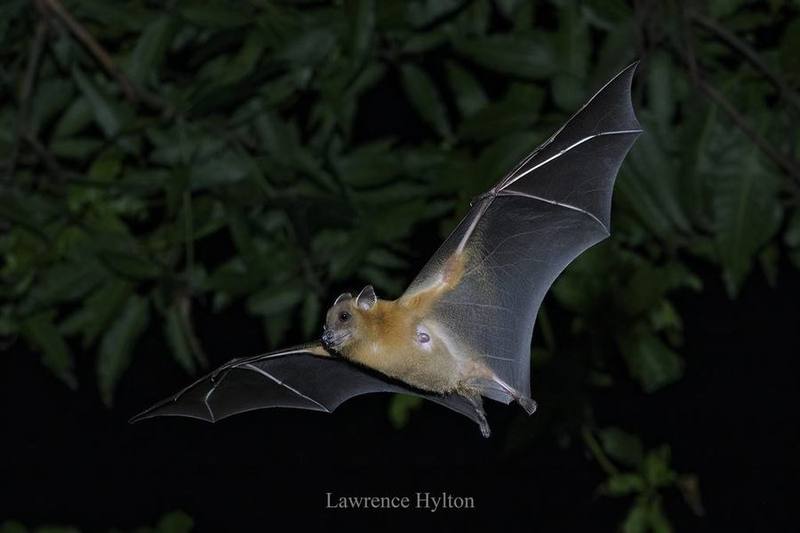
Photo: Lawrence Hylton · CC BY 4.0 (May be cropped or resized)
Cynopterus sphinx
Basic stats
Diet
Fruit, nectar and leaves
Habitat
Tropical forest, fruit orchards, grassland and mangrove
Range
Pakistan to Vietnam
Litter size
1 young
Gestation period
About 3–5 months
Wingspan
About 48cm
The greater short-nosed fruit bat has a relatively long snout for its name, fine silky brown to grey-brown fur above and paler underparts. The ears and wing bones are edged in white. The wingspan is about 48 cm and the forearm averages about 70 mm (Wikipedia, general species account).
It is common in tropical forest and wherever fruit crops are grown. It roosts in small same-sex groups of eight or nine and builds simple tents by chewing palm fronds, or by weaving vines over buildings when palms are scarce. Females bear a single young; in central India they breed twice a year. The bat disperses date palm seeds and pollinates night-blooming flowers (Wikipedia, general species account).
Quick answers
- What does the Greater Short-nosed Fruit Bat eat?
- Fruit, nectar and leaves
- What habitat does the Greater Short-nosed Fruit Bat live in?
- Tropical forest, fruit orchards, grassland and mangrove
- Where is the Greater Short-nosed Fruit Bat found?
- Pakistan to Vietnam
- What is the litter size of the Greater Short-nosed Fruit Bat?
- 1 young
- How long is the gestation period of the Greater Short-nosed Fruit Bat?
- About 3–5 months
- What is the wingspan of the Greater Short-nosed Fruit Bat?
- About 48cm