 Wildlife
of Thailand
Siamang
Hylobatidae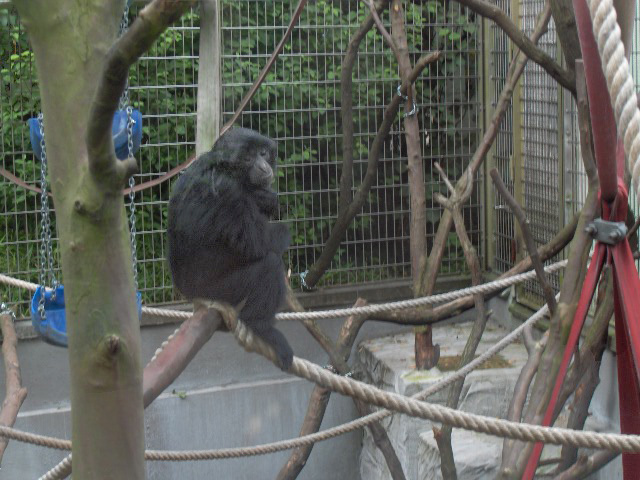
Photo: JoJan · CC BY-SA 3.0 (May be cropped or resized)
Symphalangus syndactylus
Basic stats
Diet
Leaves and fruit, with insects, eggs and occasional small vertebrates
Habitat
Lowland, hill and upper dipterocarp forest
Range
Malay Peninsula south of the Perak River and Sumatra
Size
71–90cm
Weight
10–12kg
The siamang is the largest gibbon, measuring 71–90 cm and weighing 10–12 kg. It has black fur, arms more than twice body length, partial webbing between the second and third toes and an inflatable throat sac that amplifies its calls (Animal Diversity Web).
It inhabits lowland to upper dipterocarp forest in Sumatra and the southern Malay Peninsula, reaching Thailand's far south. Territorial pairs sing coordinated duets and usually produce one infant after about 230–235 days. Leaves and fruit dominate the diet, with insects and eggs also taken (Animal Diversity Web). It is Nationally Critically Endangered (Thailand Red Data 2025).
Quick answers
- What does the Siamang eat?
- Leaves and fruit, with insects, eggs and occasional small vertebrates
- What habitat does the Siamang live in?
- Lowland, hill and upper dipterocarp forest
- Where is the Siamang found?
- Malay Peninsula south of the Perak River and Sumatra
- How big is the Siamang?
- 71–90cm
- How much does the Siamang weigh?
- 10–12kg