 Wildlife
of Thailand
Northern Palm Civet
Viverridae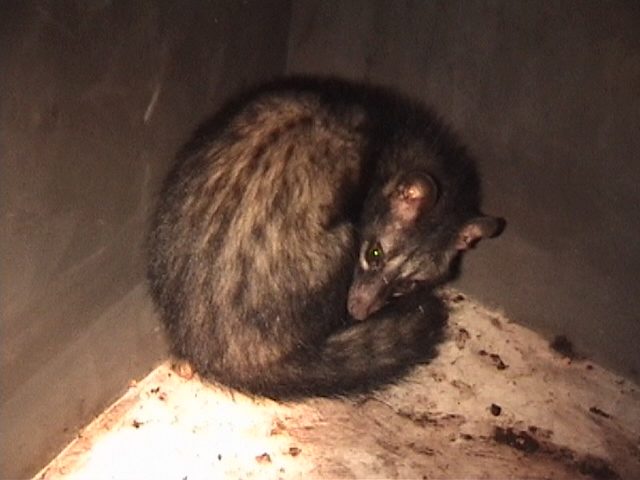
Photo: Prashanth N S · CC BY 4.0 (May be cropped or resized)
Paradoxurus hermaphroditus
Basic stats
Diet
Fruit, seeds, nectar and sap, plus small vertebrates, eggs, insects and other invertebrates
Range
South Asia through mainland Southeast Asia to southern China
Litter size
2–5 young
Gestation period
About 60 days
The northern palm civet is an Asian viverrid with a broad head, narrow muzzle, rounded ears and a tail roughly as long as the head and body. Modern taxonomic work has split some southern populations into other species, so this account follows Paradoxurus hermaphroditus in its restricted northern sense rather than the older, wider Asian-palm-civet complex (Mammal Diversity Database; Animal Diversity Web).
It is nocturnal, secretive and omnivorous, eating fruit, seeds, nectar and palm sap as well as small vertebrates, eggs, insects and other invertebrates. Breeding occurs through the year; after about 60 days females bear two to five young in tree hollows or sheltered crevices. Its range extends across South Asia, mainland Southeast Asia and southern China (Animal Diversity Web). It is Nationally Least Concern (Thailand Red Data 2025).
Quick answers
- What does the Northern Palm Civet eat?
- Fruit, seeds, nectar and sap, plus small vertebrates, eggs, insects and other invertebrates
- Where is the Northern Palm Civet found?
- South Asia through mainland Southeast Asia to southern China
- What is the litter size of the Northern Palm Civet?
- 2–5 young
- How long is the gestation period of the Northern Palm Civet?
- About 60 days