 Wildlife
of Thailand
Tiger
Felidae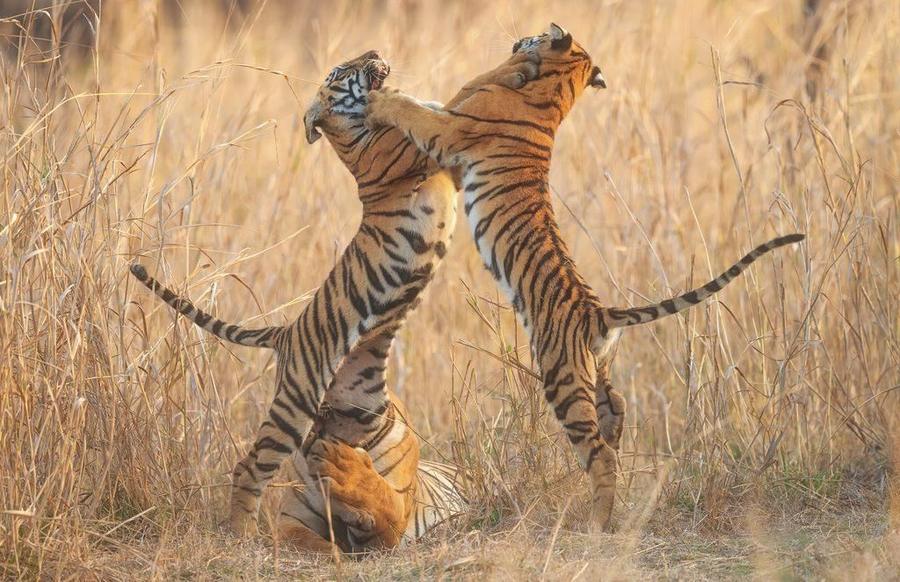
Photo: (c) Morten Ross, some rights reserved (CC BY) · CC BY 4.0 (May be cropped or resized)
Panthera tigris
Basic stats
Diet
Mainly hooved mammals, taken by ambush
Habitat
Mainly forests, from coniferous and temperate forest to tropical and subtropical moist broadleaf forest
Range
Asia
Litter size
Usually 2–3 cubs
Size
Head and body 1.4–2.8m; tail 0.6–1.1m; 0.8–1.1m at the shoulder
Weight
Bengal tiger males 200–260kg, females 100–160kg; Sumatran males 100–140kg, females 75–110kg
The tiger is a large cat with a powerful, muscular body, a big head and broad front paws, and a tail about half the length of the body. The orange coat fades to white on the belly and parts of the face and legs, and black, mostly vertical stripes make a pattern unique to each animal. Head and body length is 1.4–2.8 m with a tail of 0.6–1.1 m. The Siberian and Bengal tigers are the largest: male Bengal tigers weigh 200–260 kg and females 100–160 kg, while island tigers are smaller, with male Sumatran tigers at 100–140 kg (Wikipedia, general species account).
Across its range the tiger lives mainly in forests, from coniferous and temperate forests in the Russian Far East to tropical moist forests in South and Southeast Asia. An apex predator, it preys mainly on hooved mammals taken by ambush, and lives a mostly solitary life in home ranges that it defends against others of the same sex. A male's range overlaps those of several females. Females usually give birth to two or three cubs, which stay with their mother for about two years before leaving to establish ranges of their own. Tigers have lost at least 93% of their historic range since the early twentieth century (Wikipedia, general species account).
Quick answers
- What does the Tiger eat?
- Mainly hooved mammals, taken by ambush
- What habitat does the Tiger live in?
- Mainly forests, from coniferous and temperate forest to tropical and subtropical moist broadleaf forest
- Where is the Tiger found?
- Asia
- What is the litter size of the Tiger?
- Usually 2–3 cubs
- How big is the Tiger?
- Head and body 1.4–2.8m; tail 0.6–1.1m; 0.8–1.1m at the shoulder
- How much does the Tiger weigh?
- Bengal tiger males 200–260kg, females 100–160kg; Sumatran males 100–140kg, females 75–110kg