 Wildlife
of Thailand
Leopard
Felidae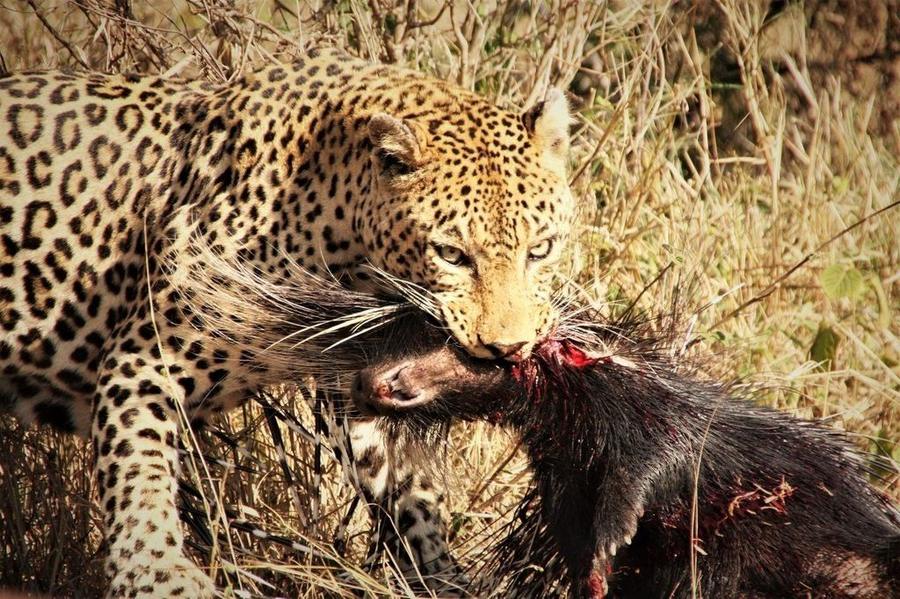
Photo: no rights reserved · CC0
Panthera pardus
Basic stats
Diet
Opportunistic; mostly hooved mammals and primates
Habitat
Rainforest to steppe, including arid and montane areas
Range
Africa and Asia
Litter size
2–3 cubs
Size
Head and body 92–183cm; tail 66–102cm; shoulder height 60–70cm
Weight
Males typically 30.9–72kg; females 20.5–43kg
The leopard is one of the five cats of the genus Panthera. Its fur is soft and thick, pale yellowish to dark golden with dark spots grouped in rosettes, and white on the underbelly; the white-tipped, ringed tail is shorter than the body. Head and body length is 92–183 cm with a tail of 66–102 cm, and males typically weigh 30.9–72 kg against 20.5–43 kg for females. Animals in arid regions are pale cream to rufous, while those in forests and mountains are darker and deep golden. Each leopard's rosette pattern is unique, and is thought to act as camouflage in dense vegetation with patchy shadow (Wikipedia, general species account).
Eight subspecies are recognised across its wide range in Africa and Asia. It is adapted to a variety of habitats from rainforest to steppe, and is an opportunistic predator, hunting mostly hooved mammals and primates. It stalks and ambushes its prey and sometimes drags it up a tree. Solitary outside the mating season and when raising cubs, females usually give birth to litters of two or three (Wikipedia, general species account).
Quick answers
- What does the Leopard eat?
- Opportunistic; mostly hooved mammals and primates
- What habitat does the Leopard live in?
- Rainforest to steppe, including arid and montane areas
- Where is the Leopard found?
- Africa and Asia
- What is the litter size of the Leopard?
- 2–3 cubs
- How big is the Leopard?
- Head and body 92–183cm; tail 66–102cm; shoulder height 60–70cm
- How much does the Leopard weigh?
- Males typically 30.9–72kg; females 20.5–43kg