 Wildlife
of Thailand
Lesser Short-nosed Fruit Bat
Pteropodidae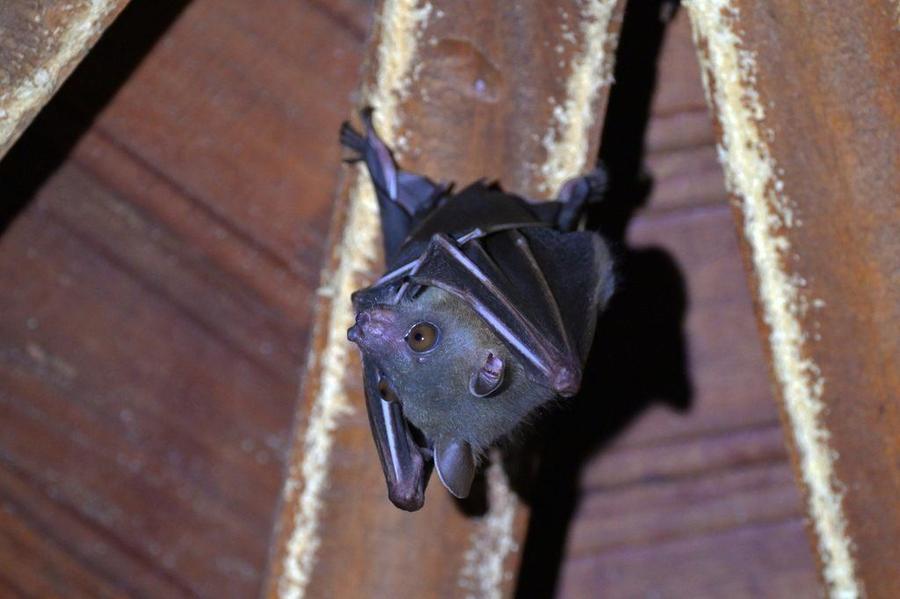
Photo: tomheijnen · CC BY (May be cropped or resized)
Cynopterus brachyotis
Basic stats
Diet
Aromatic fruit, especially mangoes; also nectar and pollen
Habitat
Disturbed forest, lowland rainforest, gardens, mangroves and beach vegetation
Range
South and Southeast Asia
Size
Head and body 70–127mm
Weight
21–32g
The lesser short-nosed fruit bat, also called the lesser dog-faced fruit bat, is a small fruit bat weighing 21 to 32 g and measuring 70 to 127 mm. It is brown to yellowish-brown with a brighter collar, dark orange in males and yellowish in females, and has white-edged ears and wing bones (Wikipedia, general species account).
It prefers aromatic fruit, especially mangoes, extracting the juice and soft pulp, and also takes nectar and pollen. It occurs in many habitats but most often in disturbed forest, including lower montane forest and lowland rainforest, as well as gardens, mangroves and beach vegetation. Groups roost in trees, with males often roosting alongside up to four females and female groups reaching 20. Males build leaf shelters by chewing palm fronds, which can take over two months (Wikipedia, general species account).
Quick answers
- What does the Lesser Short-nosed Fruit Bat eat?
- Aromatic fruit, especially mangoes; also nectar and pollen
- What habitat does the Lesser Short-nosed Fruit Bat live in?
- Disturbed forest, lowland rainforest, gardens, mangroves and beach vegetation
- Where is the Lesser Short-nosed Fruit Bat found?
- South and Southeast Asia
- How big is the Lesser Short-nosed Fruit Bat?
- Head and body 70–127mm
- How much does the Lesser Short-nosed Fruit Bat weigh?
- 21–32g