 Wildlife
of Thailand
Dugong
Dugongidae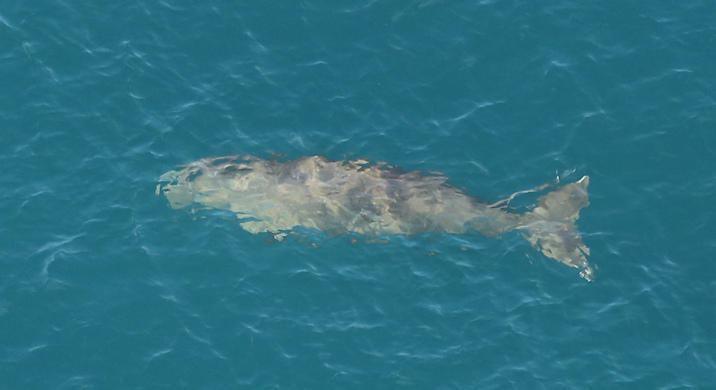
Photo: (c) Wynand Uys, some rights reserved (CC BY) · CC BY 4.0 (May be cropped or resized)
Dugong dugon
Basic stats
Diet
Seagrasses, grazed from the seabed
Habitat
Warm, shallow coastal waters with seagrass meadows: bays, mangrove channels and waters of large inshore islands
Range
Indo-West Pacific, in some 40 countries and territories
The dugong, or sea cow, is a large marine mammal with a torpedo-shaped body, no dorsal fin and no hind limbs. Its front limbs are short, paddle-like flippers, and it swims with a notched, dolphin-like tail fluke, which tells it apart from the manatees. The snout is sharply downturned, an adaptation for feeding on seagrass on the seabed, and the molar teeth are simple and peg-like. It is the only living member of its family and the only strictly marine plant-eating mammal (Wikipedia, general species account).
Across its range the dugong depends largely on seagrass communities, which restricts it to warm, shallow coastal waters, with the largest concentrations typically in wide, sheltered areas such as bays, mangrove channels and the waters of large inshore islands. It has been hunted for thousands of years for meat and oil, and today fishing-related deaths, habitat degradation and hunting drive declines. Its long lifespan of 70 years or more and slow reproduction make it especially vulnerable, and many populations are now fragmented and small (Wikipedia, general species account).
Quick answers
- What does the Dugong eat?
- Seagrasses, grazed from the seabed
- What habitat does the Dugong live in?
- Warm, shallow coastal waters with seagrass meadows: bays, mangrove channels and waters of large inshore islands
- Where is the Dugong found?
- Indo-West Pacific, in some 40 countries and territories