 Wildlife
of Thailand
Bengal Slow Loris
Lorisidae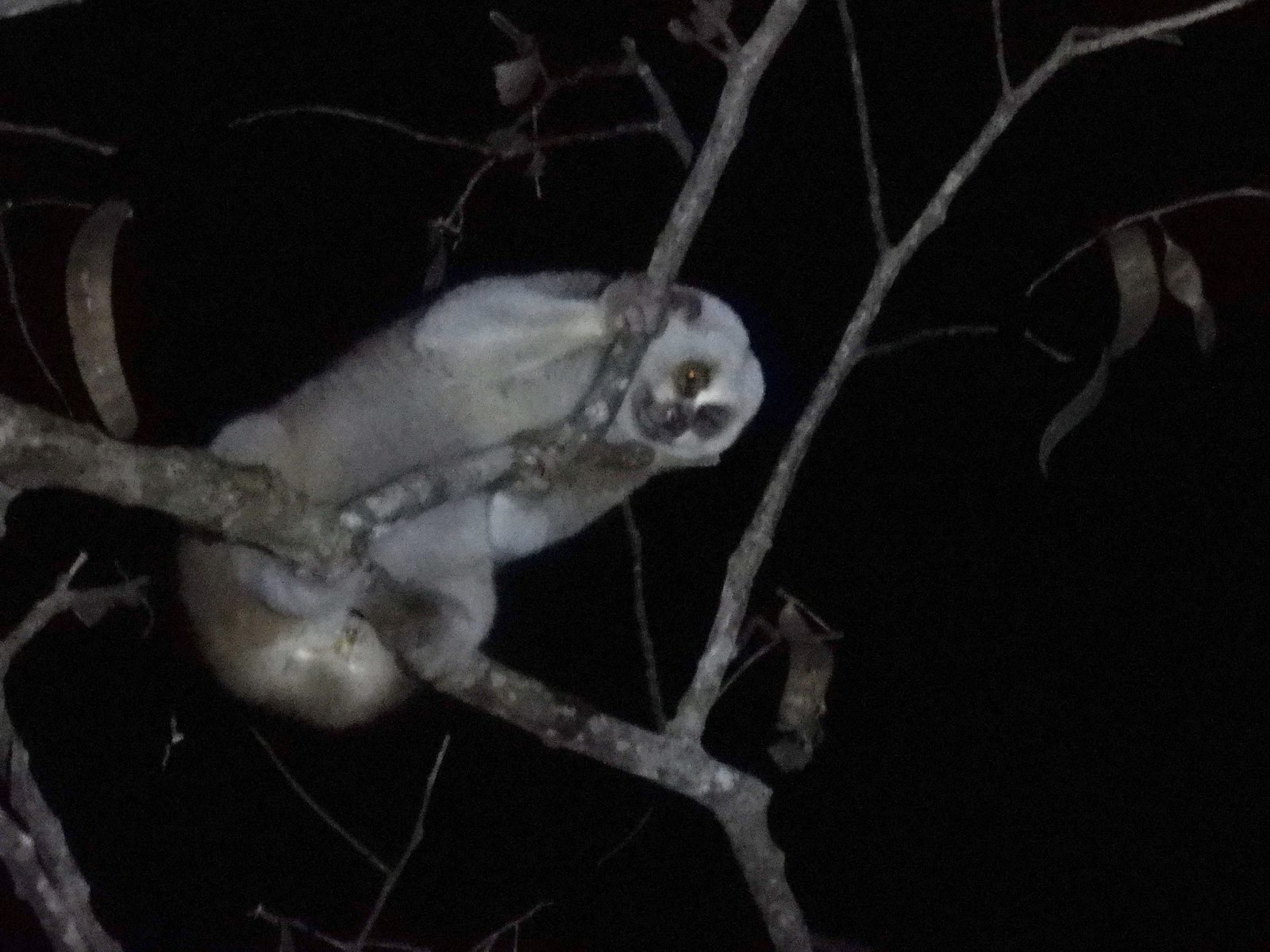
Photo: (c) Rejoice Gassah, some rights reserved (CC BY) · CC-BY (May be cropped or resized)
Nycticebus bengalensis
Basic stats
Diet
Plant gums and resins, nectar, fruit, invertebrates, bark and bird eggs
Habitat
Tropical, subtropical and semi-evergreen rainforest, forest edge and scrub
Size
26–38cm
Weight
1–2kg
The Bengal slow loris is the largest slow loris, weighing 1–2 kg and measuring 26–38 cm. It has thick woolly fur, a pale head and underside, brown-grey upperparts, a darker dorsal stripe, large forward-facing eyes and an almost vestigial tail. Opposable thumbs give it a powerful pincer-like grip for deliberate movement through branches (Animal Diversity Web).
This nocturnal, arboreal primate ranges from north-eastern India through Myanmar, Thailand and Indochina to southern China. It favours high canopy cover but also uses forest edge and scrub. Plant gums and resins are major foods, supplemented by nectar, fruit, invertebrates, bark and eggs. Saliva mixed with brachial-gland secretion makes its defensive bite venomous (Animal Diversity Web). It is Nationally Vulnerable (Thailand Red Data 2025).
Quick answers
- What does the Bengal Slow Loris eat?
- Plant gums and resins, nectar, fruit, invertebrates, bark and bird eggs
- What habitat does the Bengal Slow Loris live in?
- Tropical, subtropical and semi-evergreen rainforest, forest edge and scrub
- How big is the Bengal Slow Loris?
- 26–38cm
- How much does the Bengal Slow Loris weigh?
- 1–2kg