
 Wildlife
of Thailand
Thailand's Deep South in 2025: Banded Linsang, bat caves and a recce trip
Trip report by Jon Hall on mammalwatching.com · 28 August 2025
When Jirayu ‘Tour’ Ekkul from Wild Encounter Thailand told me that he thought he had found a reliable site for Banded Linsang I was fascinated. This beautiful small carnivore was on my top 21 list. They seem extremely hard to find over their range and would also represent a new mammal family lifer for me. So when Tour asked if I would like to get a group together for a recce trip I said “yes” before he finished the question.
The trip to the deep south of Thailand was oversubscribed within a couple of days of advertising it. Stuart Chapman, Nick Cox, Kat Smith and Murray Thompson got in first. The linsang aside, Tour promised we’d see several rare bat species with chances of many more top-shelf Thai mammals.
If you heard Tour on the mammalwatching podcast, you heard him talk about the mammalwatching potential in the far south of Thailand. There are a lot of great mammals in the south, but very few people have looked for them. This would very much be a recce trip and we would be visiting places a long ways off the usual ecotourism route.
I wasn’t sure what to expect from our food and accommodation, but was pleasantly surprised. We stayed in comfortable hotels and guest houses. And – though not really a surprise given we are talking about Thailand – the food was excellent, and the people welcoming. Western tourists are a rarity here still. In part because southern Thailand – especially Narathiwat Province – is reputedly dangerous because of an ongoing separatist insurgency. Many western governments advise against visiting. We didn’t get a hint of any trouble, though Jirayu also knew the particular areas to avoid.
Our itinerary had considerable flexibility built into it depending on how long it took us to find the linsang. It ended up running as follows.
- Hat Yai via bat caves to Yala Town
- Yala Town via bat caves to Bang Lang National Park (for the linsang)
- Bang Lang to Hala Bala Wildlife Sanctuary
- Hala Bala to Pha Dam Forest
- Pha Dam via bat caves to Hat Yai
Phattalung Province
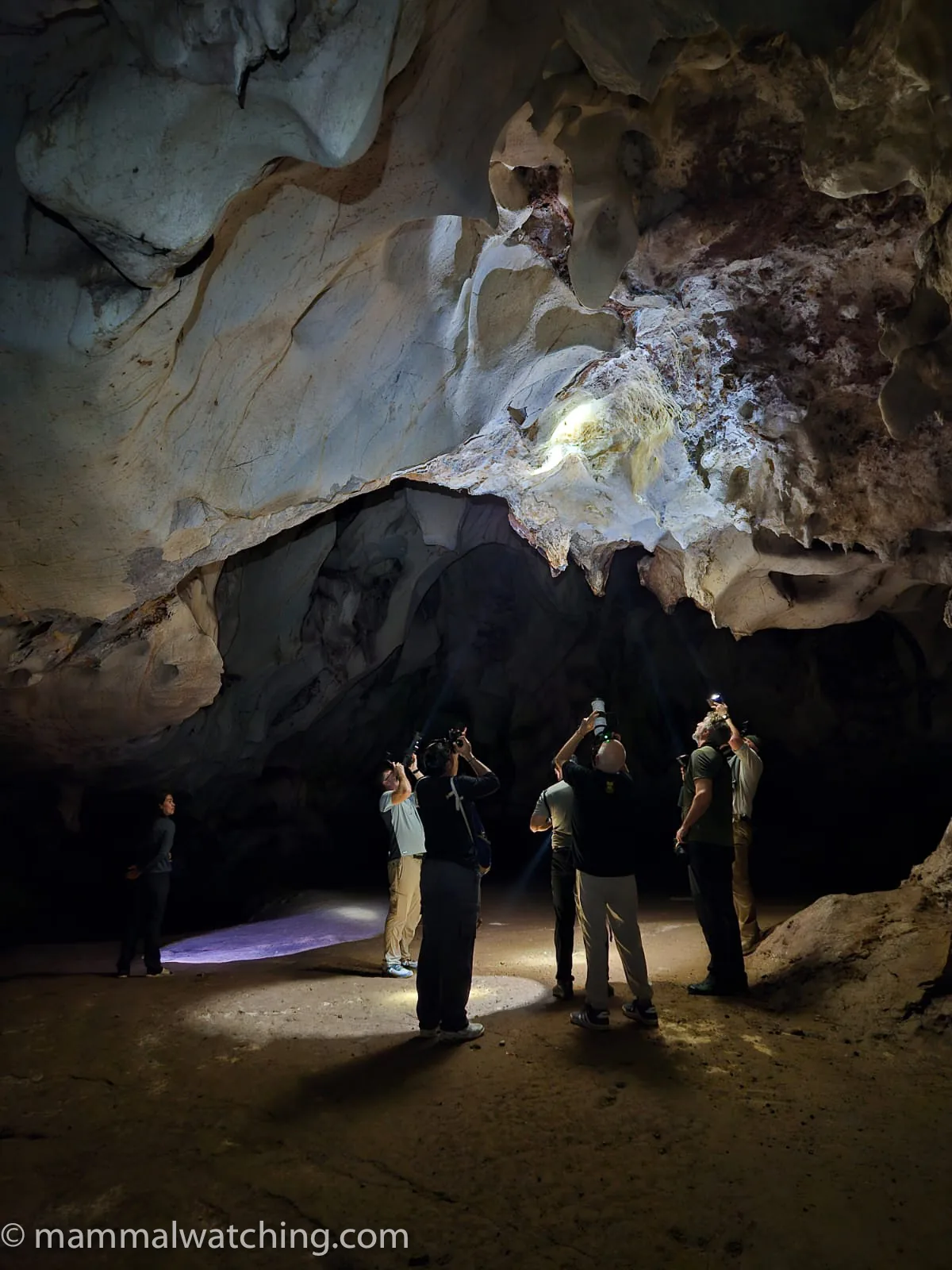
We met in Hat Yai. We would spending our first night in Yala Town, two hours to the south, but we would spend the day exploring bat caves.
We drove north for several hours to visit two caves that Tour had explored on previous trips and whose bats had been well documented by top Thai bat expert Pipat Soisook. These caves – like all the caves we visited – are set up for tourists: they are clean (sometimes too clean for the bats) and easy to explore.
Wat Tham Sumano Cave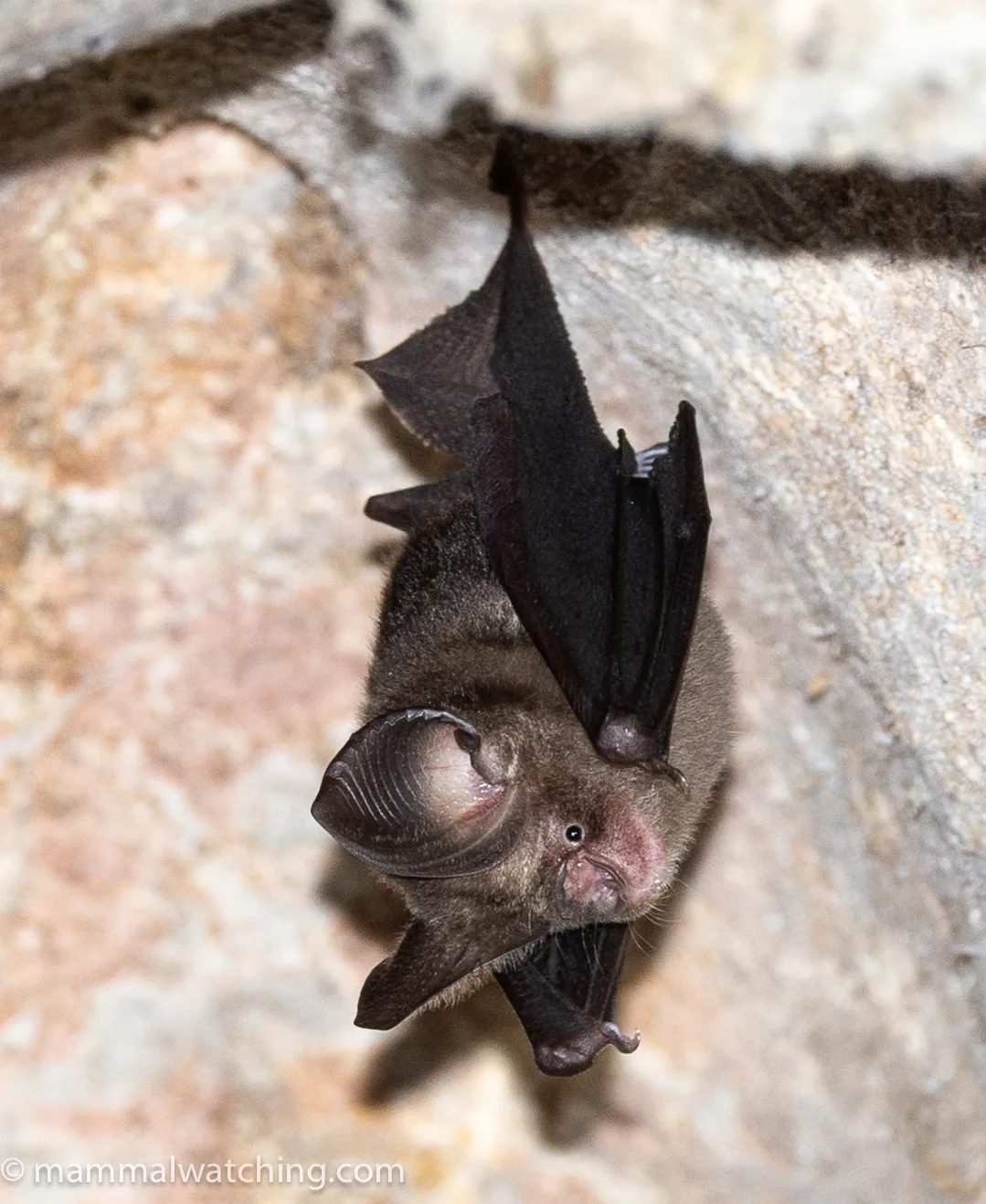
This temple cave is here.
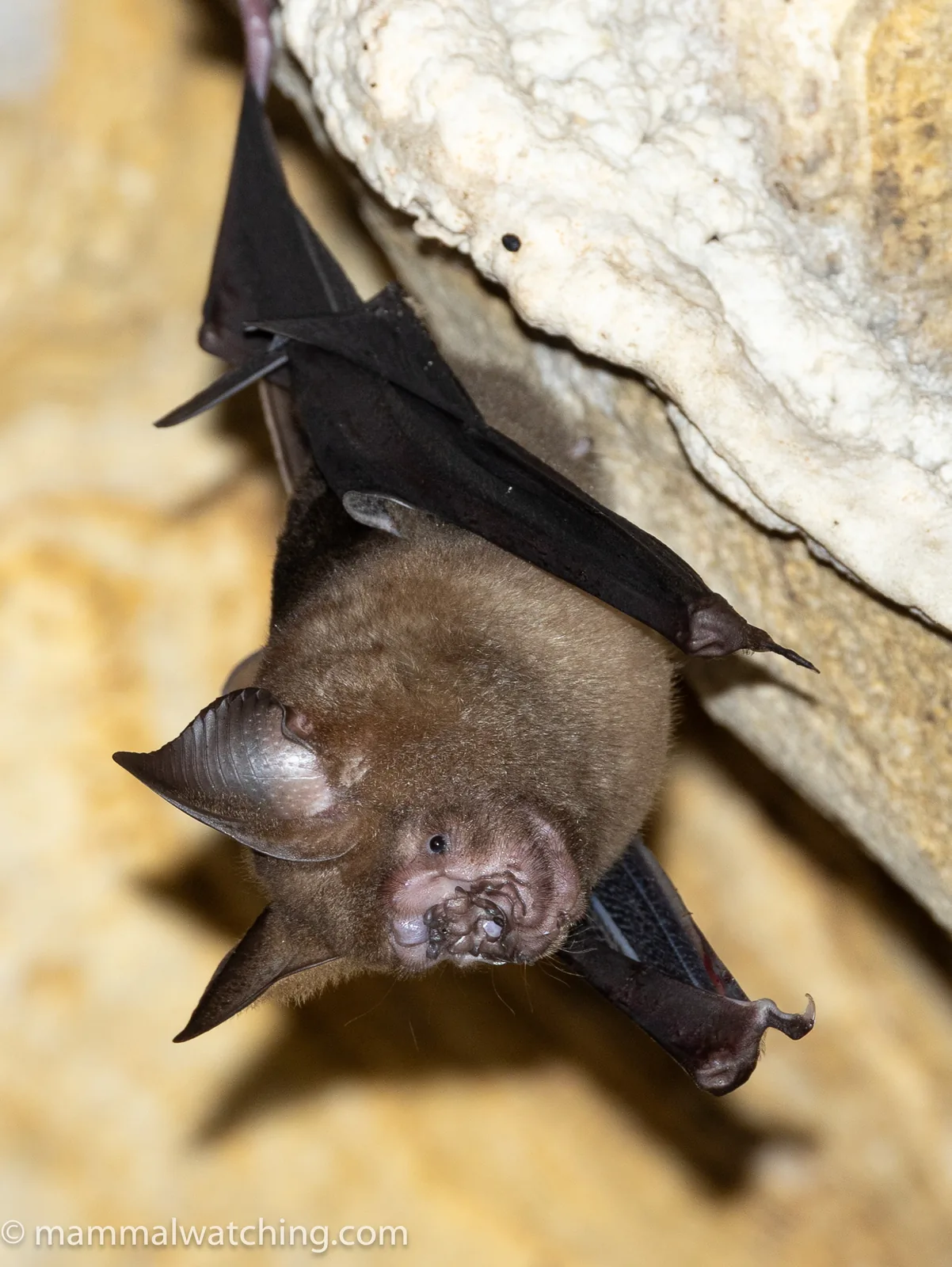
It was home to plenty of the chunky Great Himalayan Leaf-nosed Bats and a few Diadem Leaf-nosed Bats.
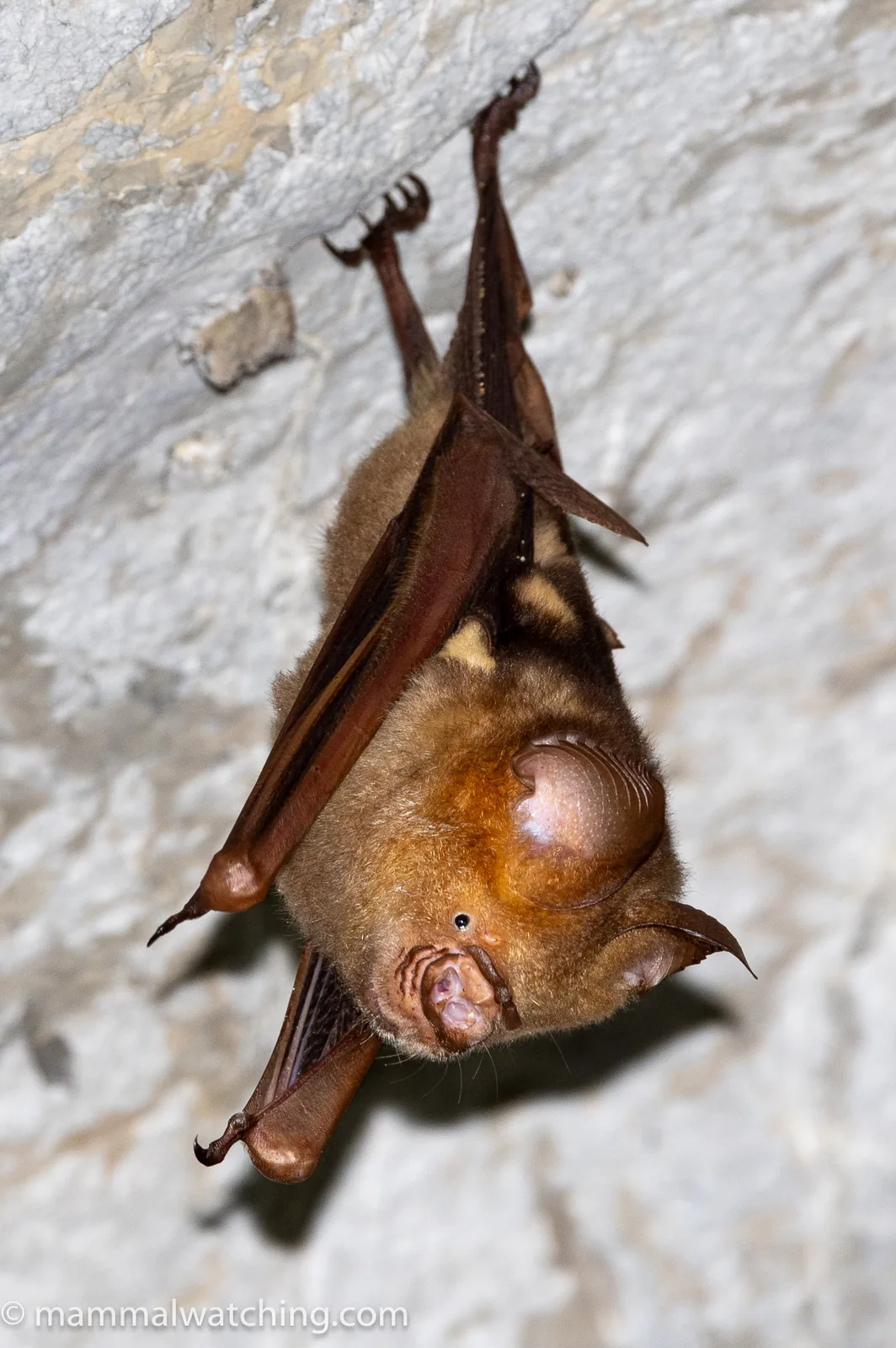
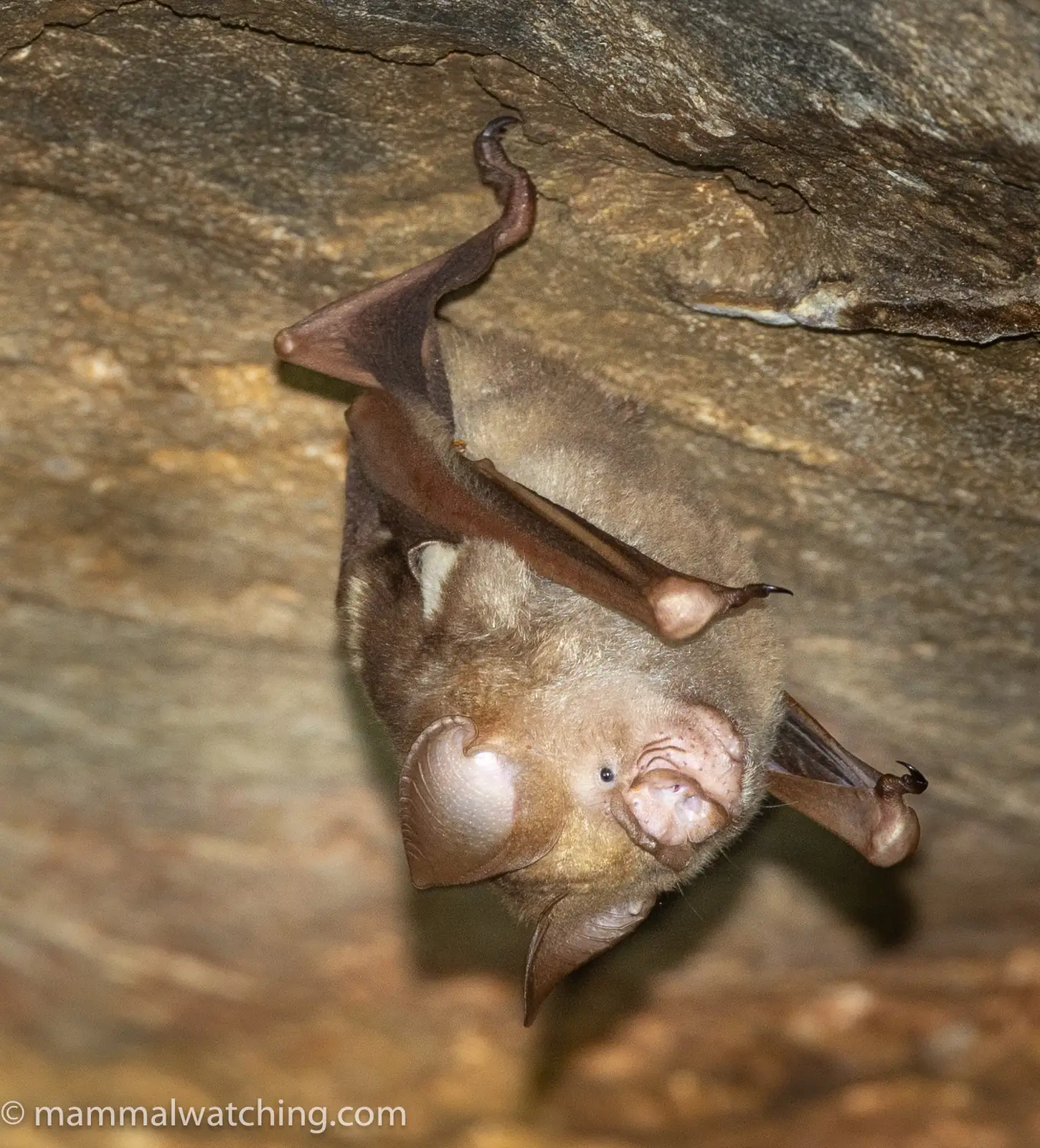
Our first lifer was our target Least Leaf-nosed Bat, much smaller than the other hipposiderids in the cave.
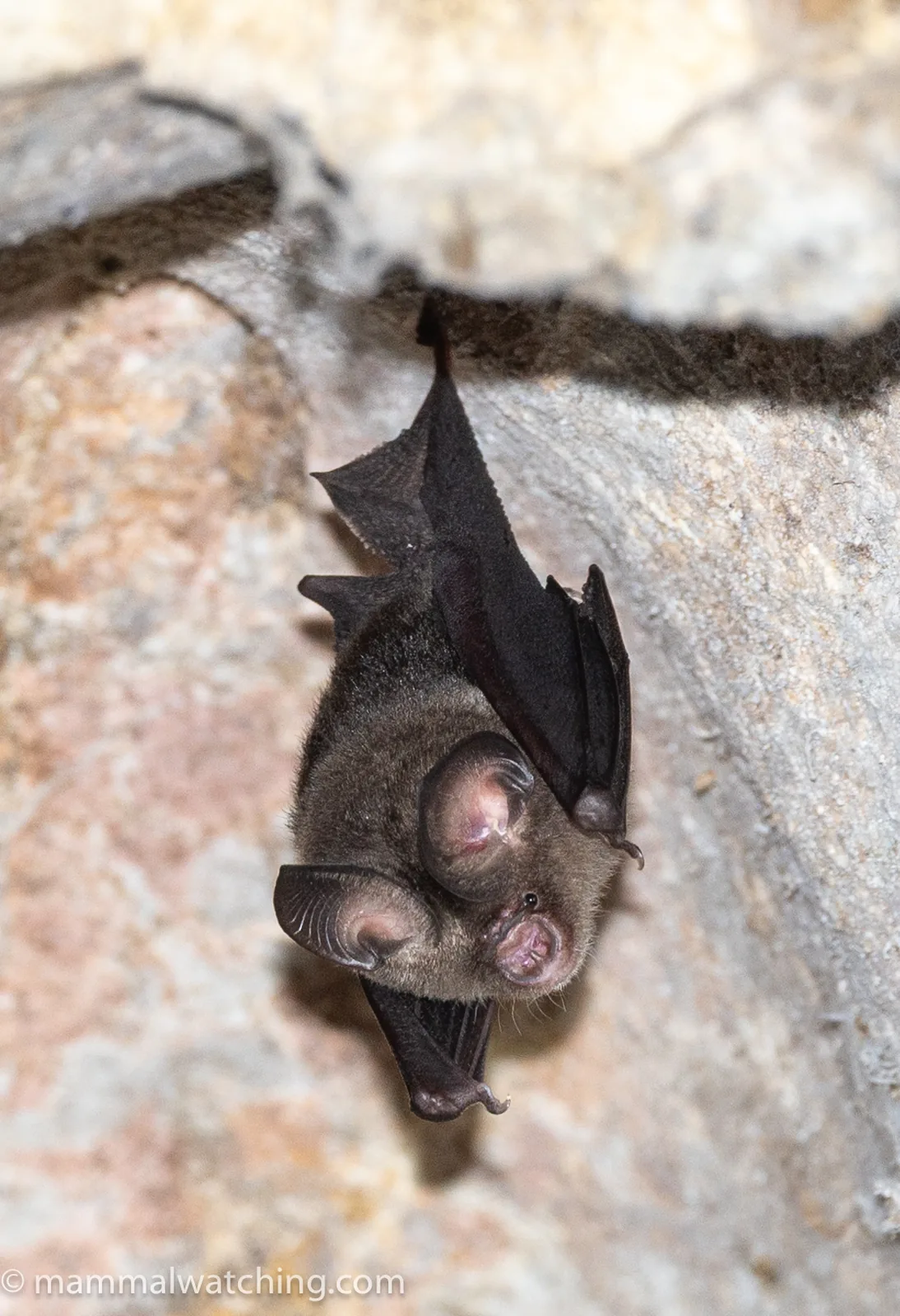
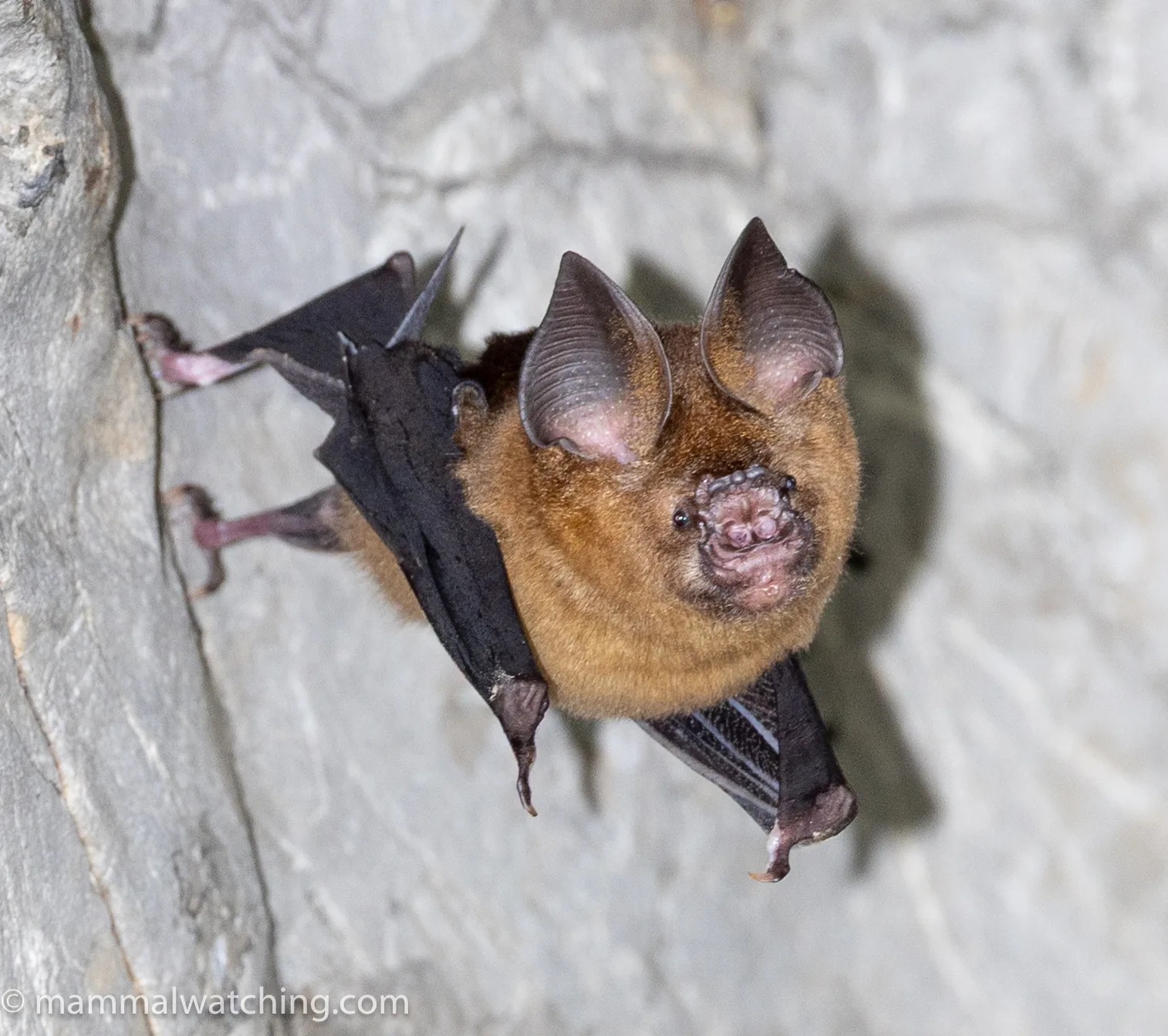
We also saw a few Pendlebury’s Leaf-nosed Bats, another lifer for the group. These bats look very like a smaller version of the Great Roundleaf Bats. All very well when you see them in the cave, but not so helpful when you are trying to decide which photographs belong to which species. Thankfully Pipat can tell the two species apart from photos based on subtle differences in the face and fur.
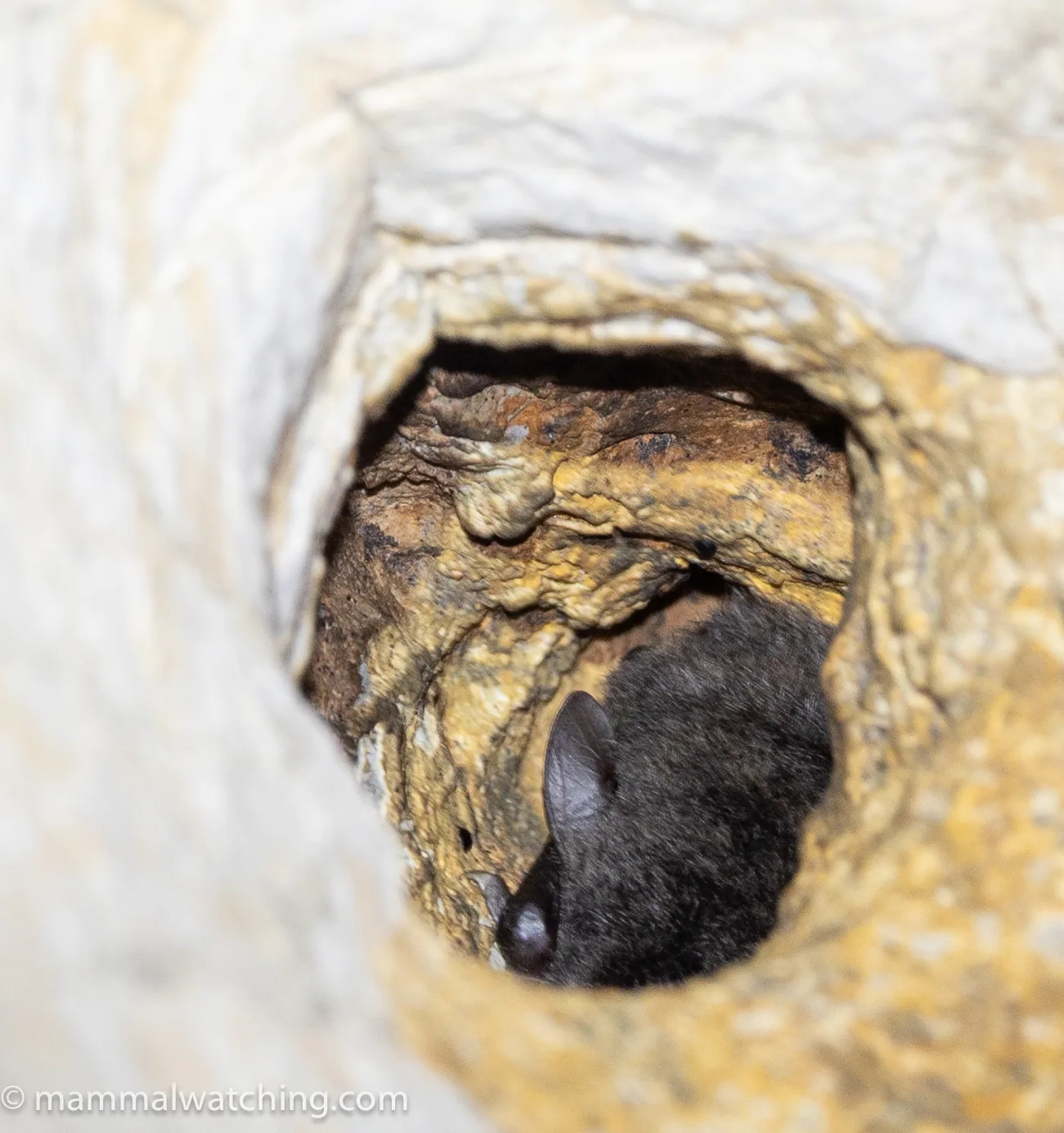
A small myotis roosting deep in a weep hole was impossible to photograph well but – according to Pipat who knows the bats and this cave – it ought to have been Horsfield’s Myotis.
A Common Treeshrew ran across the road in front of the bus as we were leaving the cave.
Songkhla Province
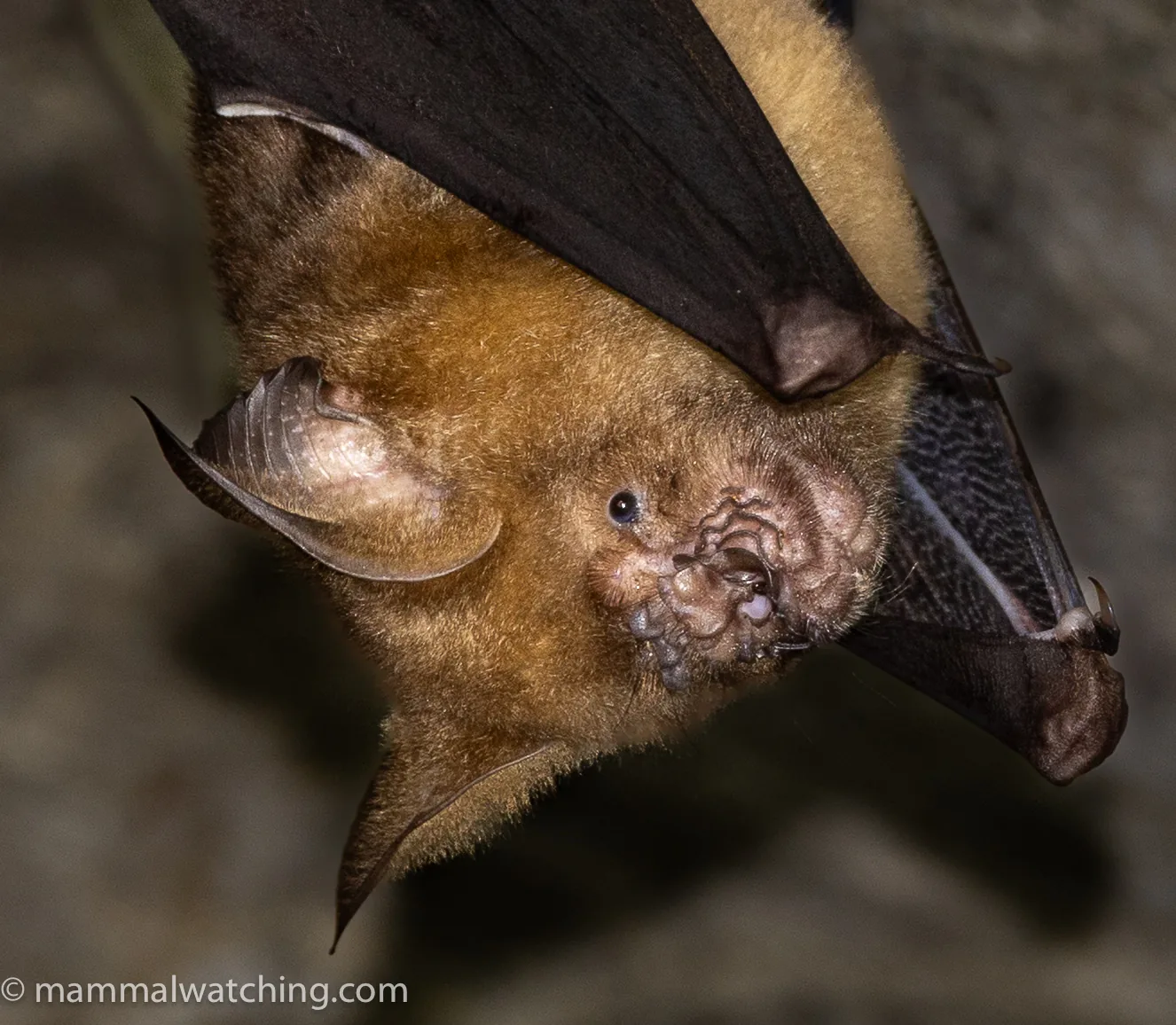
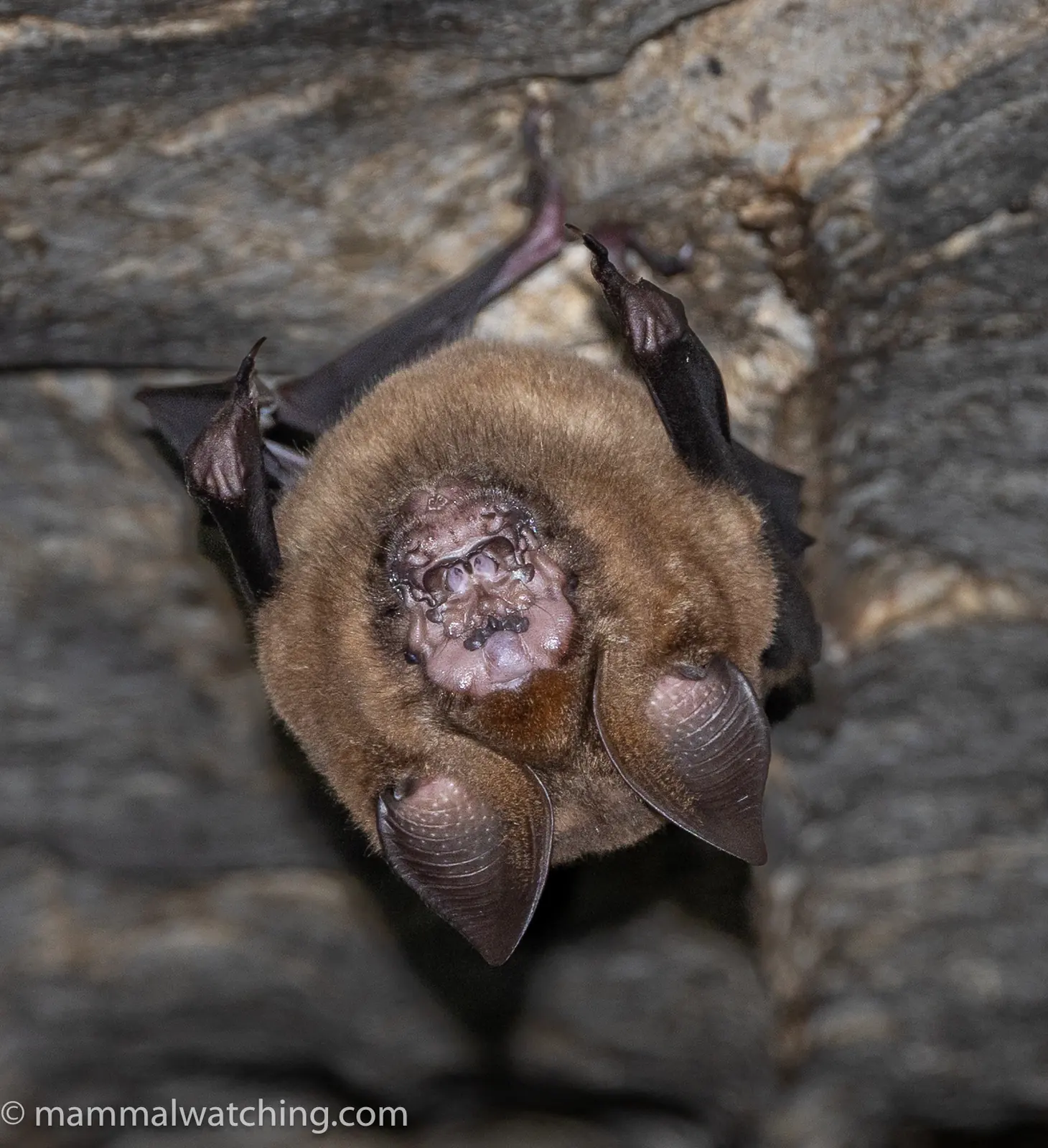
We turned around to head back towards our destination stopping at Si Son Cave (here).
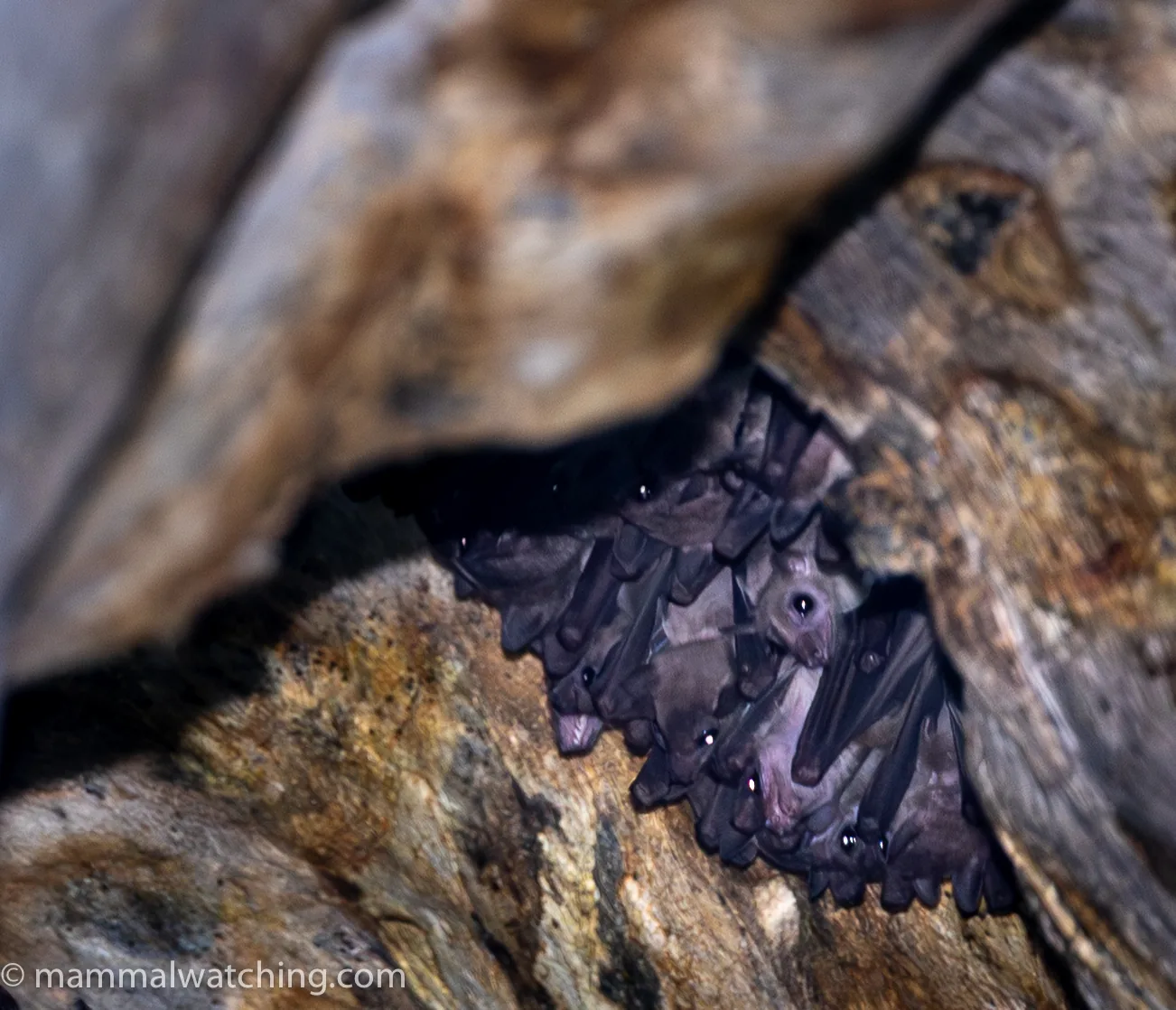
There were plenty more bats inside, mainly Great & Diadem Roundleaf Bats, though there were also a colony of Leschenault’s Rousettes with what appear to be a few Lesser Dawn Bats mixed in (well spotted by Juliana Senawi when she checked my photos).
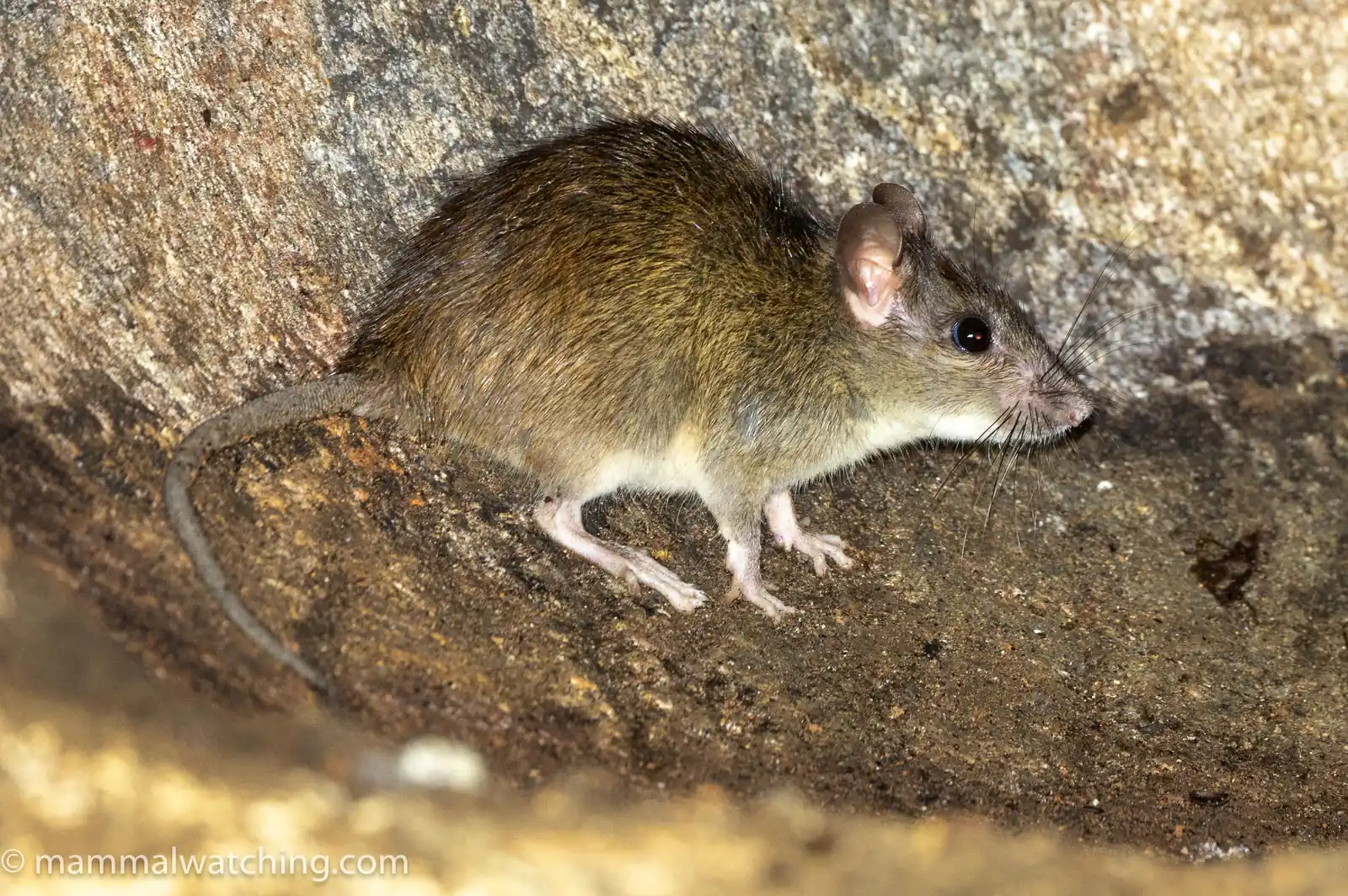
A rat generated a flurry excitement in the way a rat does only among a group of hard core mammalwatchers. But it was just a rattus species that, on the basis of size, looks very like a Pacific Rat.
We continued on to Yala Town arriving after dark.
Yala Province
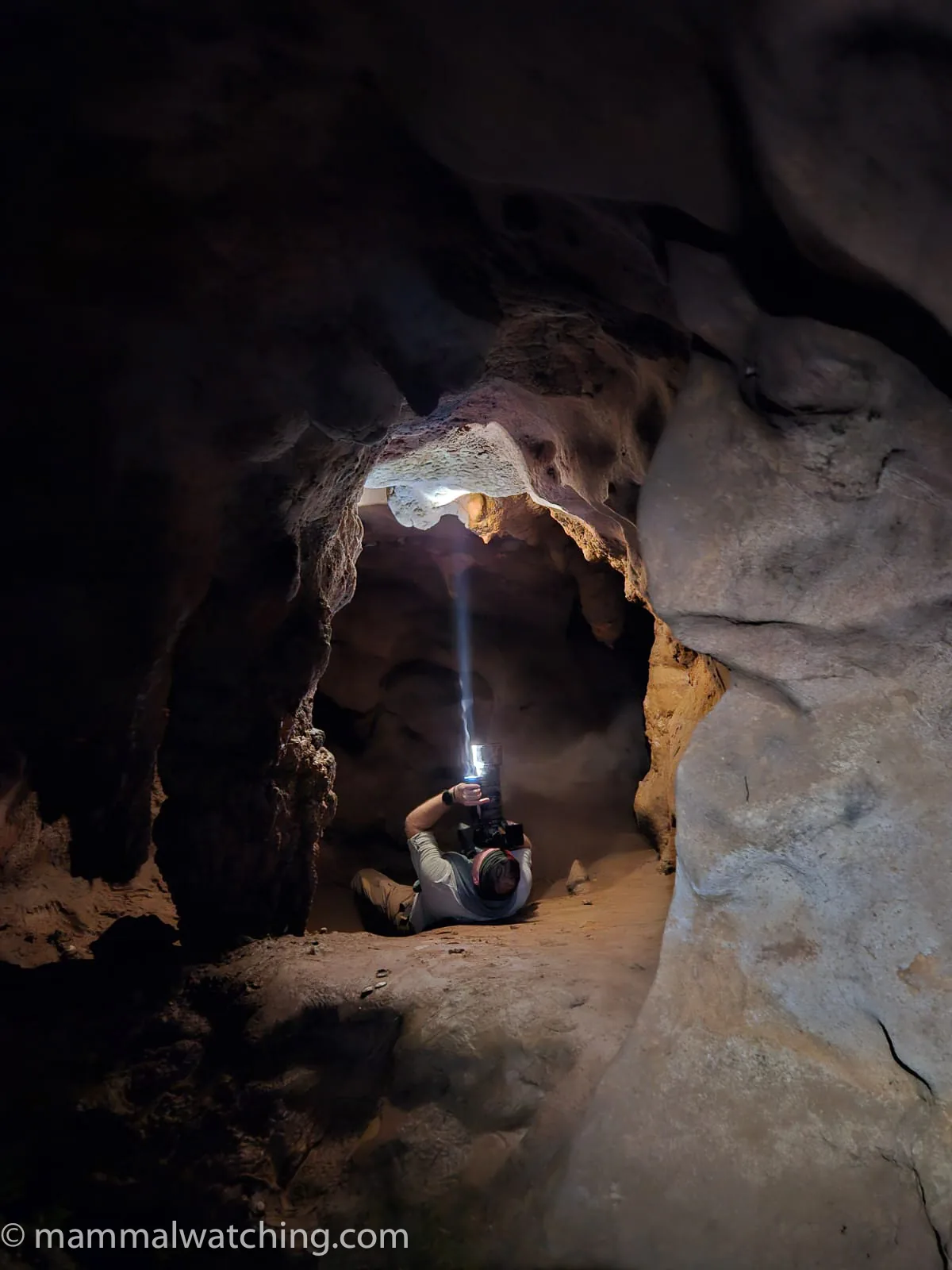
We visited two caves the following morning around the Tham Khuha Phimuk Temple (here).
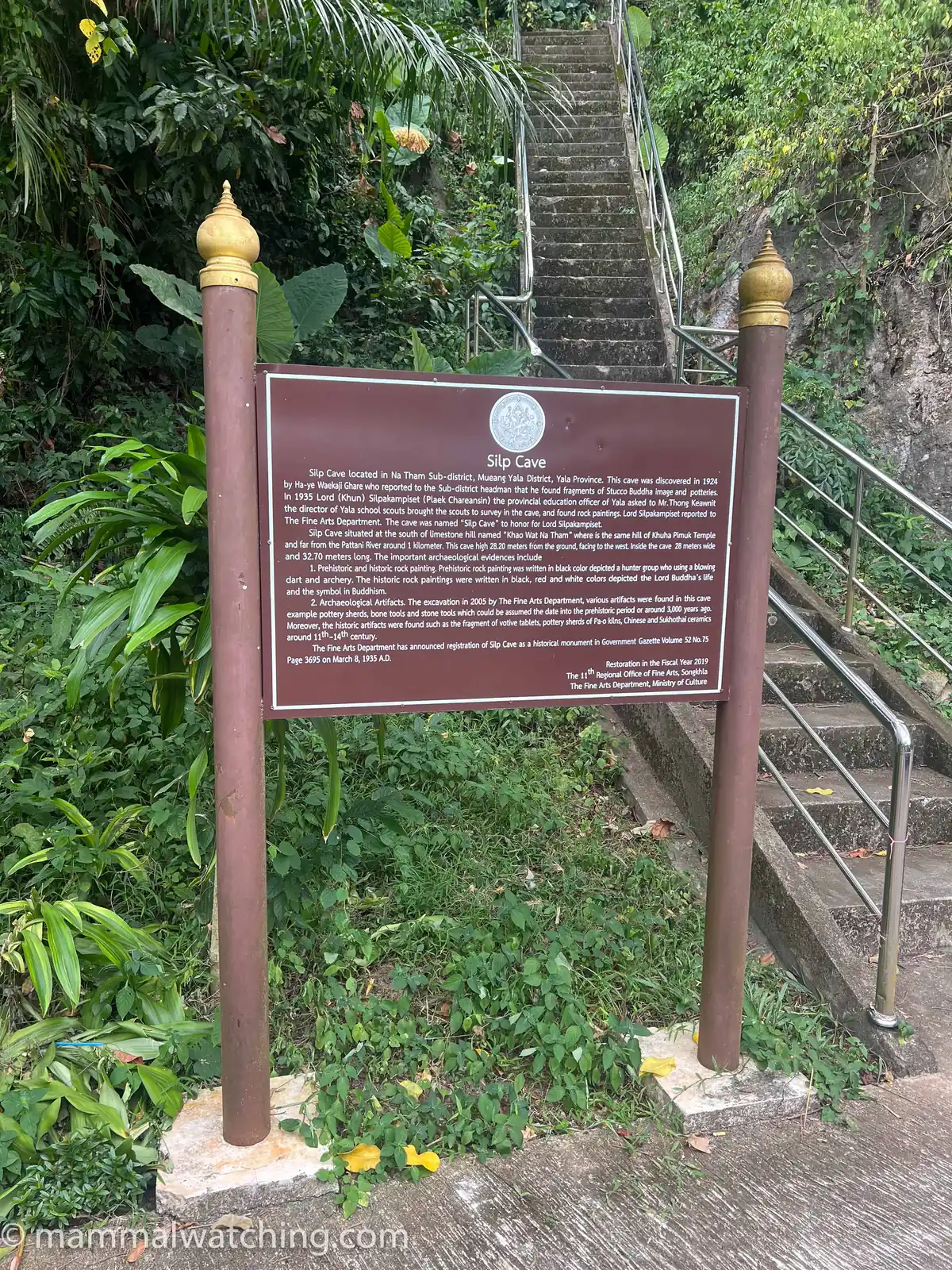
The first of these, Slip Cave, contained only Greater Leaf-nosed Bats and Malayan Horseshoes. We were chasing two other species here, which Tour had seen only in the next door cave next that was managed by the Buddhist temple. Trouble was that cave was closed for maintenance. But Tour used some Buddhist charm to persuade them to open up. We quickly found both target species.
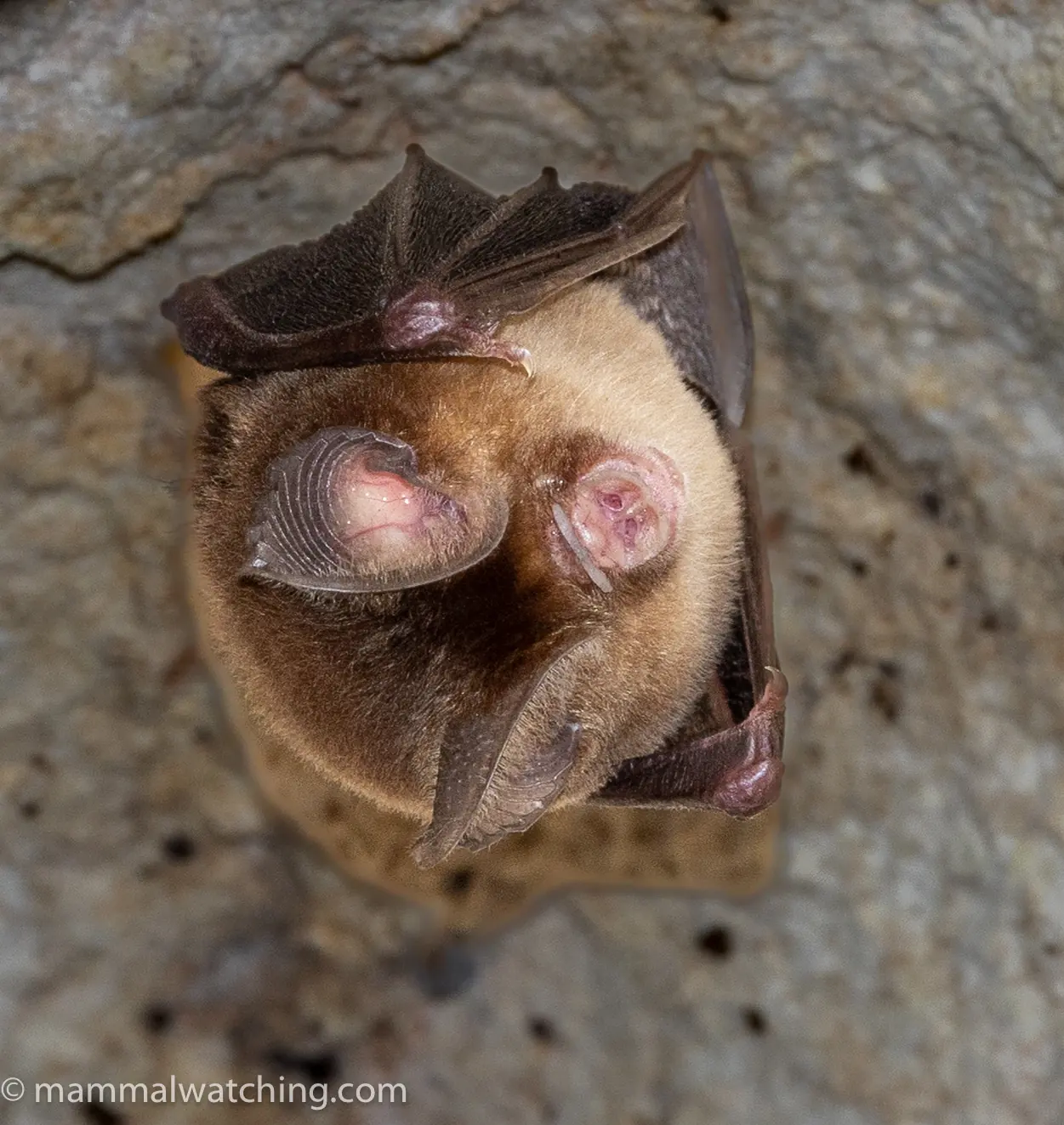
This small roundleaf bat is Kunz’s Leaf-nosed Bat, a lifer for us all.
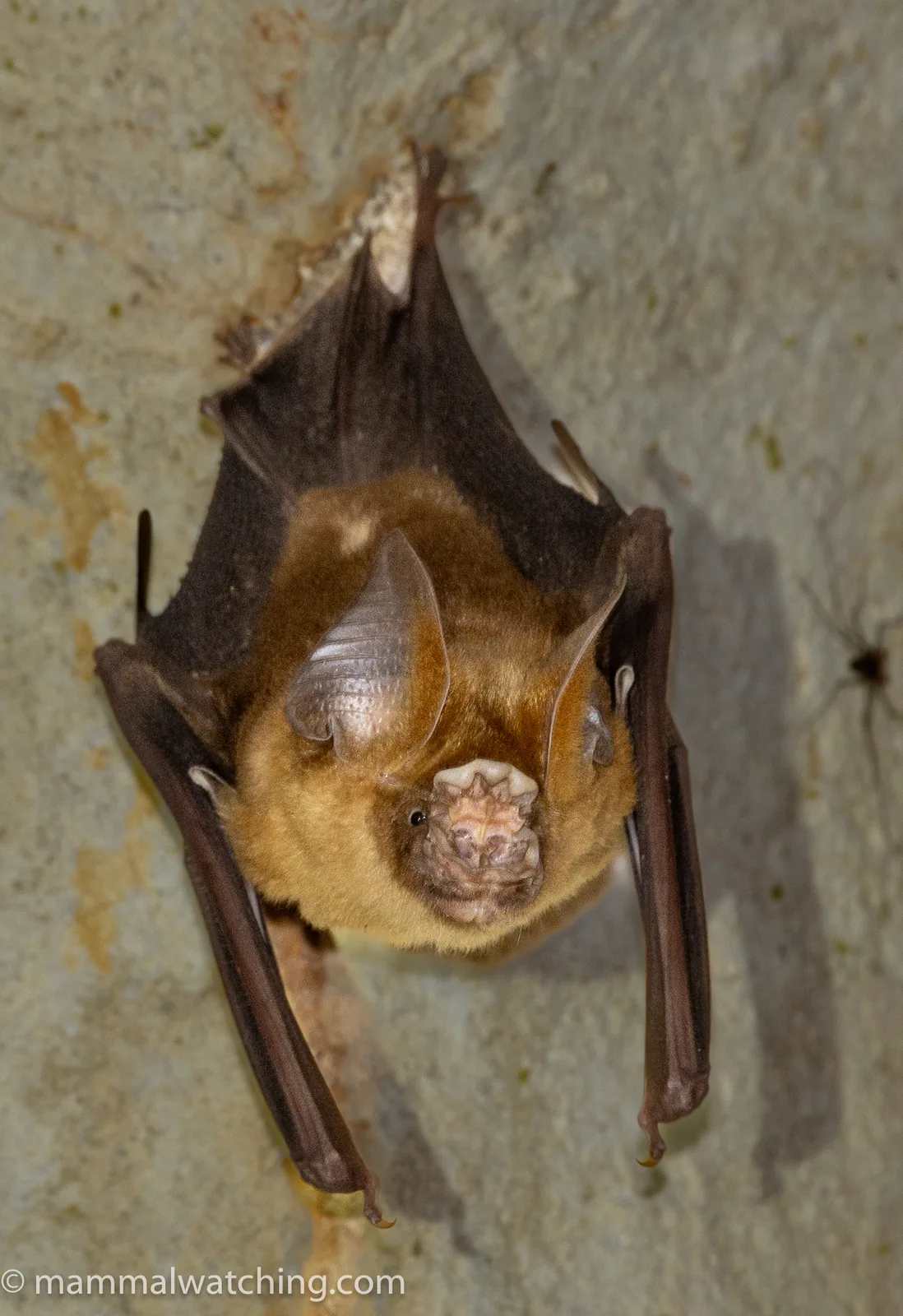
And this larger roundleaf bat is the distinctive Large Asian Leaf-nosed Bat, another lifer for the group.
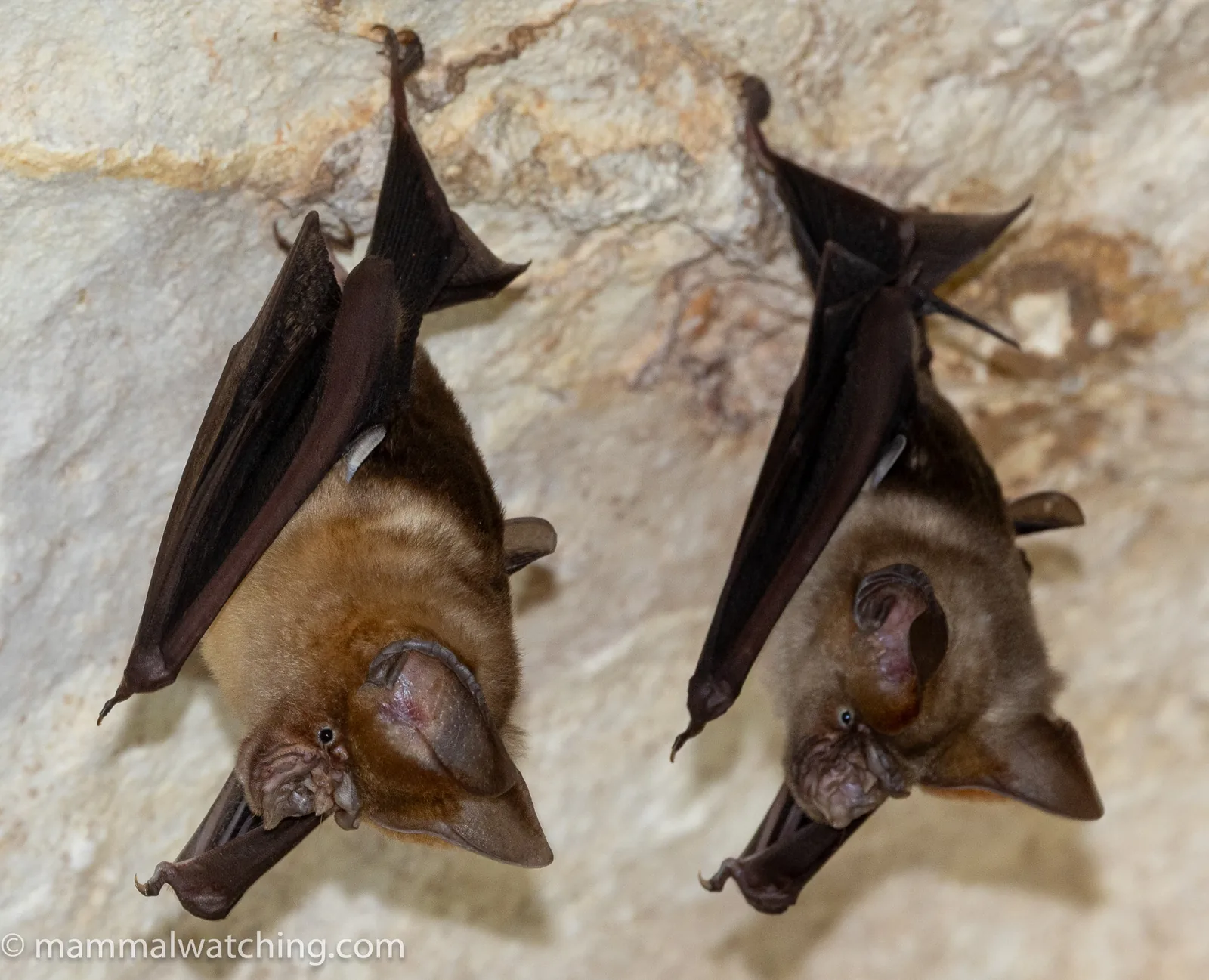
Once again there were Greater Leaf-nosed Bats inside along with lots of horseshoe bats. I tried hard to turn some of them into a species other than Malayan Horseshoe, but Pipat looked at about 50 of my photos and couldn’t spot the Rhinolophus stheno I was trying to manufacture.
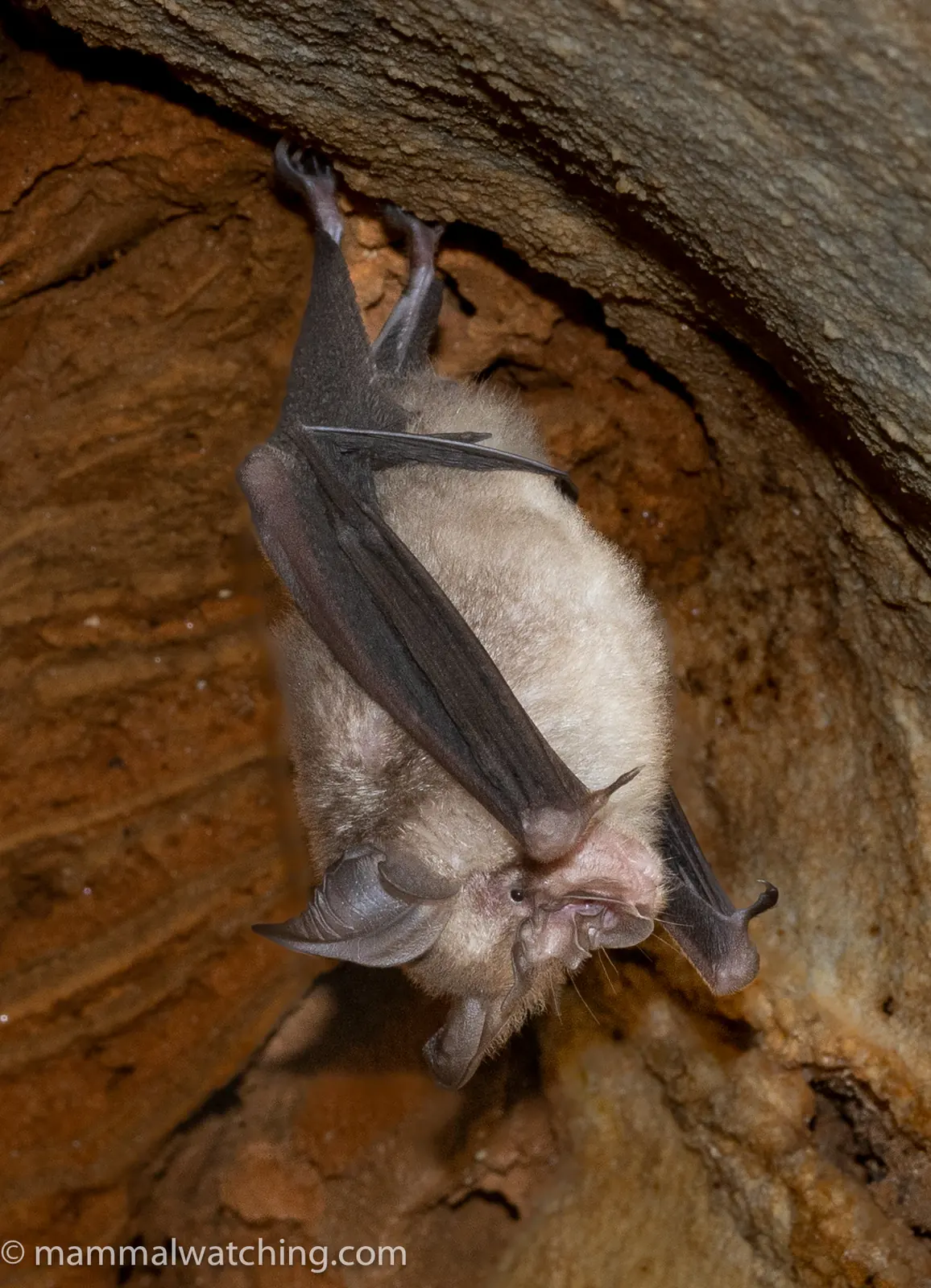
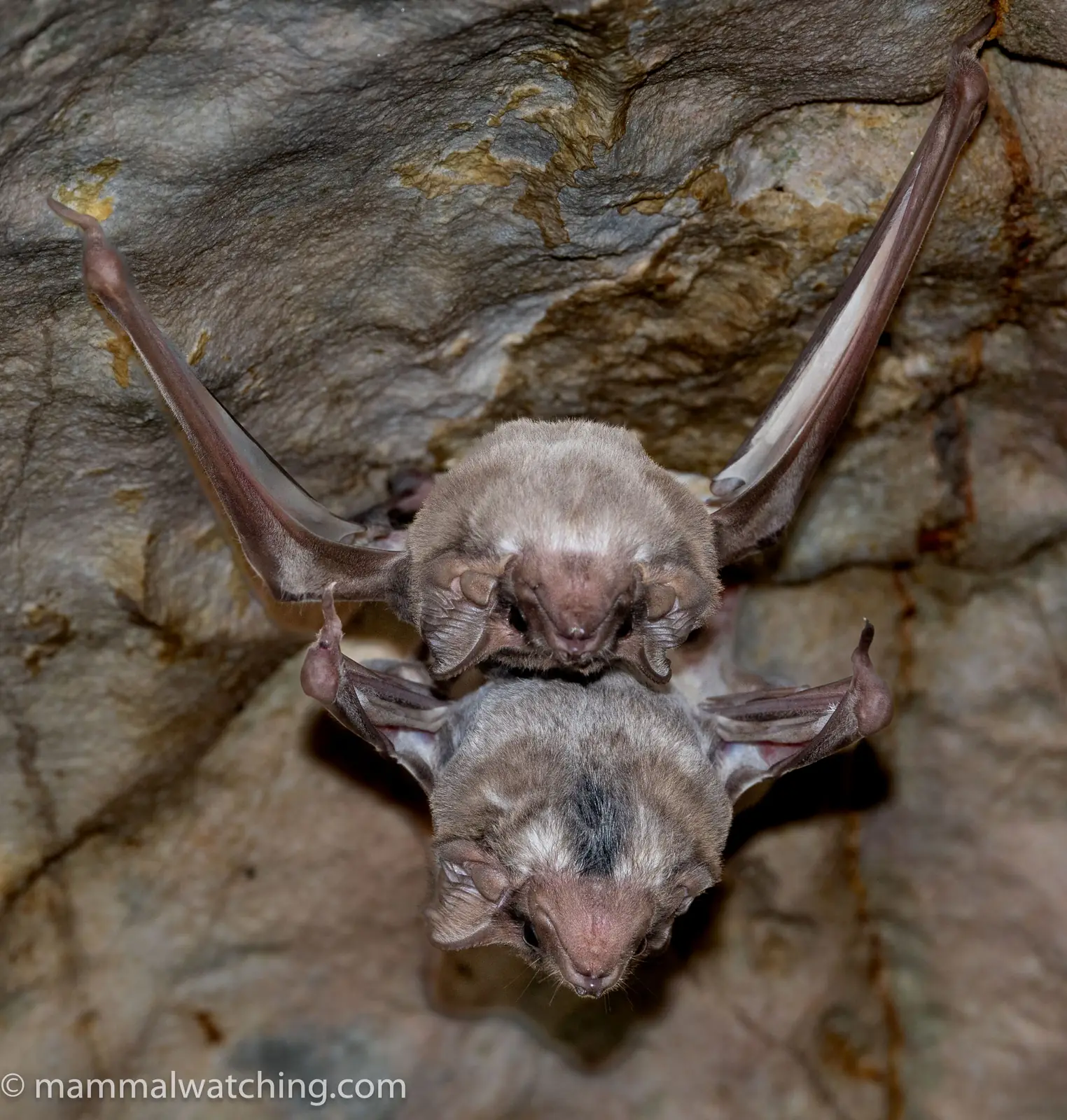
We encountered one other species inside: Black-bearded Tomb Bats, which posed nicely for photos.
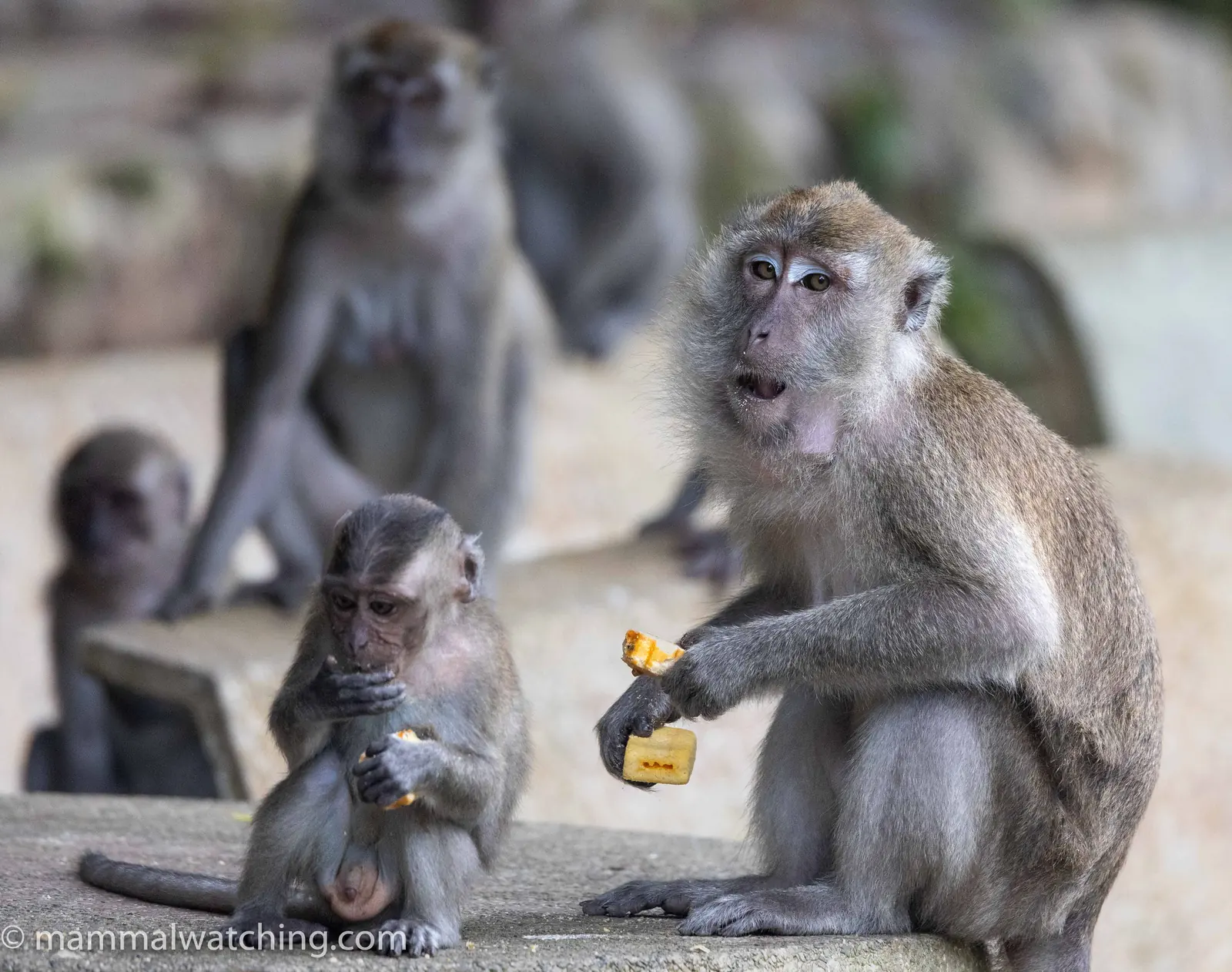
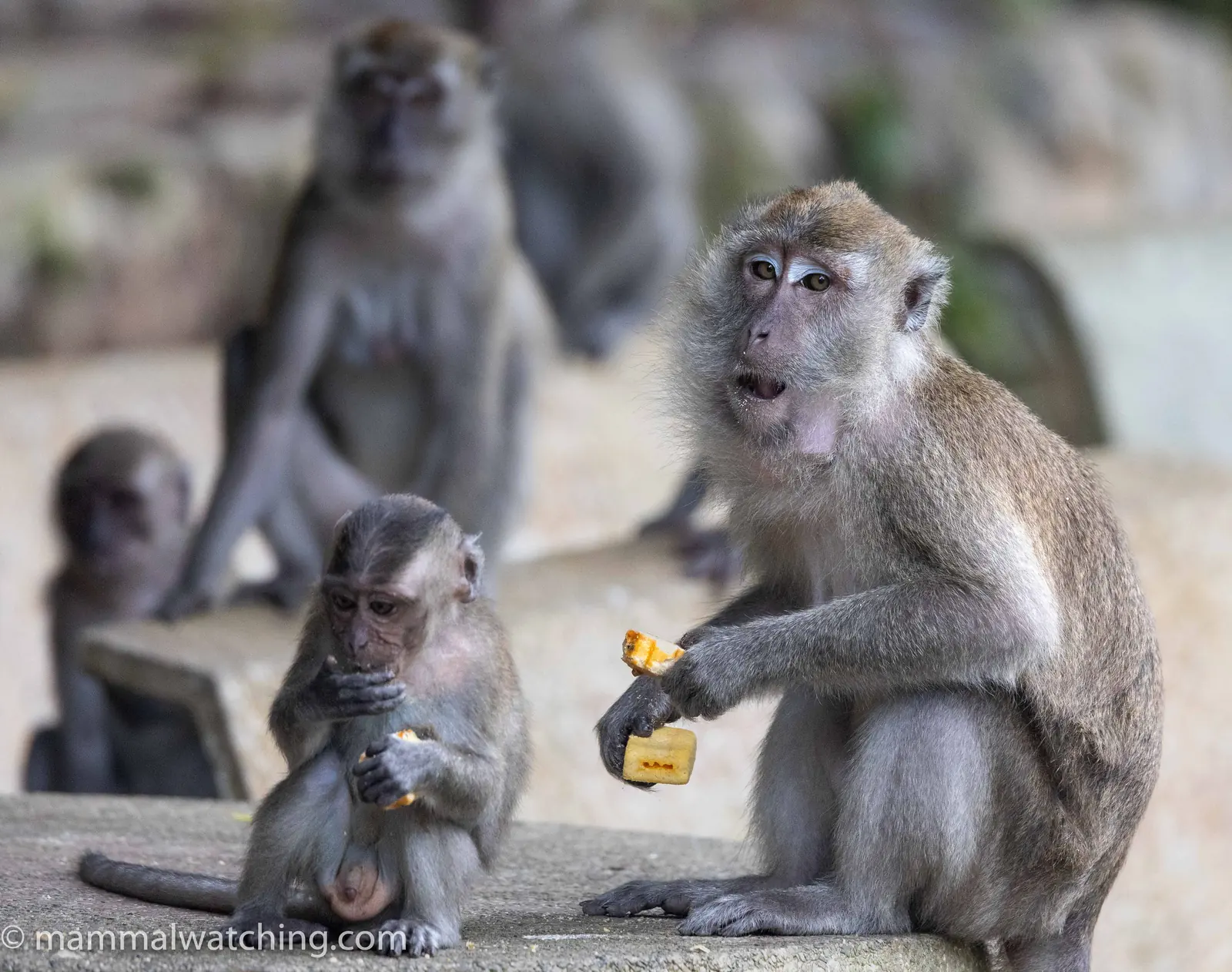
Outside the cave the monks shared some snacks with the local Long-tailed Macaques.
We grabbed an early lunch and set off south for Chulaporn Development Village 9, on the border of Yala and Narathiwat provinces and very close to Malaysia, abutting Bang Lang National Park.
Bang Lang National Park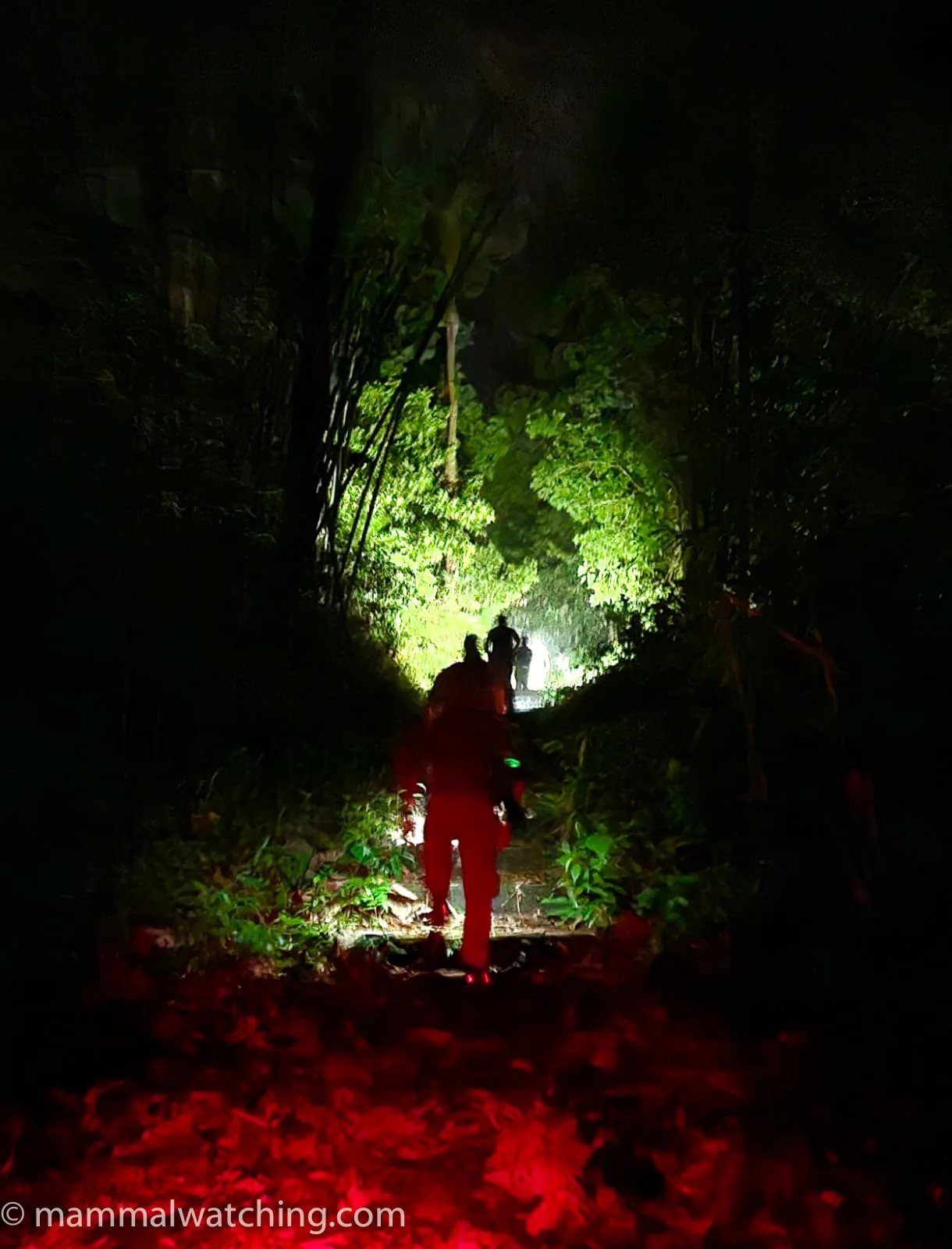
This was our headline destination. Tour had visited several times over the past year or two to scout for mammals around Chulaporn Village, and had seen a Banded Linsang every time. He’d figured out that the animals seemed to prefer forest near the river, especially where there was bamboo. Even more specifically he often saw them on small islands in the river. This seemed strangely specific to me, and I really didn’t know what to expect. But we had up to four days to search for the linsang, and we were determined to give it a good go.
We stayed at a small guest house at the edge of the village. Several groups of birders were visiting the village, and so they are already set up for ecotourism. Our house had Wi-FI, hot water and overly-effective AC. The villagers brought hot food and cold beer to us on demand.
All our effort here would be spent at night. We rested when we arrived and set out in a village pick-up truck after dinner. The truck had no seating in the back but Stuart had the brain wave of installing our dining chairs. This felt like a Darwin Award in the making, but it was surprisingly comfortable, and no one fell out. Or, maybe I should say, I was surprised that it wasn’t as uncomfortable as I had expected. The next day the village had installed bench seating. I am not sure whether that was for our benefit or to protect their furniture.
Tour planned to drive – and walk – all night here in search of the linsang and whatever else might cross our path. We focused on two roads on either side of the village. One section leads a short way into Bang Lang national park. The other – a longer tarmac road – runs to an abandoned ranger station outside the park. We weren’t sure why it had been abandoned. I hope it reopens soon. We saw at least two people carrying guns into the park at night probably looking for muntjacs, though they melted away when they saw us.
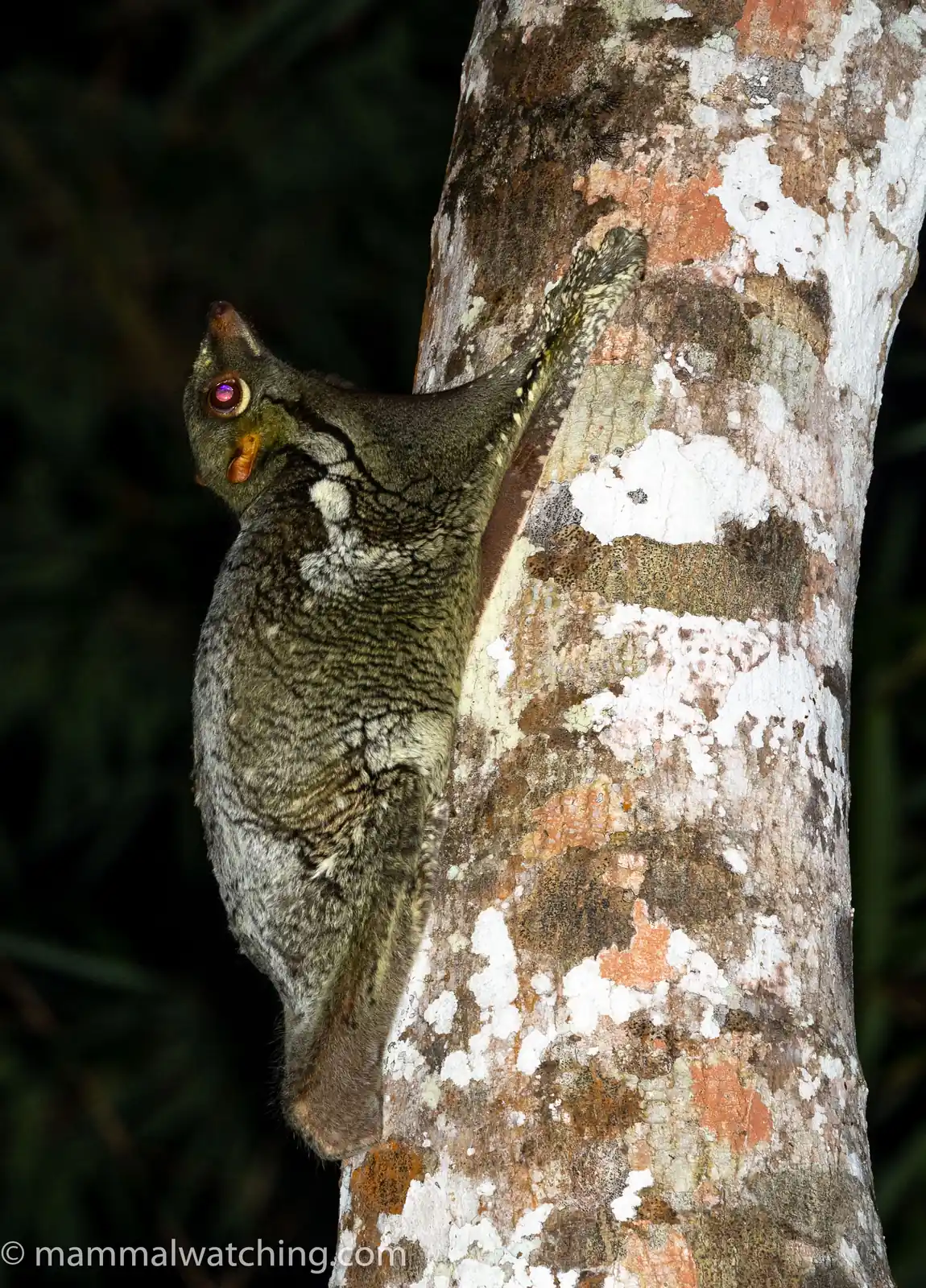
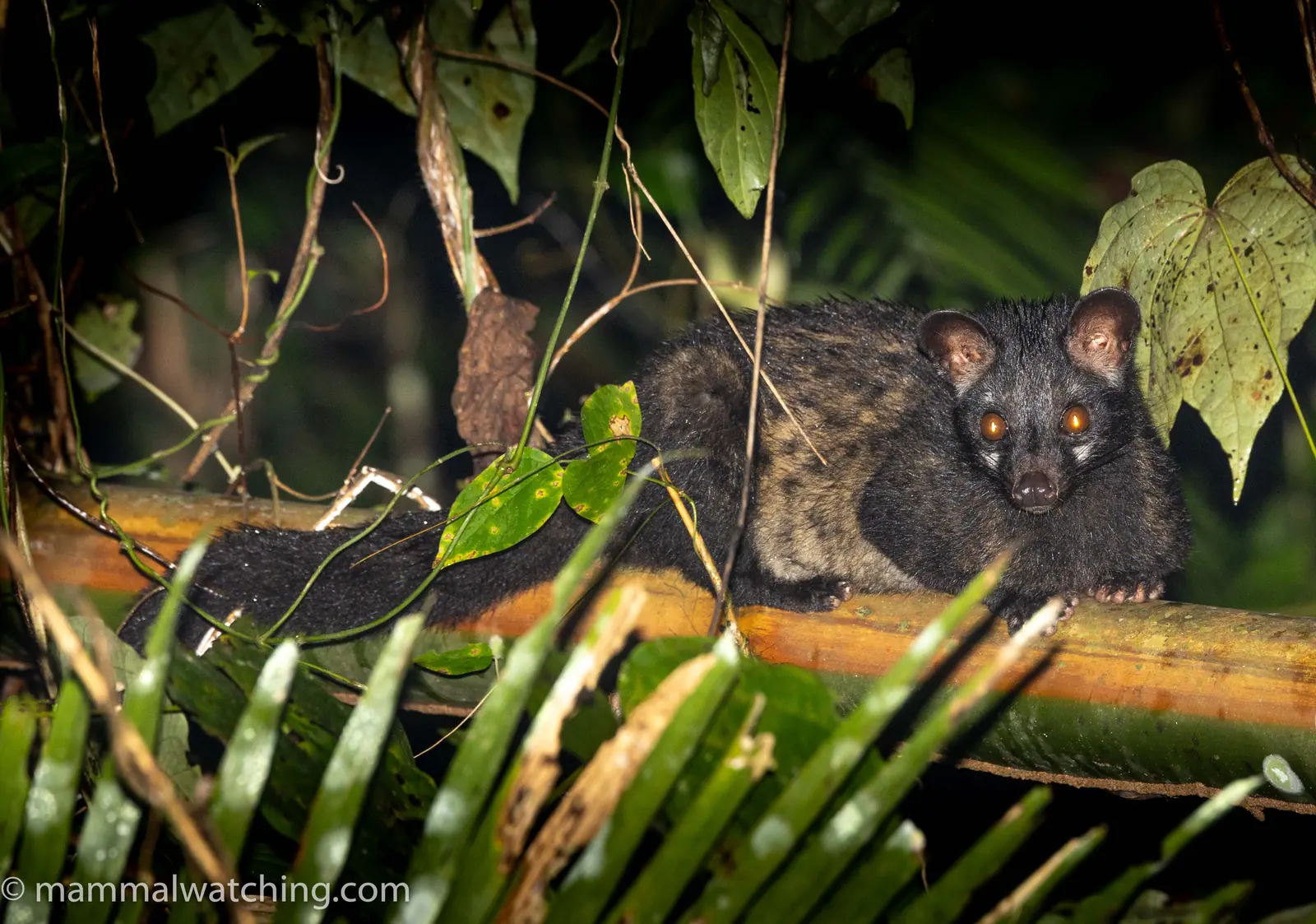
On our first night we saw several Sunda Colugos, Southern Palm Civets and what looked like a Burmese hare through the thermal scope. A large herd of Gaur were grazing in the fields next to the village: they emerge from the national park forest each evening.
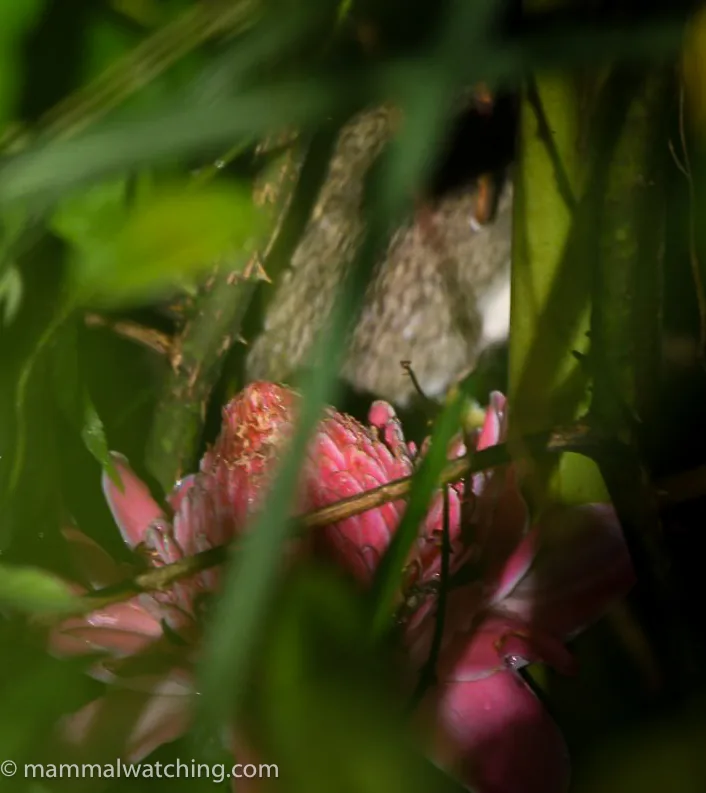
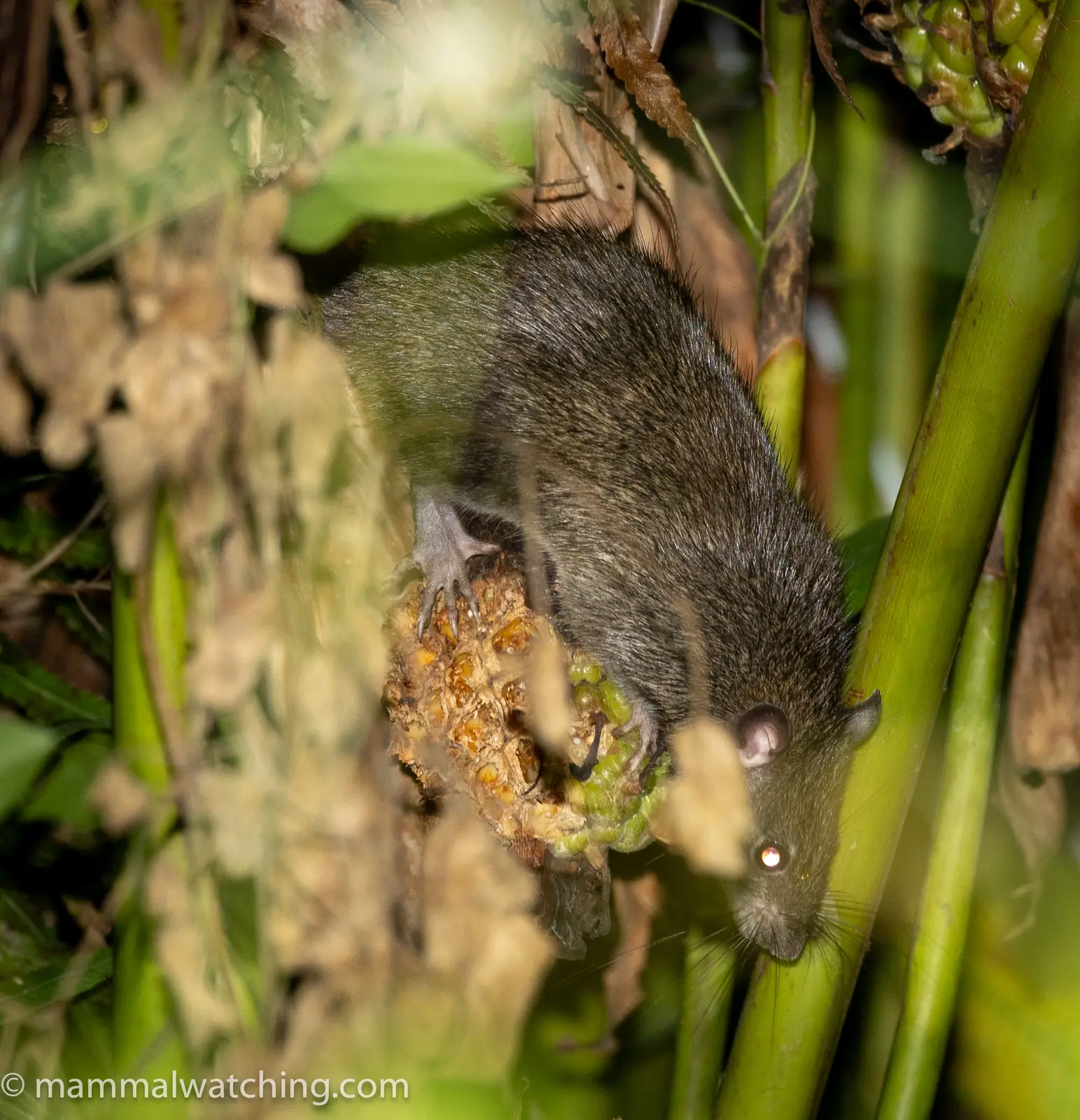
The place was tripping with rodents. Two enormous rats feeding in the vegetations along the edge of the road must – on size and colour – have been Bowers’s White-toothed Rats. I managed to get this superb photo of one feeding on an equally enormous flower.
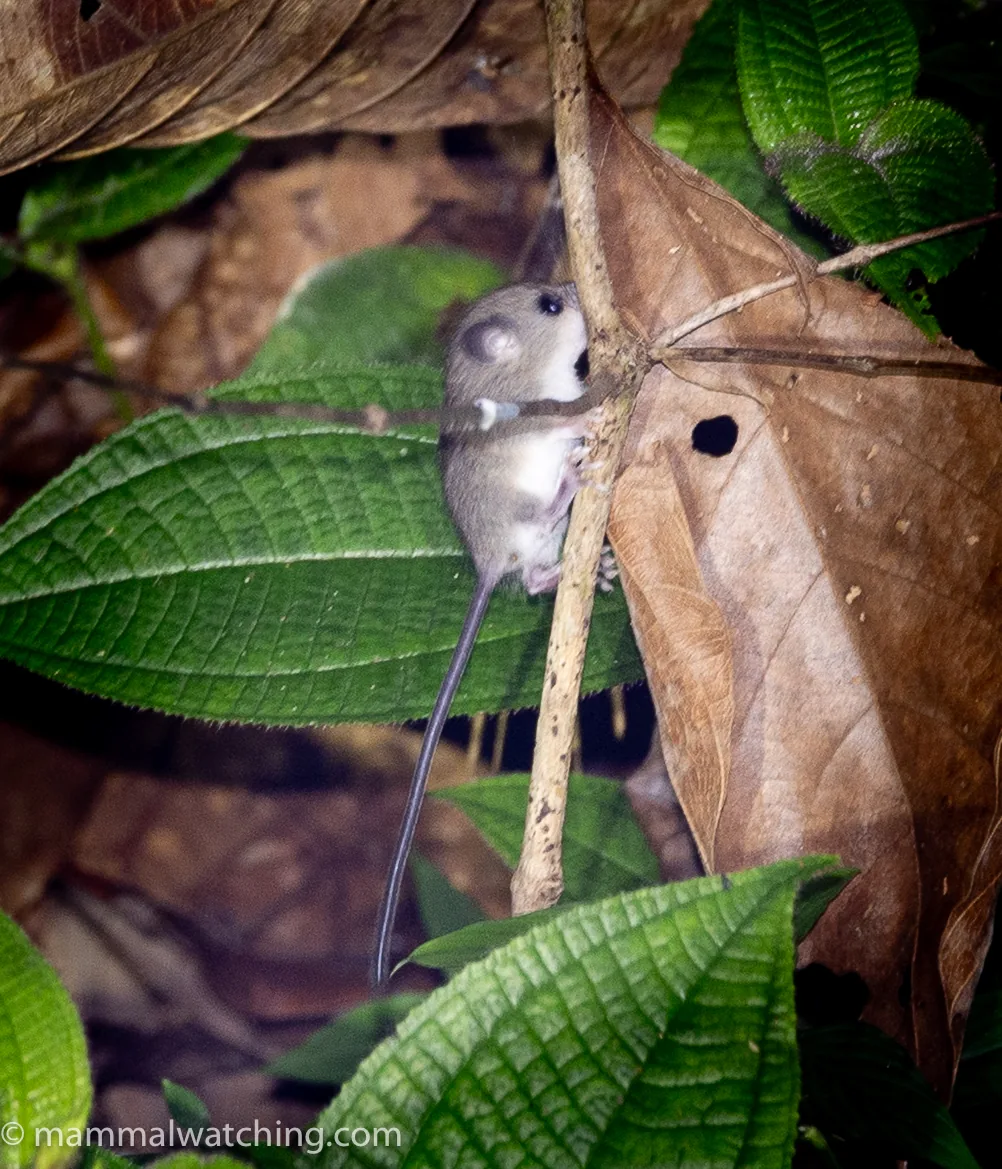
A bunch of smaller mice were zipping around trees, along electric lines and in the tops of pylons. They were mainly too quick to photograph, but the few photos we took all appeared to show Indomalayan Pencil-tailed Tree Mice, though none had a noticeable brush at the end of its tail. But I cannot think what else they could have been. Our thermals also picked up several Malaysian Woolly Horseshoe Bats hanging from hunting perches.
After six hours driving and walking we were no closer to a Banded Linsang and my optimism levels were sinking. As we returned to our accommodation I told myself that the forest was excellent, and the road was deserted. Indeed, for most of the night the only vehicle we saw was a drone – presumably piloted by the Thai military – that followed our car along the road for a few hundred metres. A reminder that the area has security concerns, no matter how peaceful it felt.
We slept most of the day. The next night started quite slowly with this large Muller’s Rat, and both Trefoil Horseshoe and Diadem Roundleaf Bats adding to our mammal list for the area, along with a Malaysian Slow Loris.
We walked a trail to the river northwest of Chulaporn. At the riverbank I saw something in my thermal in a distant tree. I wasn’t sure what it was, but felt confident it wasn’t a linsang when I got the bins onto it. A flying squirrel was my best guess.
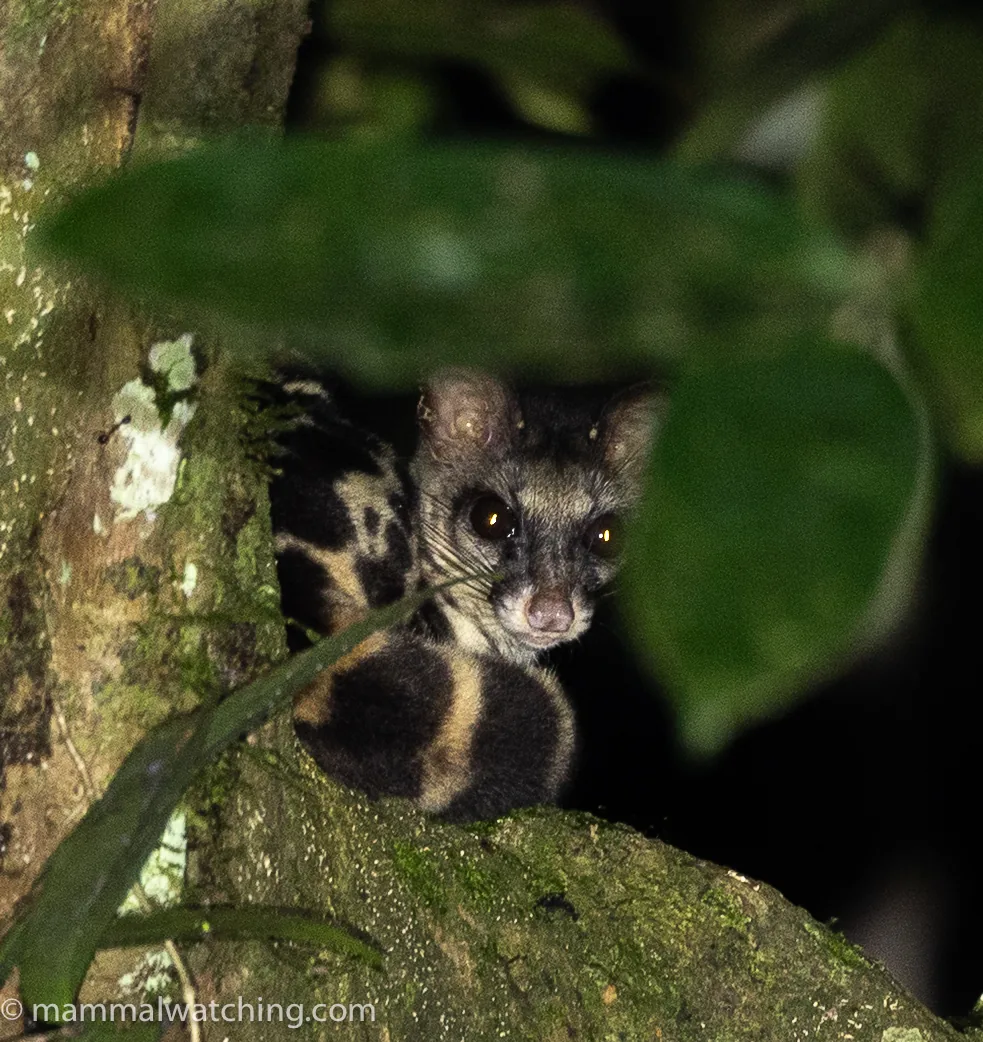
While I was still puzzled about the animal Tour yelled “We got a linsang!”. Cue 5 minutes of mayhem as we all barked questions along the lines of “Where? Which tree? Are you sure?”. Tour’s team member – Fit – had spotted it. He was certain that whatever eyeshine he was looking at belonged to a linsang: he could see the tail.
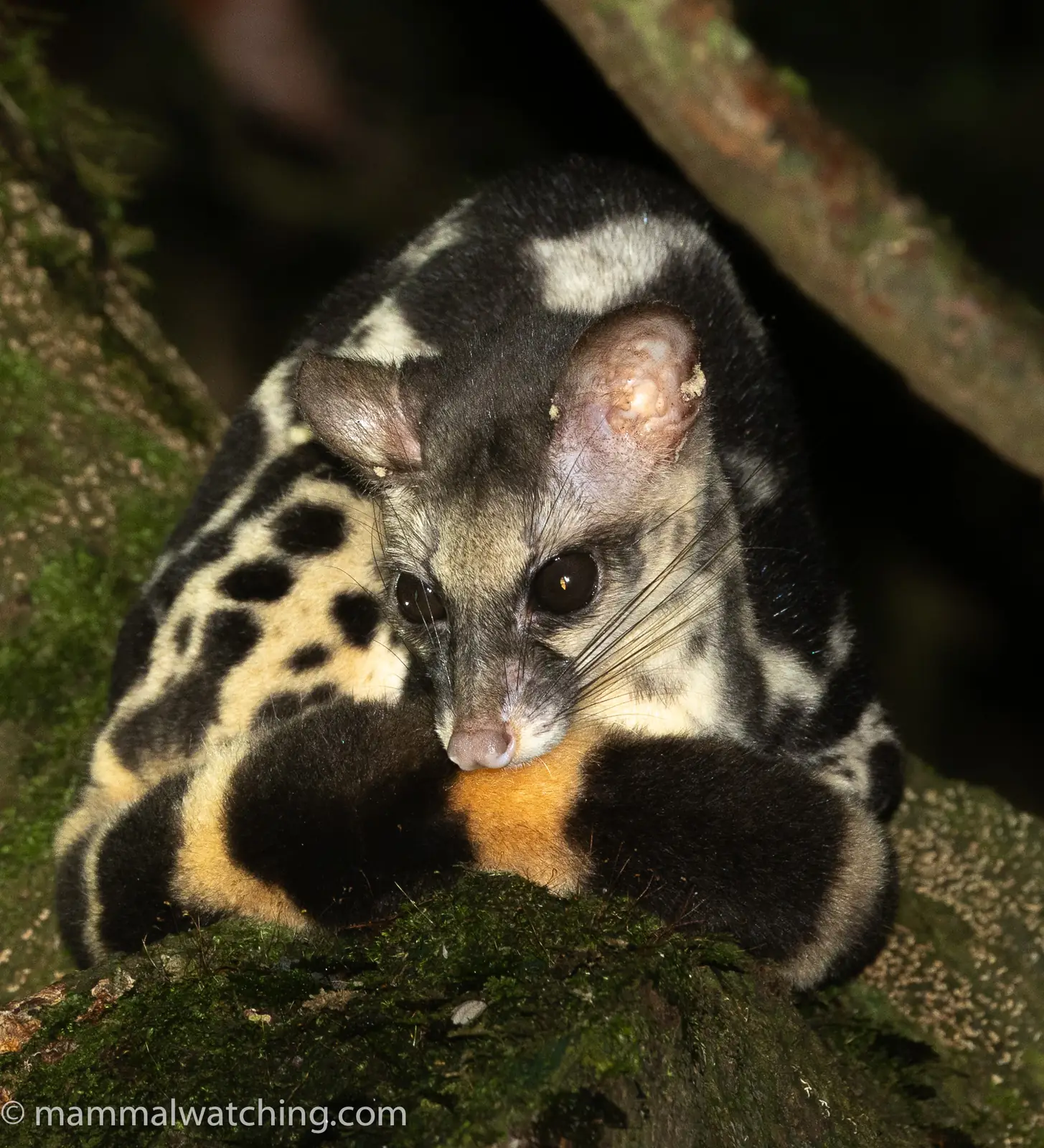
After several minutes staring at the wrong tree, I realised Fit was looking at the same animal I had found. I snapped off a photo or two. Holy crap. Banded Linsang!
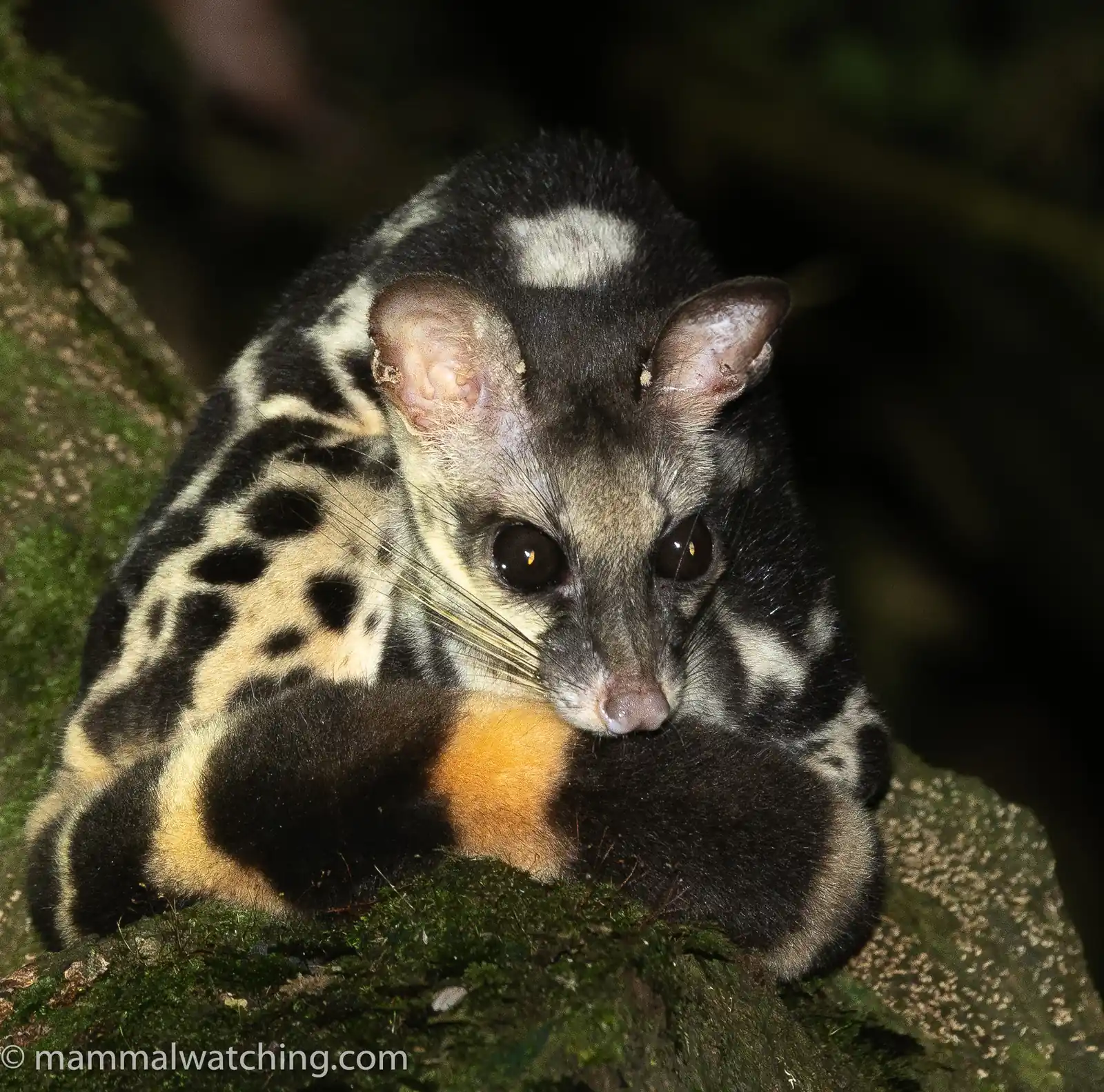
The animal, resting in the fork of a tree, was on a small island in the middle of the river. It appeared unperturbed by our lights and didn’t appear to be going anywhere. After we completed stage 1 of the photo shoot, we ditched our boots and paddled across the river, stopping just a few metres from the linsang, which looked down on us without any real interest.
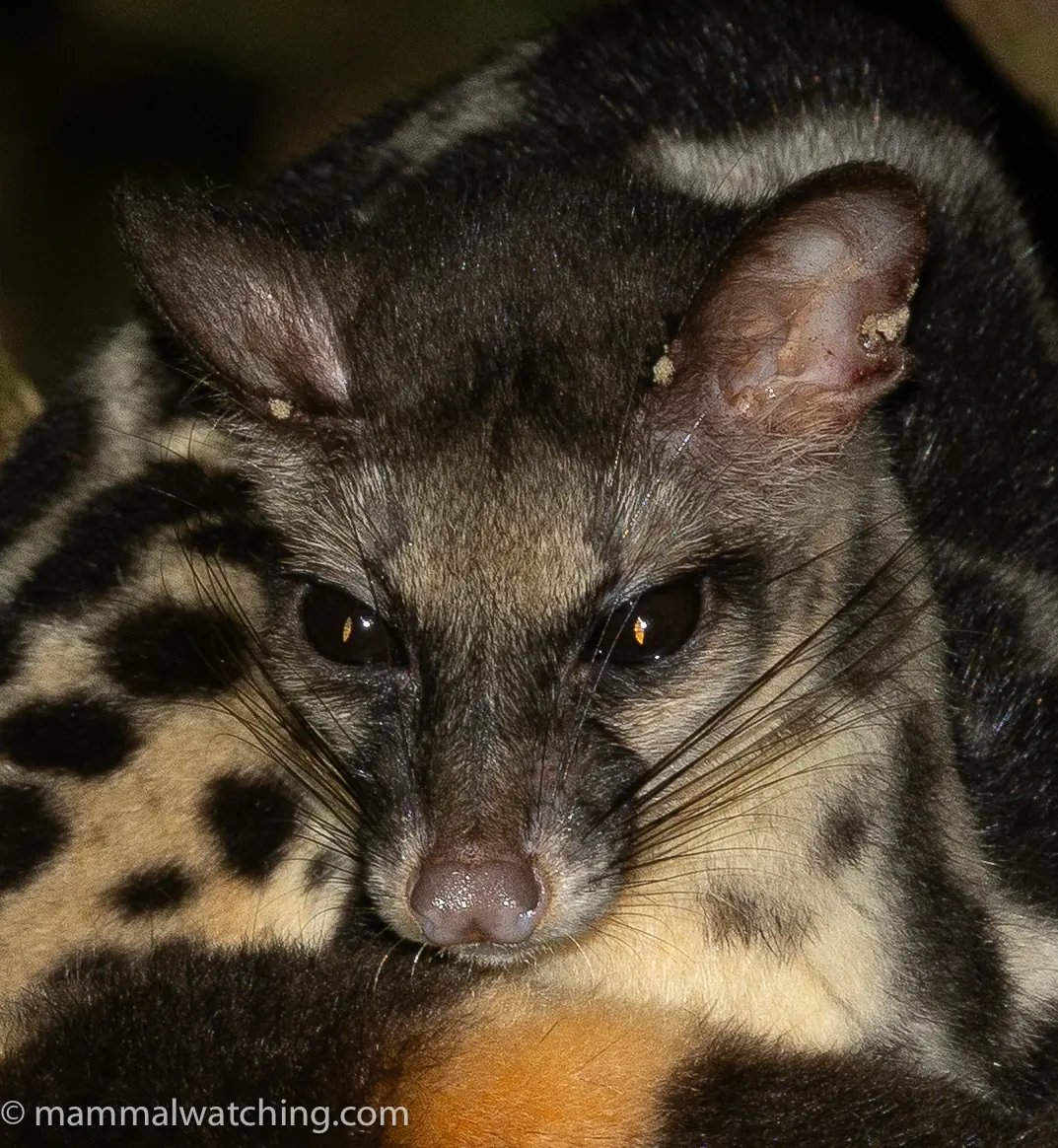
Many photos and high fives later we walked away. What a stunning little animal. It had faint eyeshine, was smaller than I expected and even prettier. Tour explained that the long striped tail – which mimics the deadly Banded Krait – is a defense mechanism. We saw a krait nearby that evening.
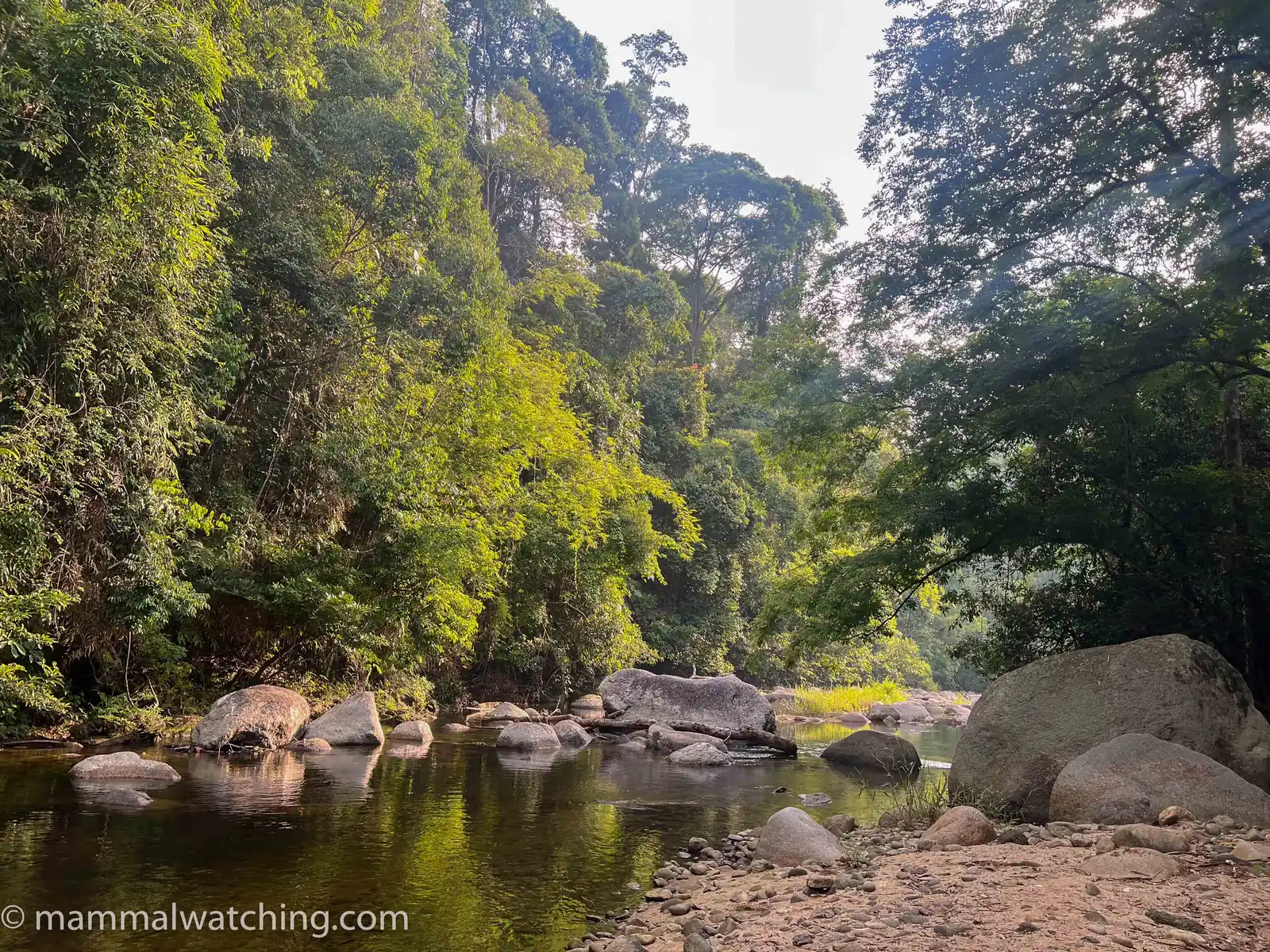
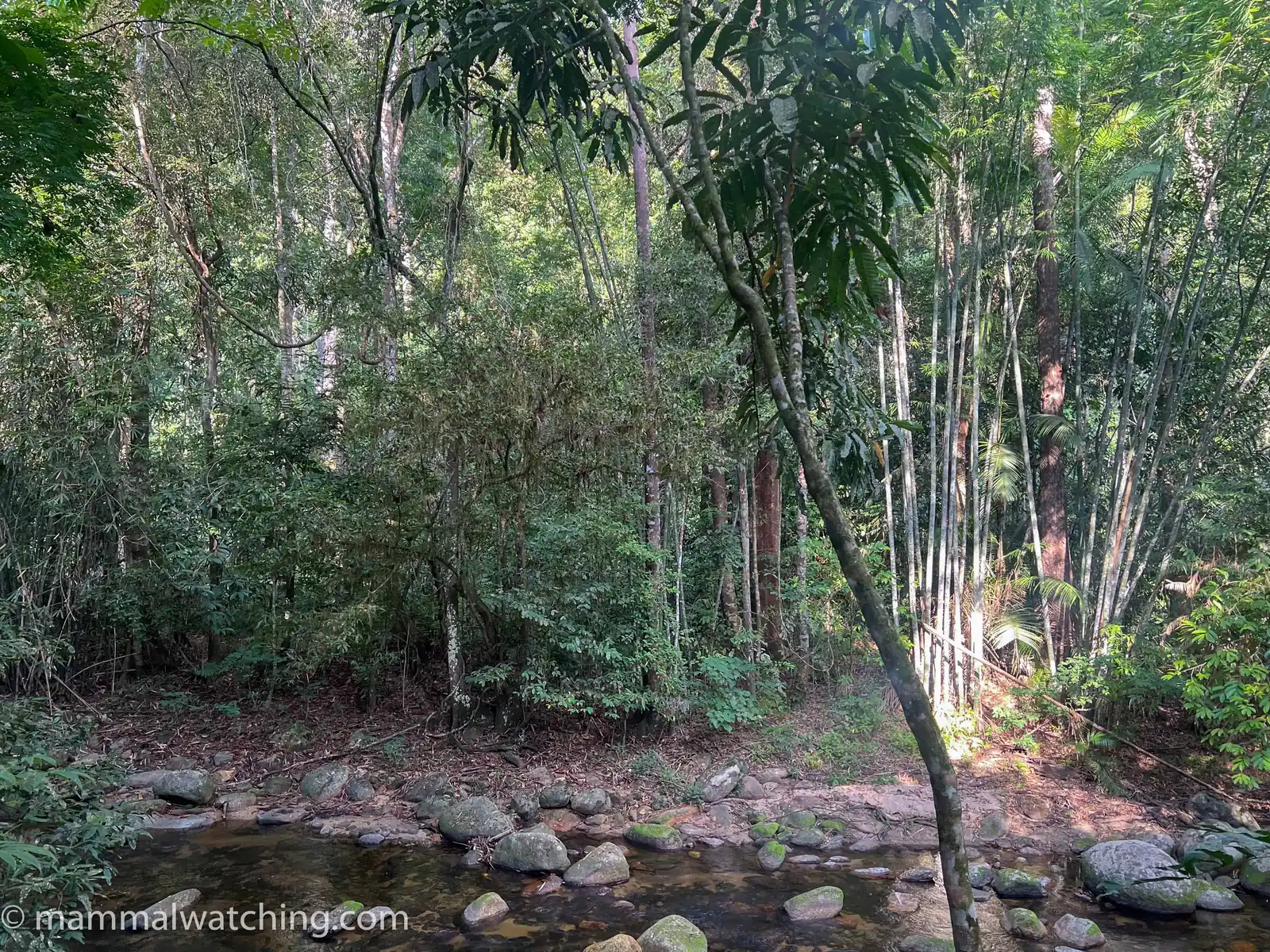
The habitat was exactly as Tour had predicted: a small island in the river among forest with plenty of bamboo.
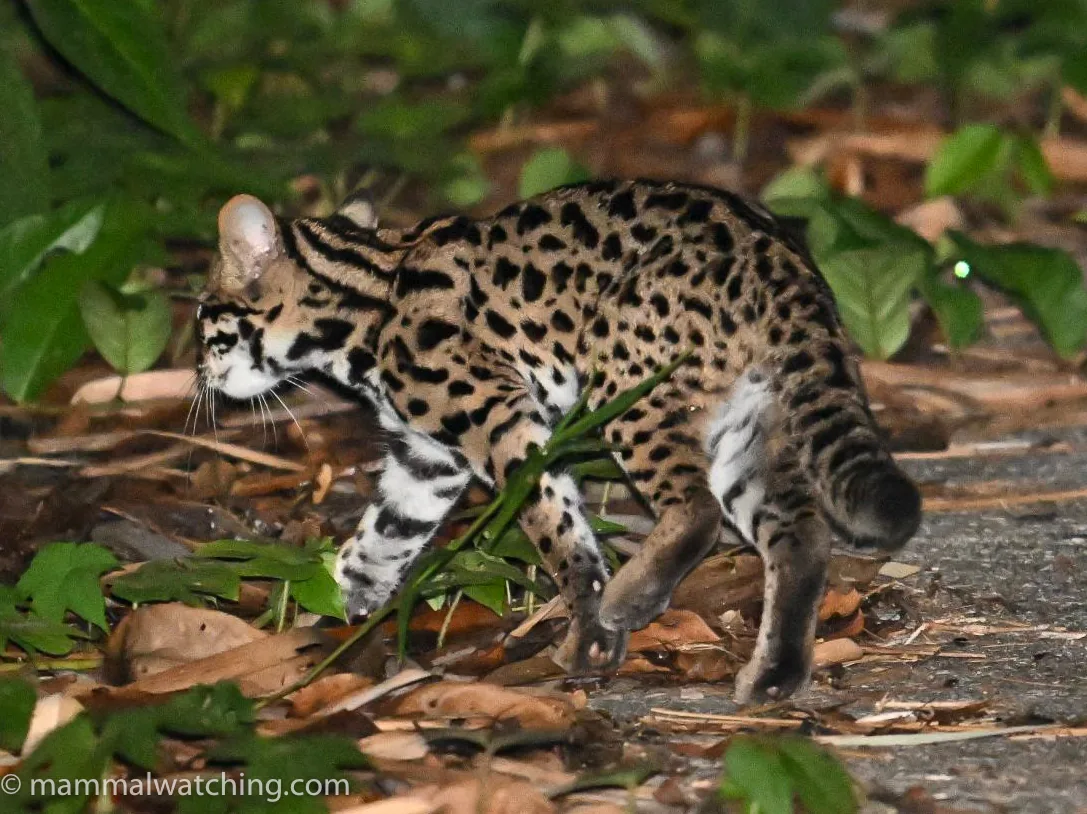
On the – now very relaxed – drive back to our accommodation we saw a Mainland Leopard Cat on the road
A tree close to the village was full of sleeping langurs, presumably Dusky Langurs, though we did not get good views.
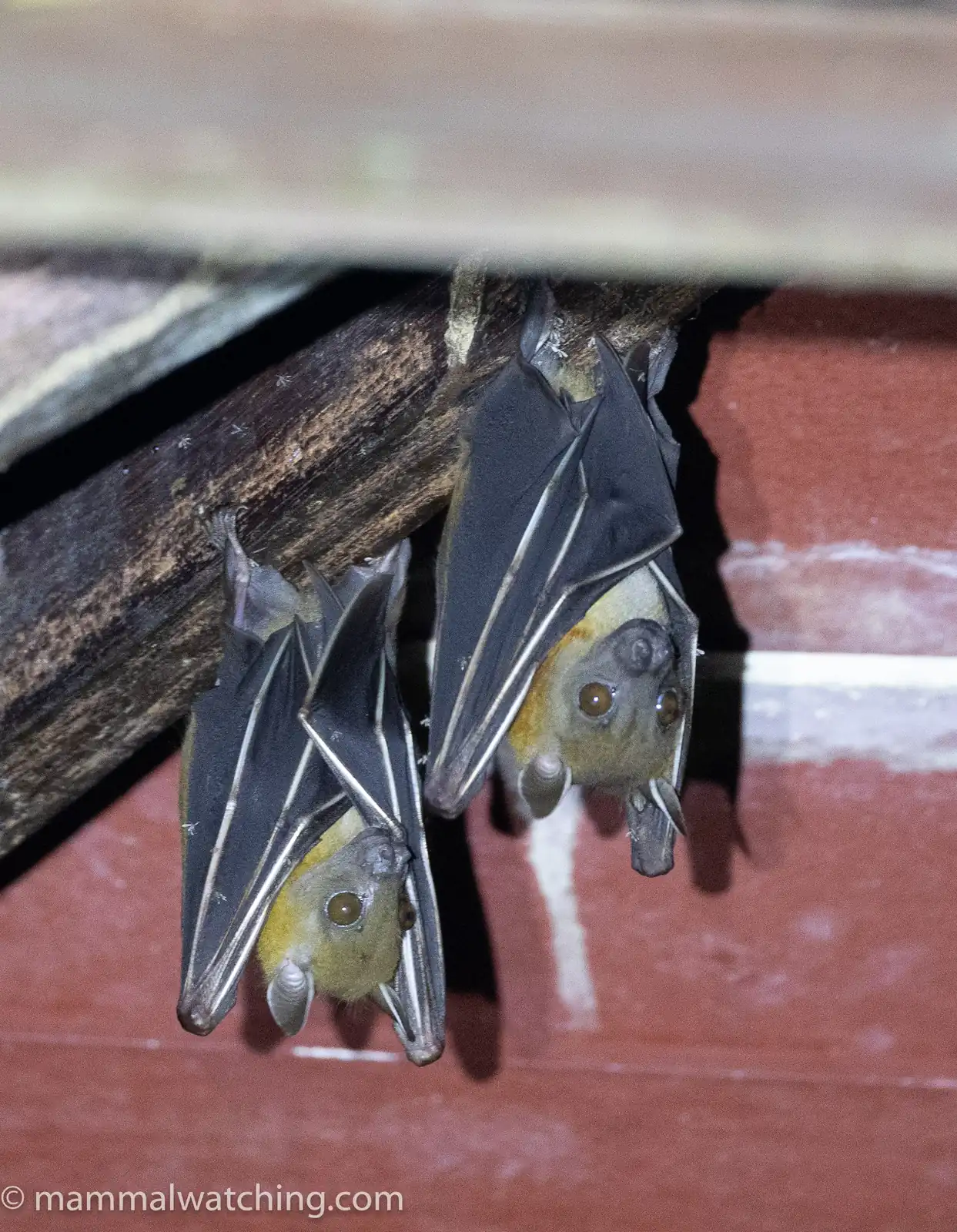
Tour had booked us in for four nights in Chulaporn but with the linsang under our belts we were ready to move on to pastures new. It was too late to cancel for the next day, so we decided to spend one more night in the village, returning to ‘Location Linsang’ the next afternoon to check out the habitat. No sign of the linsang, but there were a few roosting short-nosed fruit bats (probably Forest Short-nosed Fruit Bats) under the roof of an abandoned structure in an old campsite next to the river.
Heavy rain that evening delayed our night drive. And running into a group of elephants walking along the road cut it short. The other excitement that evening was a small shrew very close to our accommodation. Everyone saw it but me. And they saw it well enough to think it was likely a Sunda Shrew. Damn!
Narathiwat Province
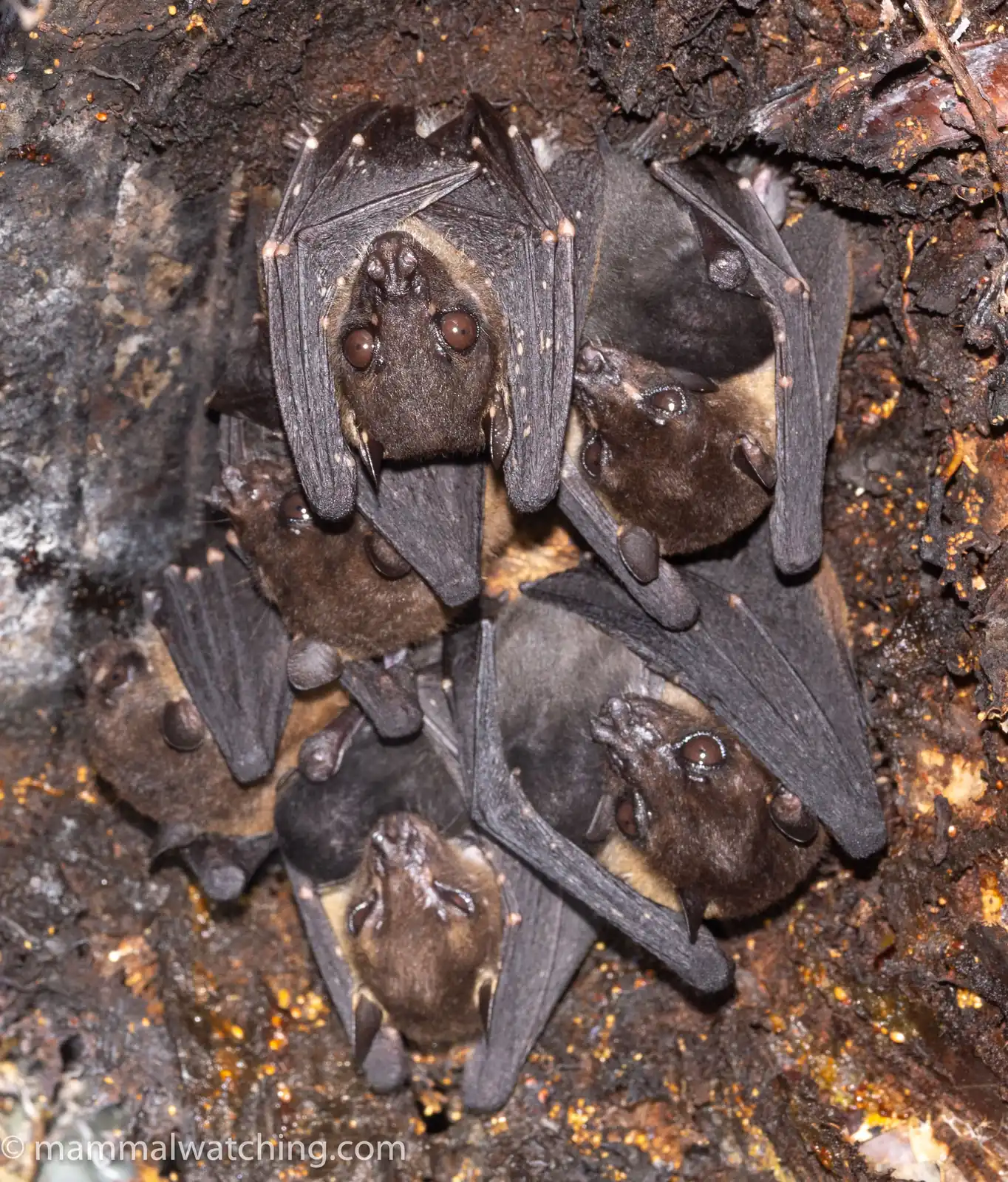
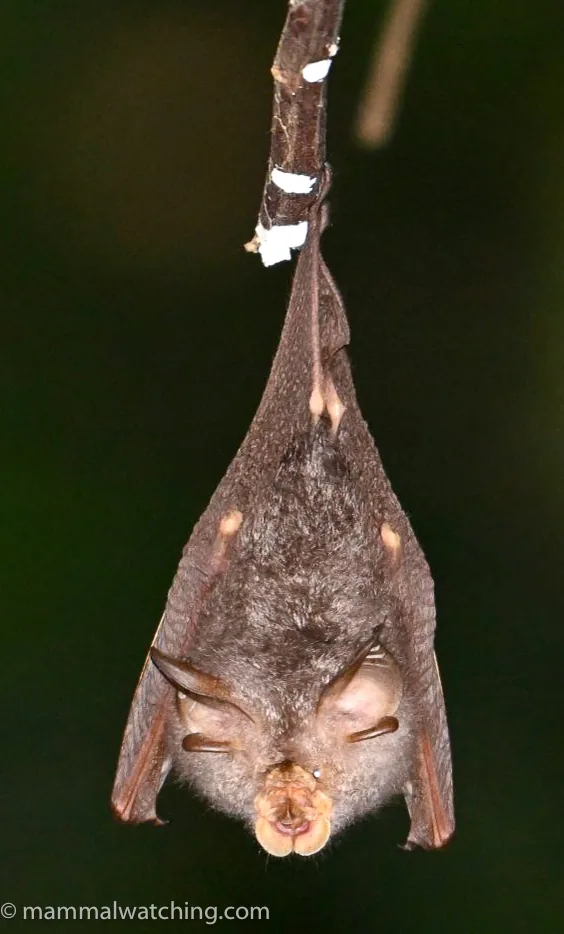
Back at the start of the trip, as we were about to leave Hat Yai, Jirayu had made the mistake of mentioning he knew a spot where Malayan Spotted-winged Fruit Bat roosted. But then he said “it would mean a long detour and we probably wouldn’t have time”. A rookie error from a guide who had apparently forgotten exactly which people he was guiding. Needless to say we – well manly Stuart and I- started convulsing at the prospect of a new genus, and announced that no amount of a detour should stand in our way.
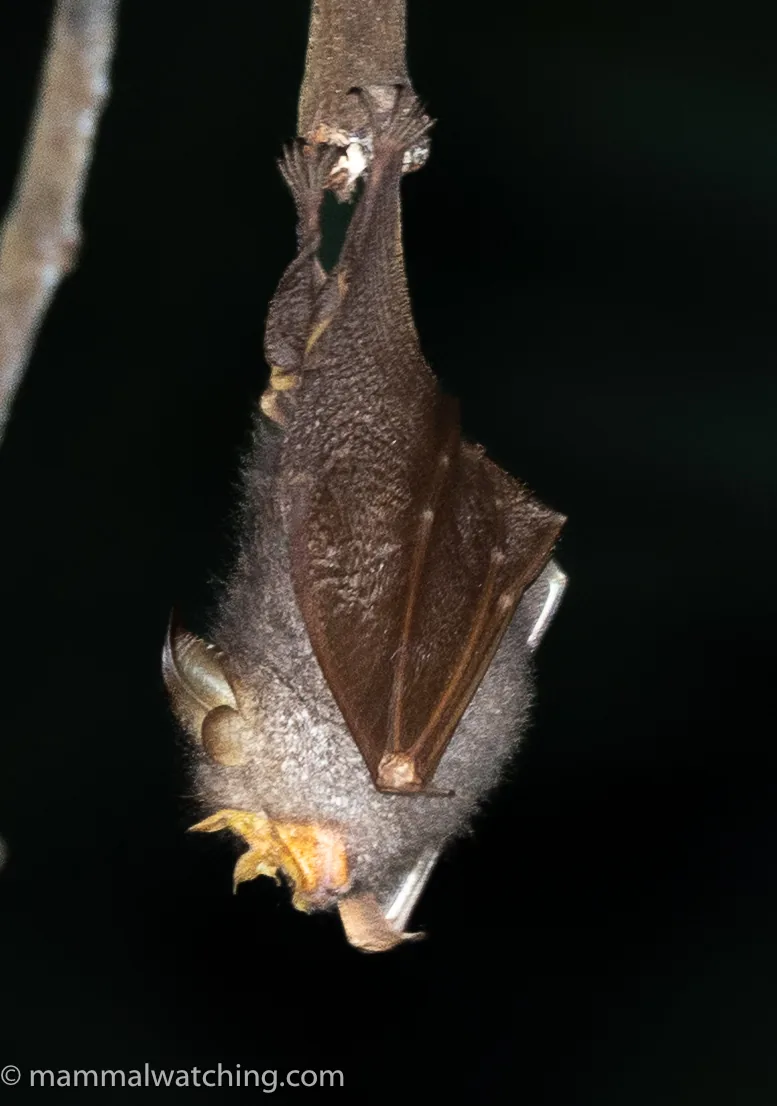
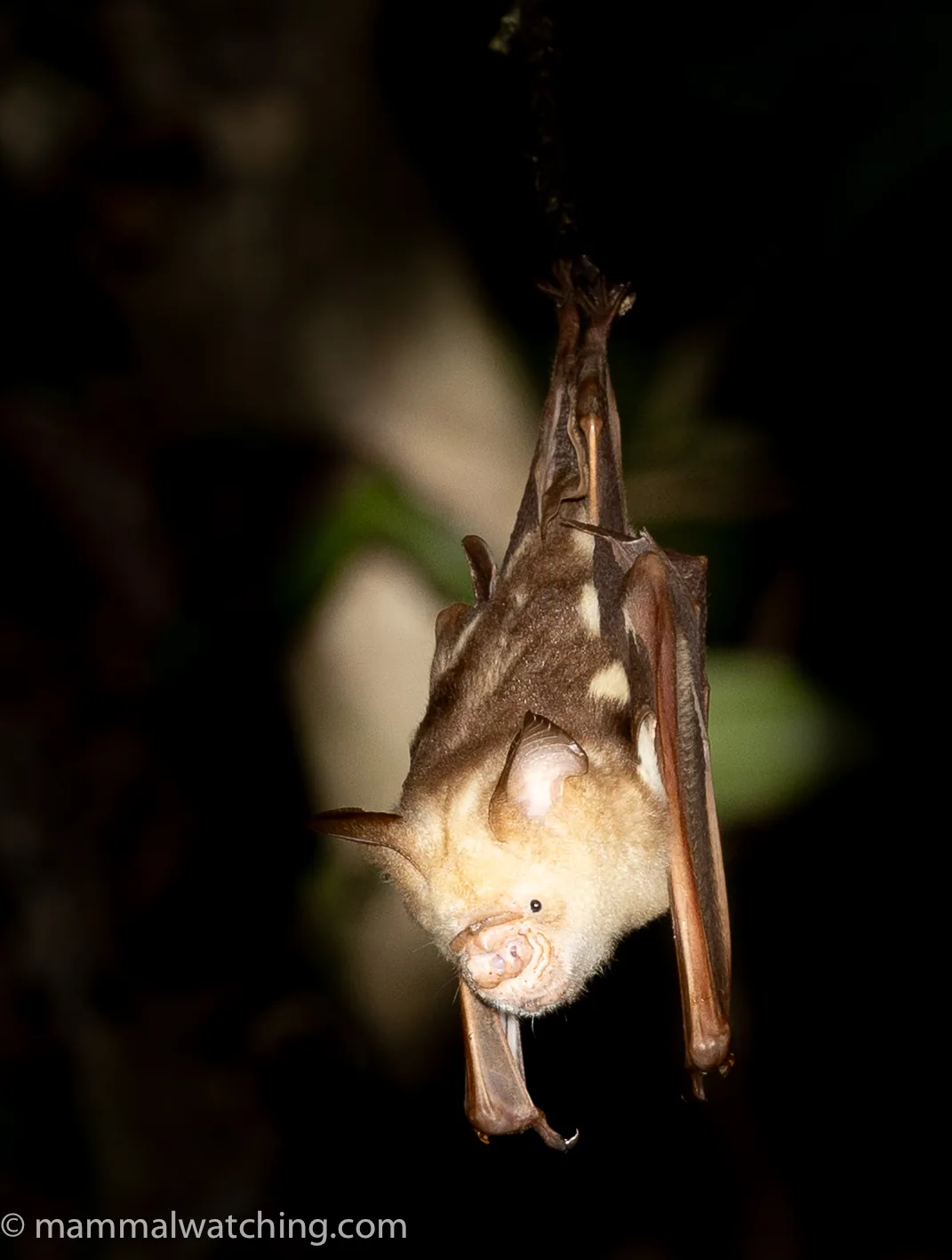
We left Chulaporn early, and by lunchtime we were looking at a small colony of these tiny fruit-bats that Jirayu had discovered roosting under the eaves of a small building near the main entrance of Hala Bala. A gorgeous little bat – one of the smallest fruit bats in the old world – and one which Malaysian bat guru Juliana Senawi had never seen roosting in anything manmade. She told me they usually roost in abandoned termite mounds or other natural structures.
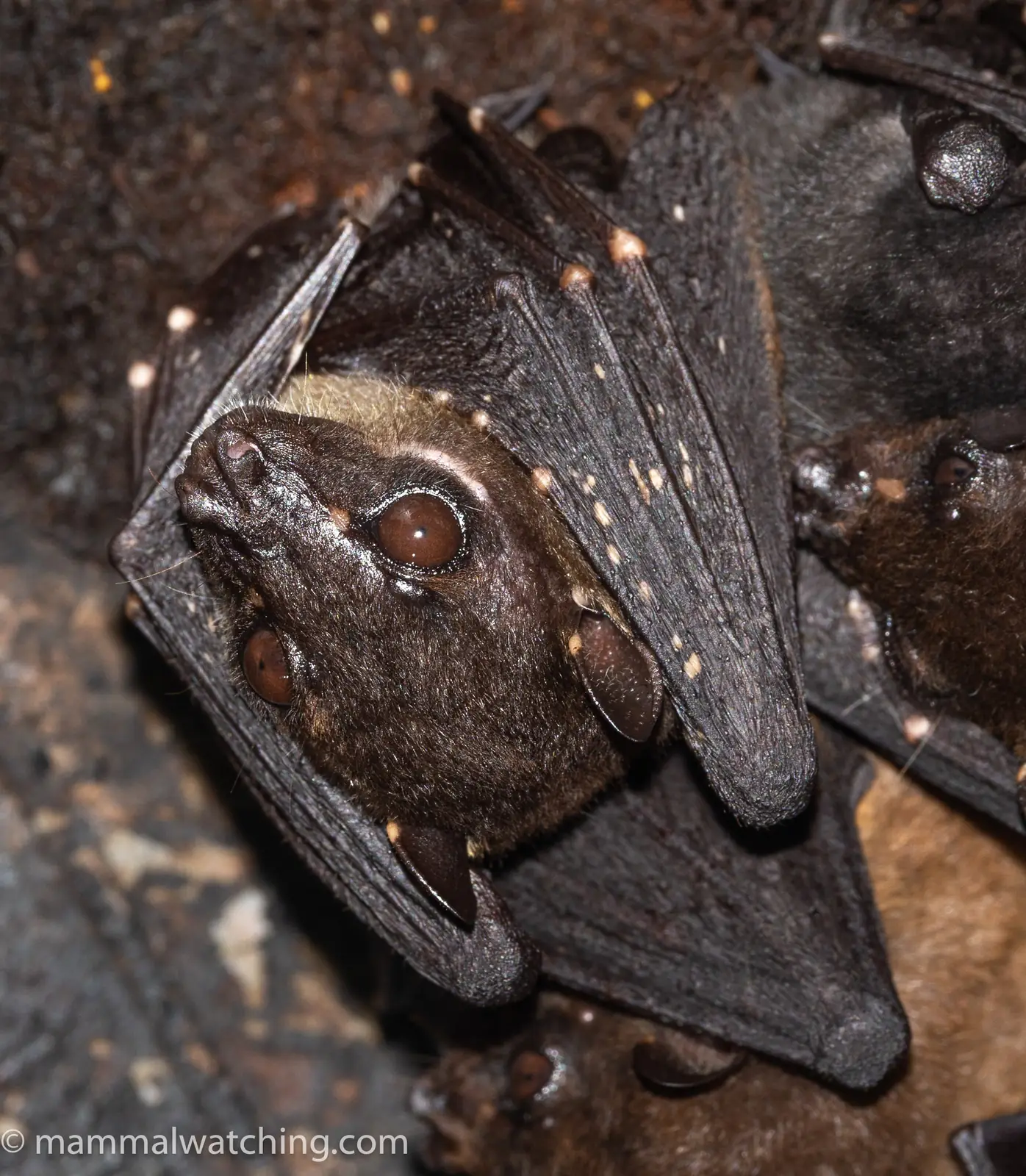
Hala Bala, which I last visited in 2010, is one of my favourite parks in SE Asia. Back in the day, the park team used to catch bats every night, and the long road through the park was excellent for spotlighting. Friends saw an Asian Golden Cat wandering along the road for instance. The security situation around the park is still quite tense, the batting has largely stopped, and you are not allowed to drive the road at night anymore.
We were staying on the other side of the park, close to a plot of land right on the Malaysian border that Wild Encounter Thailand have bought and plan to open an ecolodge.
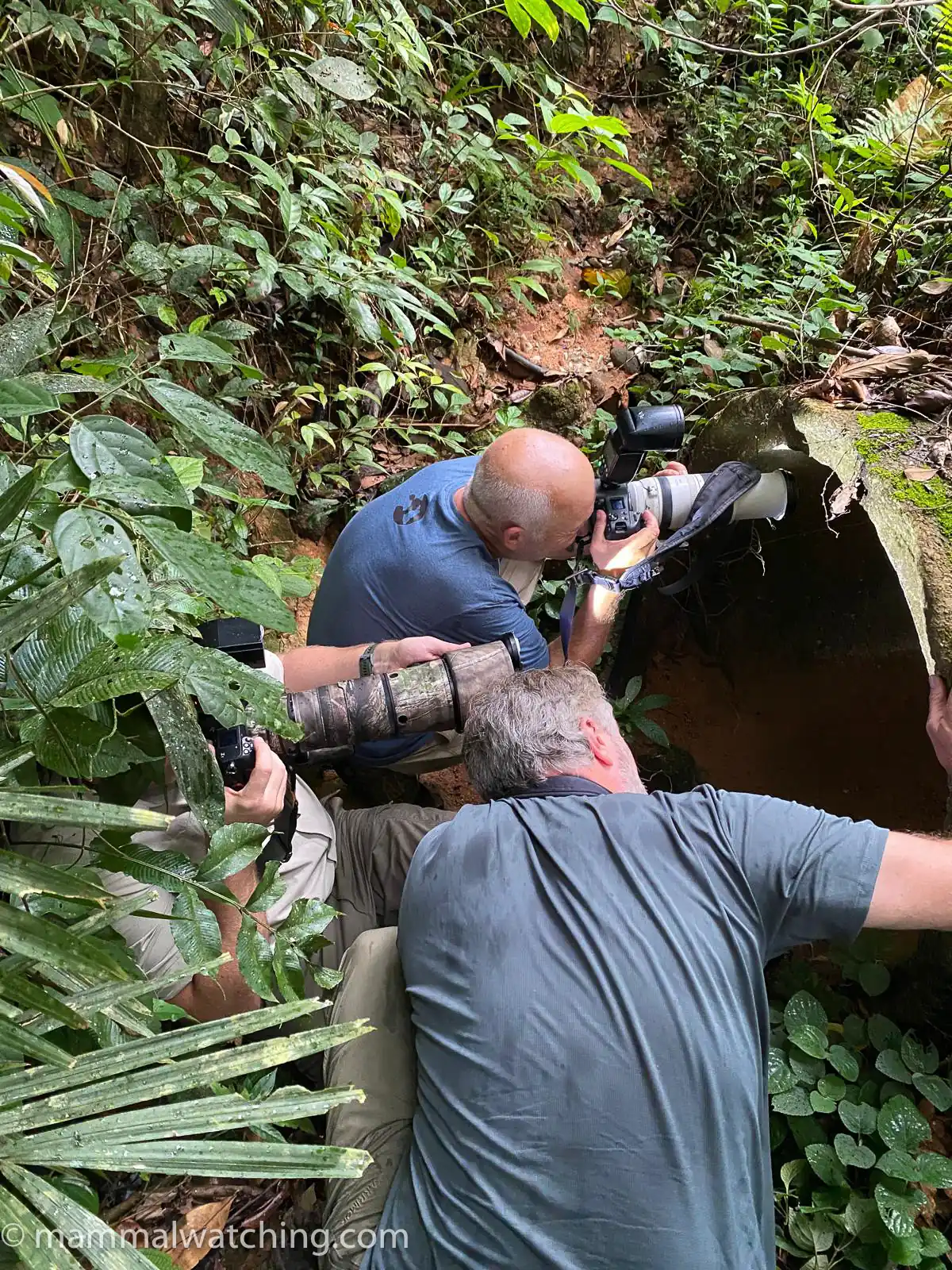
It was a slow drive through the park as we stopped at every culvert to check out the bats. Tour knows the culvert and the bats very well and we saw all the species he predicted other than Malayan Slit-faced Bats.
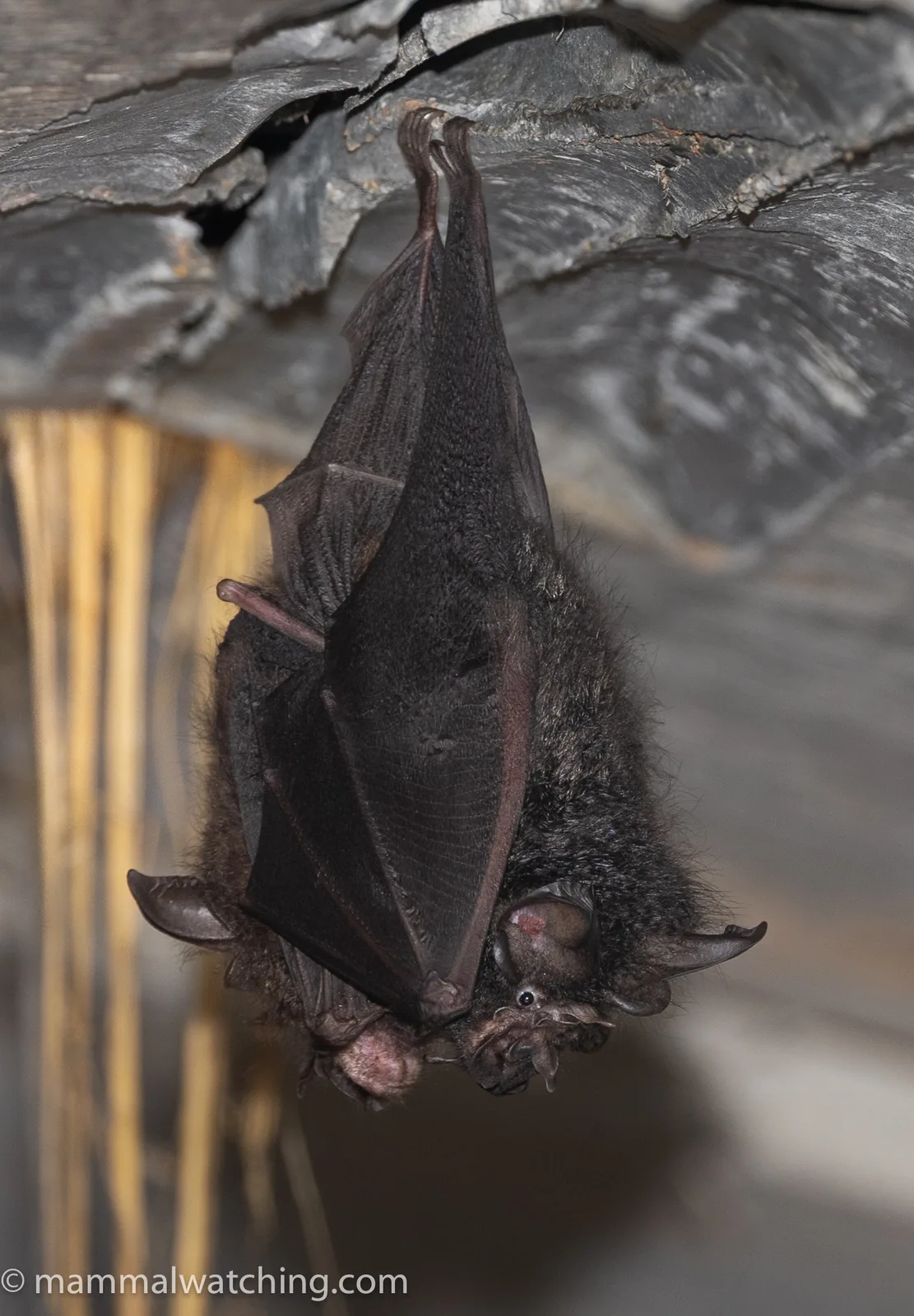
We saw these Malayan Woolly Horseshoes well. Satisfying to photograph the lifer we had first seen – but not photographed – around Bang Lang NP. An impending thunderstorm added to the urgency of our journey, and made the light even worse for photography.
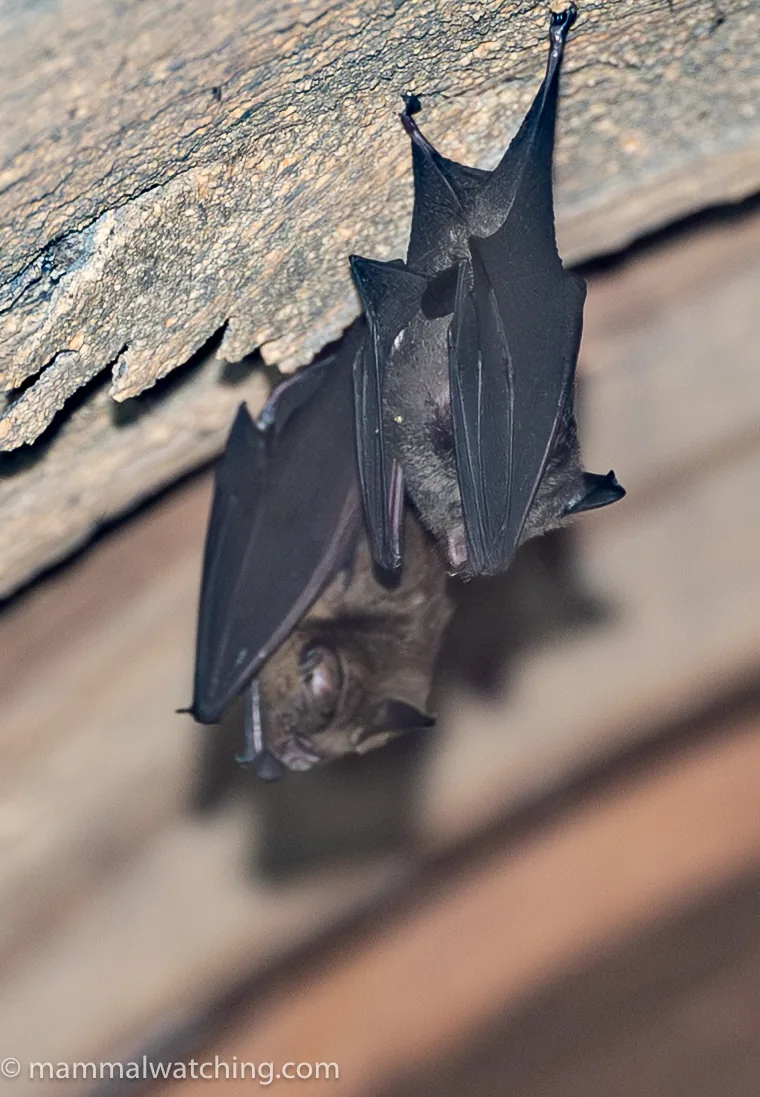
These Dayak Roundleaf Bats were harder to photograph.
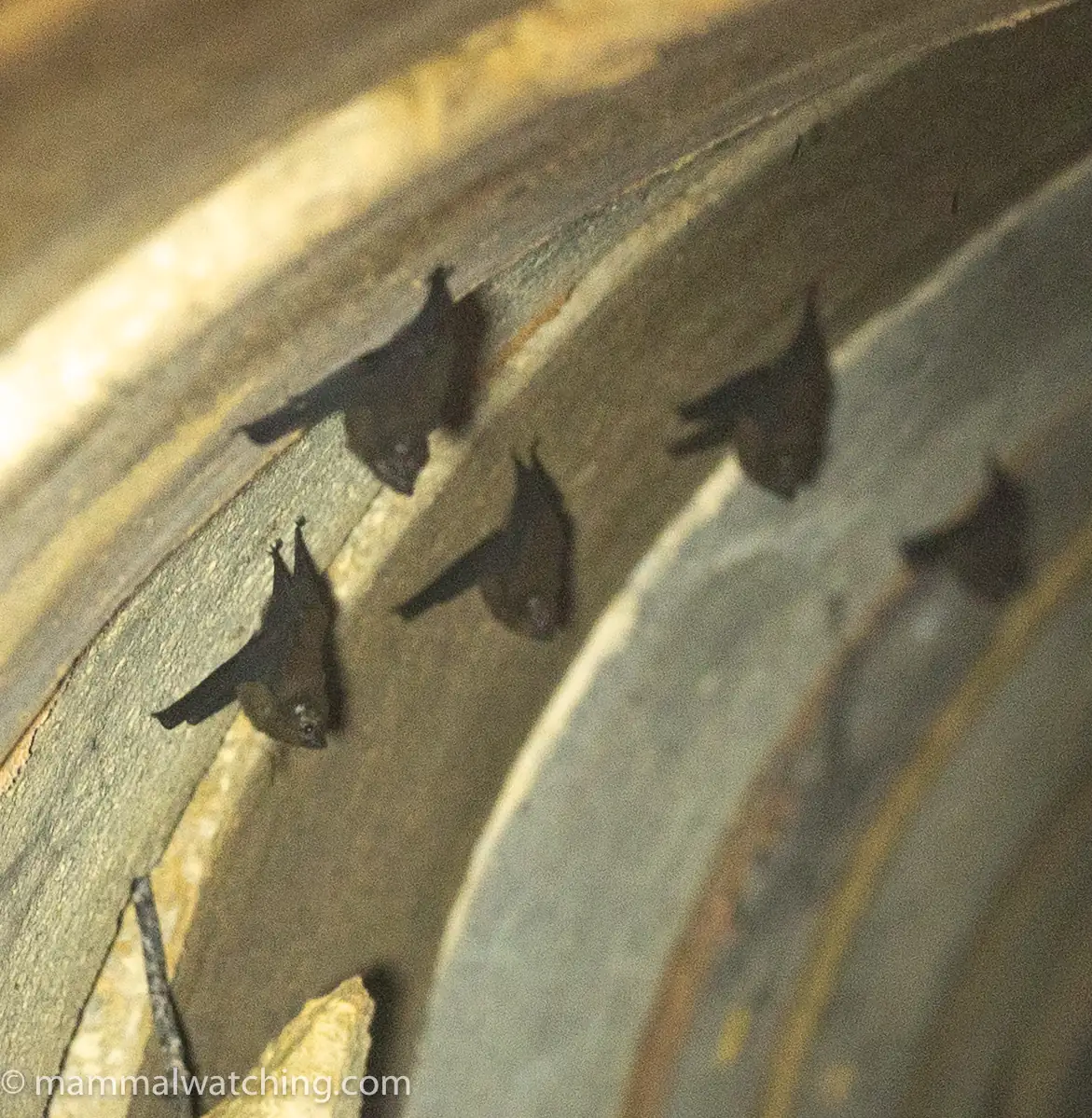
And these Lesser Sheath-tailed Bats harder still.
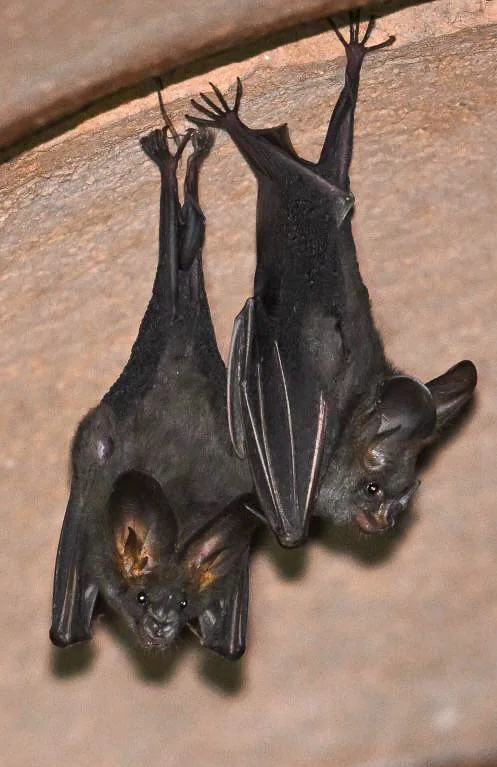
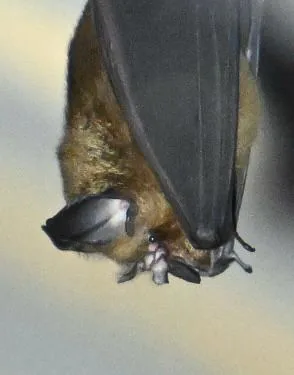
Only Nick was able to get half-decent pictures of these Lesser False Vampires and this Intermediate Horseshoe Bat.
The rain started bucketing down and we gave up on the culverts. A fallen tree was blocking the road near the park exit so we had to return and take the long way to our hotel. The spotted-winged fruit bat detour was even longer than anticipated. But well worth every kilometre.
The rain continued into the night and so we decided to go to bed early and take a pre-dawn walk through the forest near Tour’s land.
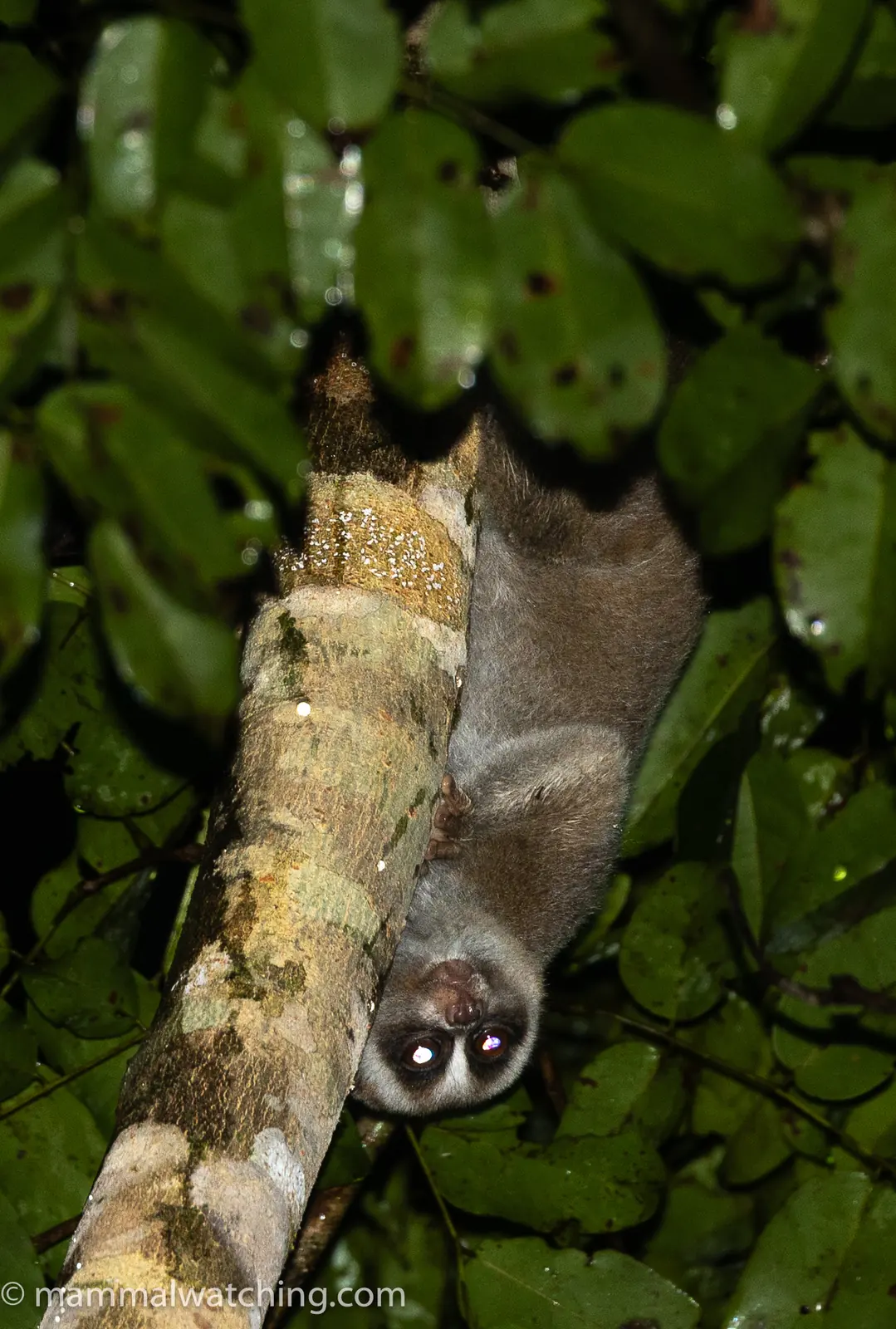
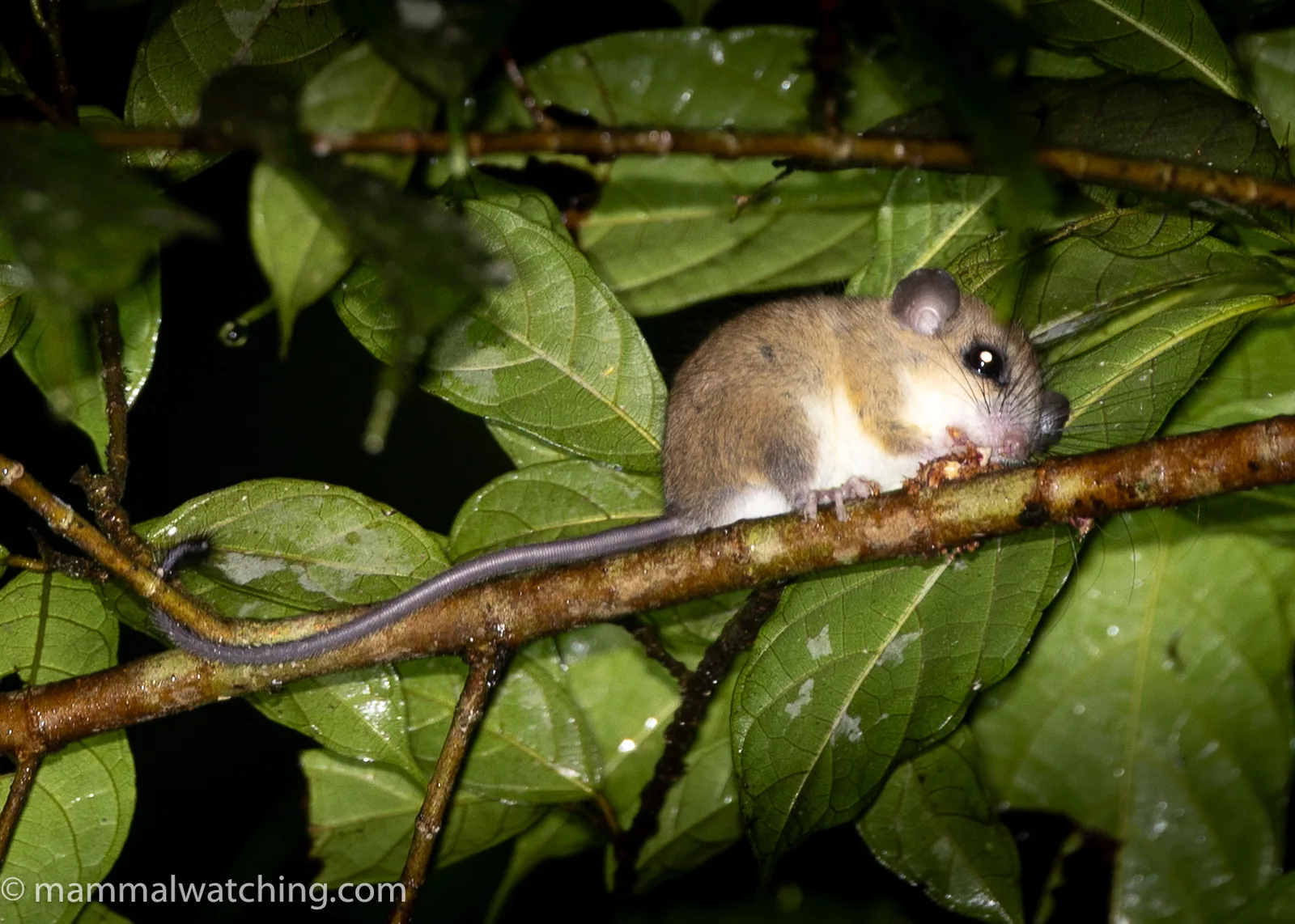
A Malaysian Slow Loris was the highlight of our walk from 4-6am, along with a cooperative Indomalayan Pencil-tailed Tree Mouse, which unlike those we saw at Bang Lang NP, had a visible tuft at the end of its tail.
The tree was still blocking the road into the park so we were unable to visit a lookout platform that Jirayu said was often good for Shrew-faced Ground Squirrel, a species I had been hoping for. We spent an hour instead searching for other squirrels around a temple near the park entrance. But the forest was quieter than usual and we saw only some skittish Black-striped and Slender Squirrels.
Songkhla Province
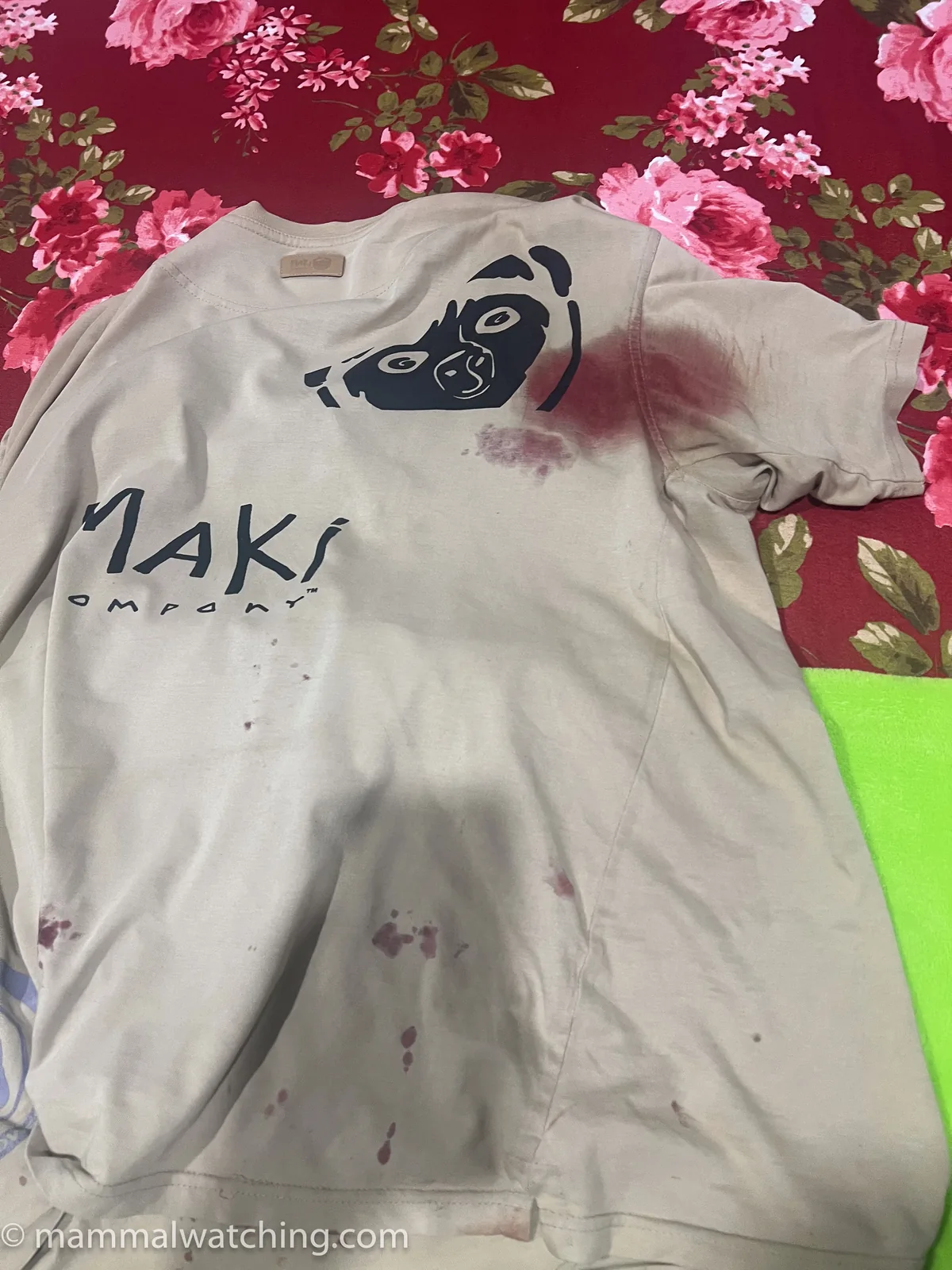
We spent our last night at a ranger station in Pha Dam Forest, on the western side of the peninsula, but still close to the Malaysian border (near Thale Ban National Park). Jirayu had never spent a night here and was excited, imagining the place might be a “Thai Deramakot”. It was not. At least not the night we were there. The habitat looks great, and there is a good trail into the forest from the ranger station that we walked for a couple of kilometres.
But there were few mammals. I suspect the leeches had eaten them all. It has been a long time since I have encountered as many leeches. When we finished our walk we competed to see who had the grossest blood-stained clothing. Stuart’s leech socks – ironically – won.
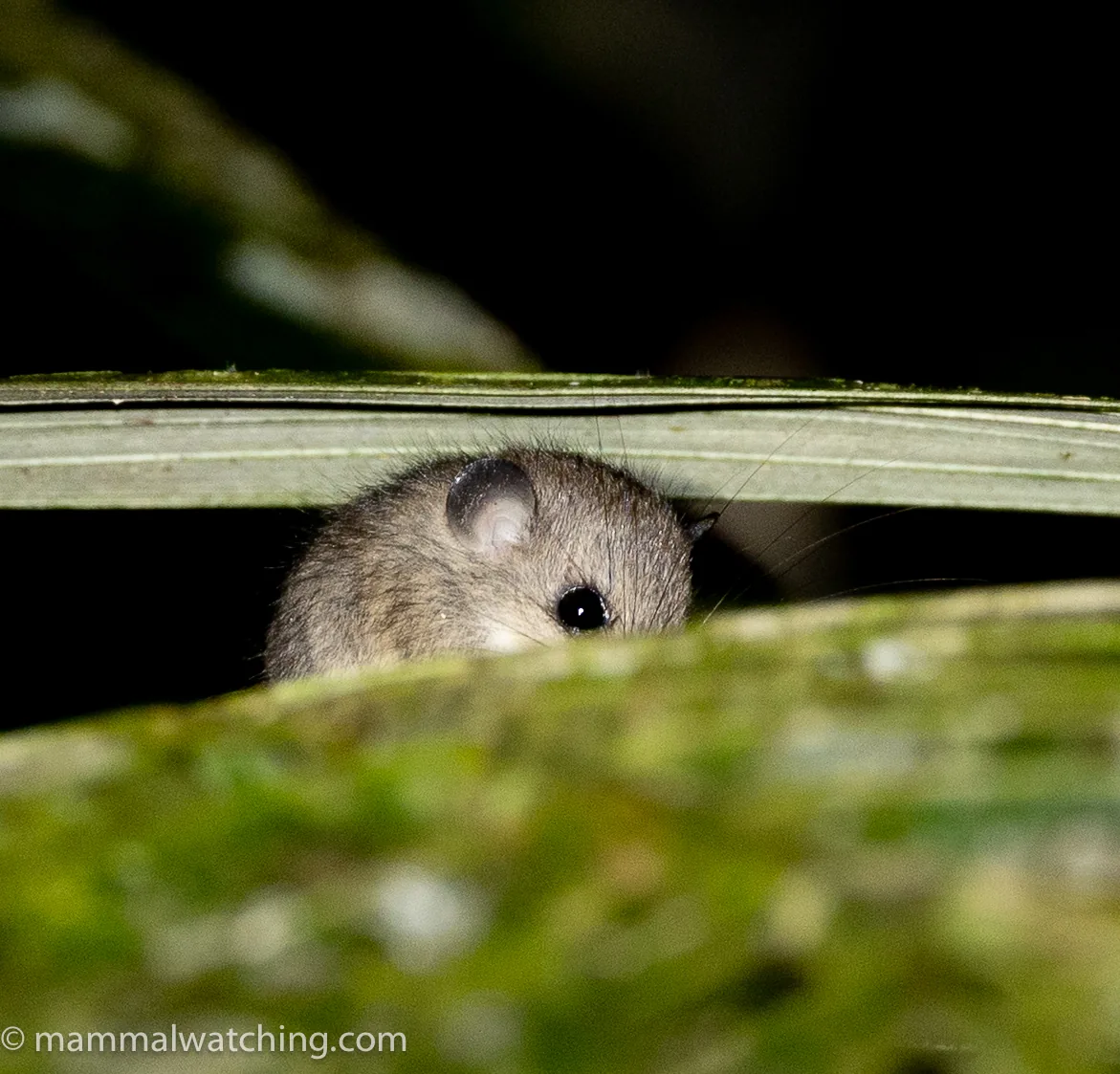
The only mammals that night were a Malaysian Slow Loris, Indomalayan Pencil-tailed Tree Mice, Diadem Leaf-nosed Bats and an unidentified Nivienter rat, as well as a few Long-tailed Macaques around the accommodation. The forest has potential for sure, and I wouldn’t want to give up on it. The rangers had recently seen Malayan Tapir and Sunda Pangolin for instance, while Tour found fresh Golden Cat tracks when he had visited for a couple of hours a few months earlier.
Satun Province
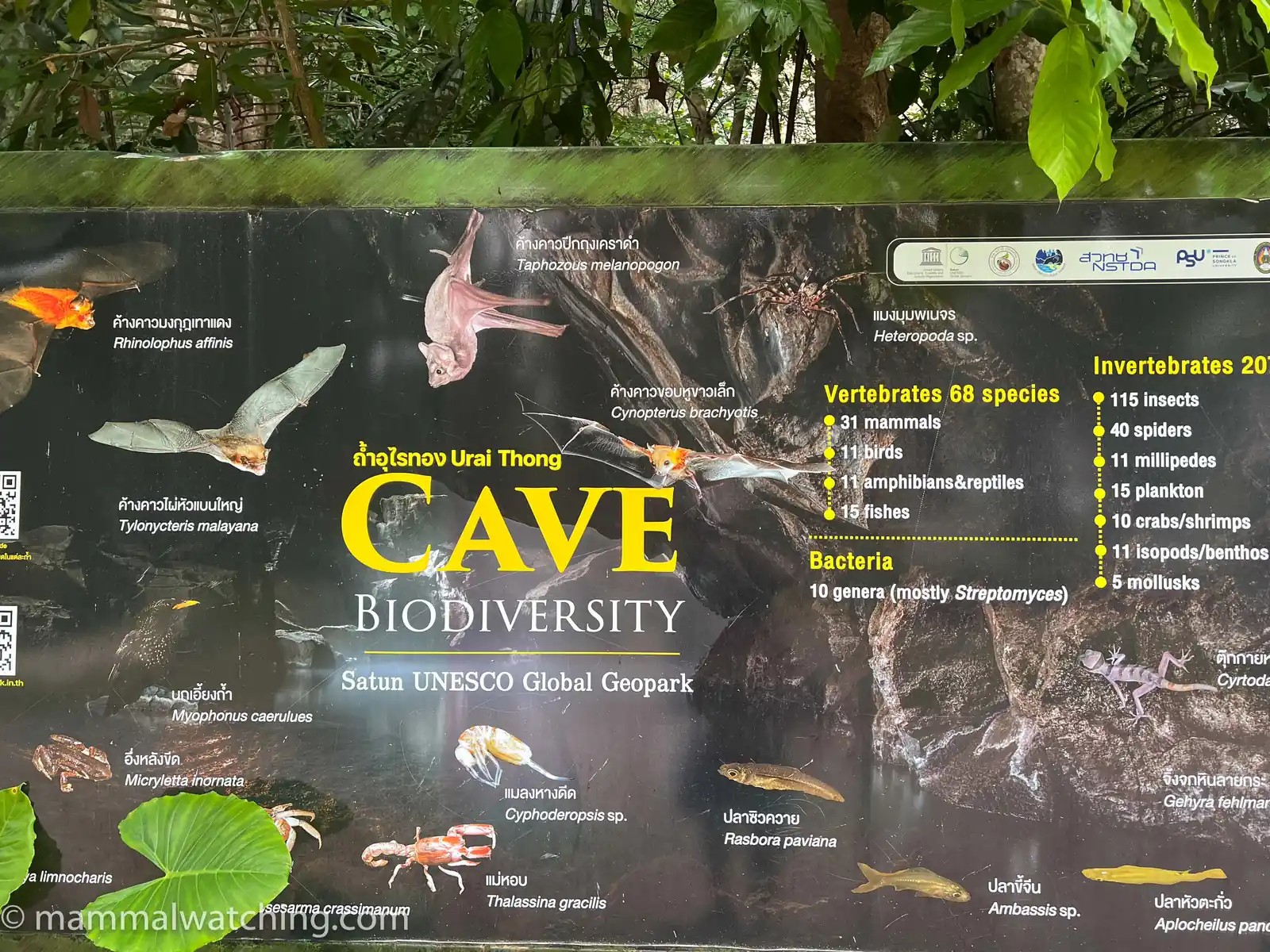
Driving back to Hat Yai on our last day we stopped in at a final two bat caves to check them out.
Phu Pha Pet Cave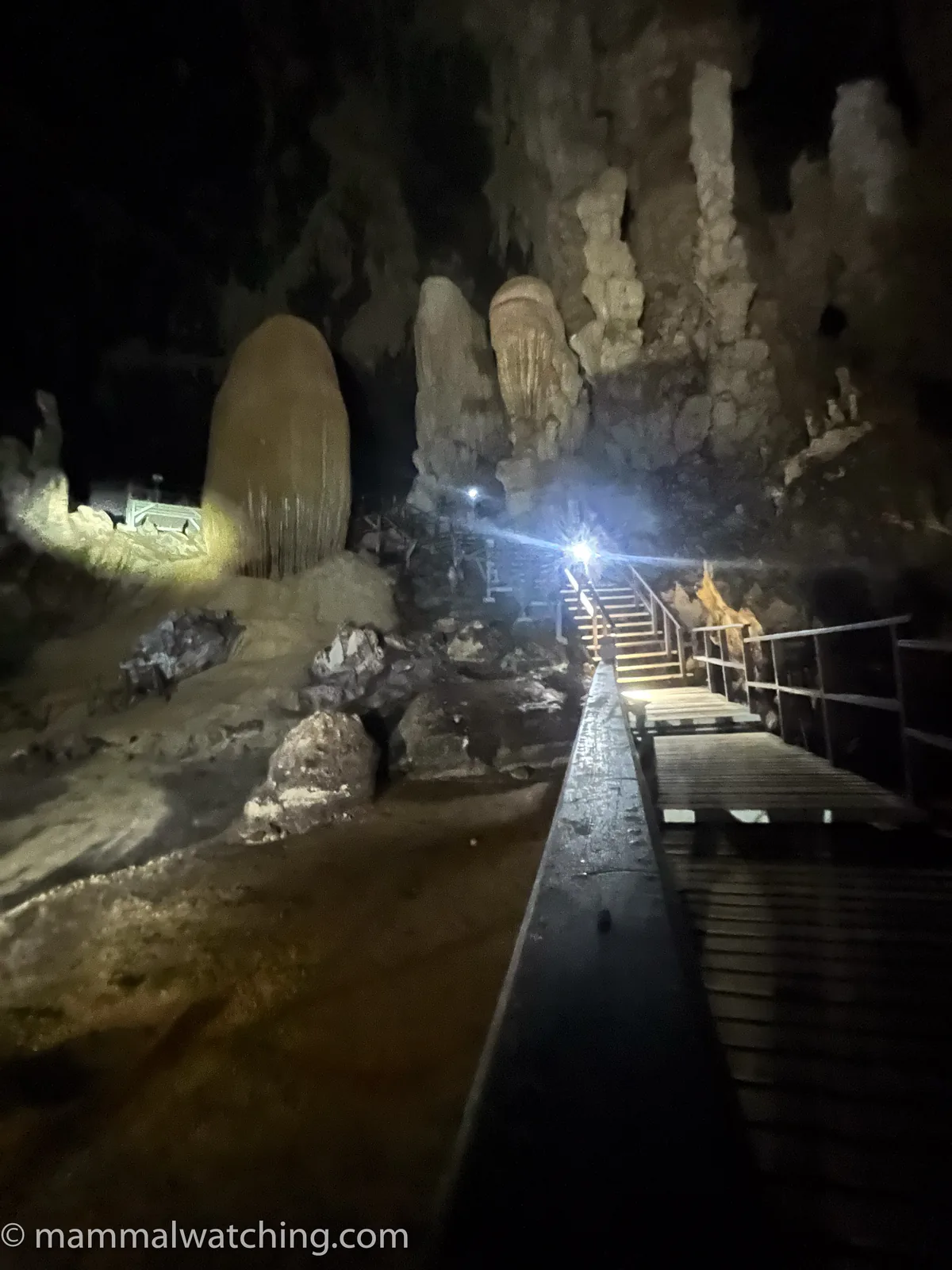
Phu Pha Phet Cave is a monster. Apparently Thailand’s largest cave, and the 4th largest cave in the world.
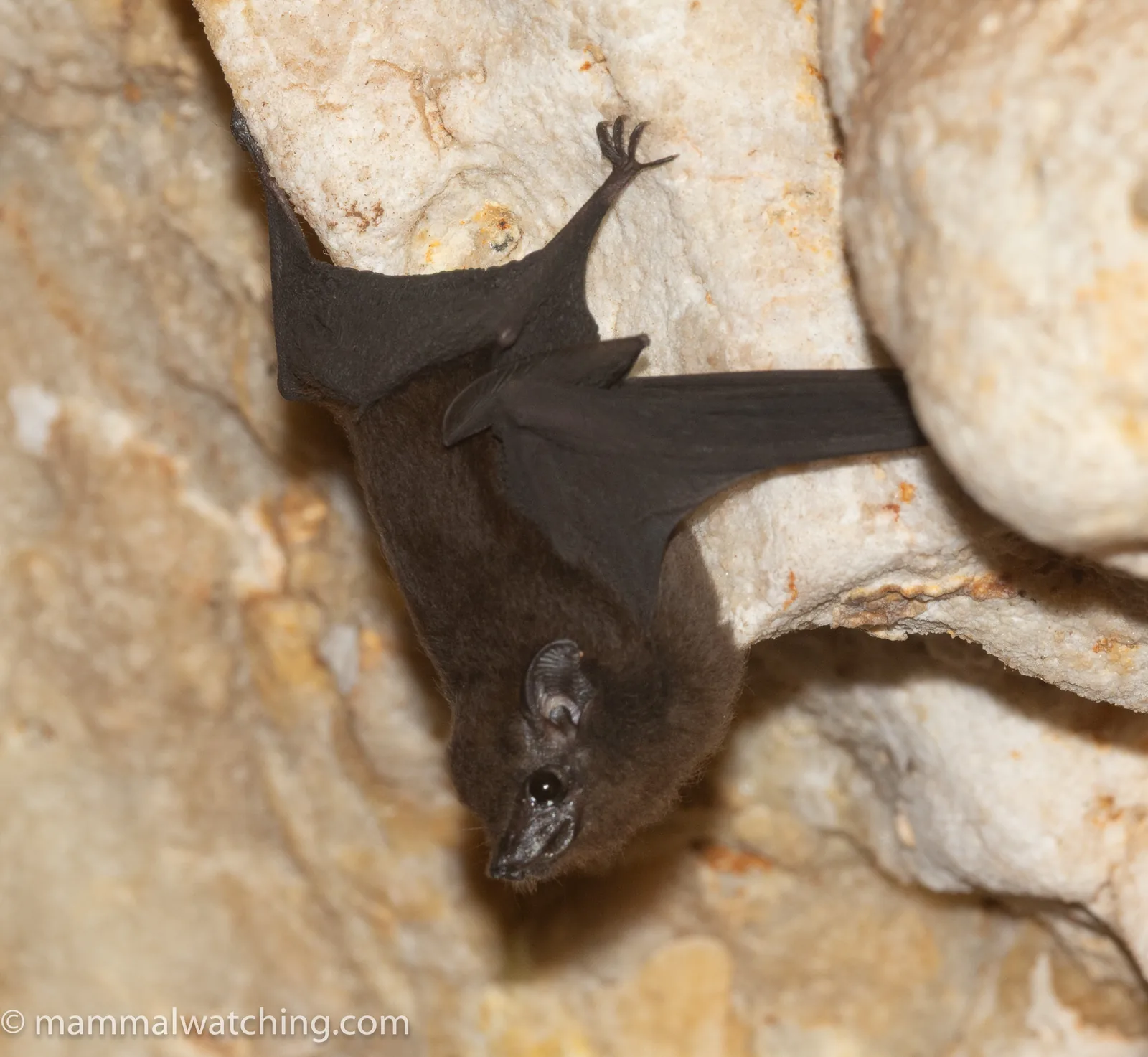
Using the ratio of bats seen per calorie expended, it is also one of the most disappointing. The cave tour involves about a thousand stairs, and we saw only a handful of Greater Roundleaf Bats, some Lesser Asian Sheath-tailed Bats and a cluster of Lesser Short-nosed Fruit Bats.
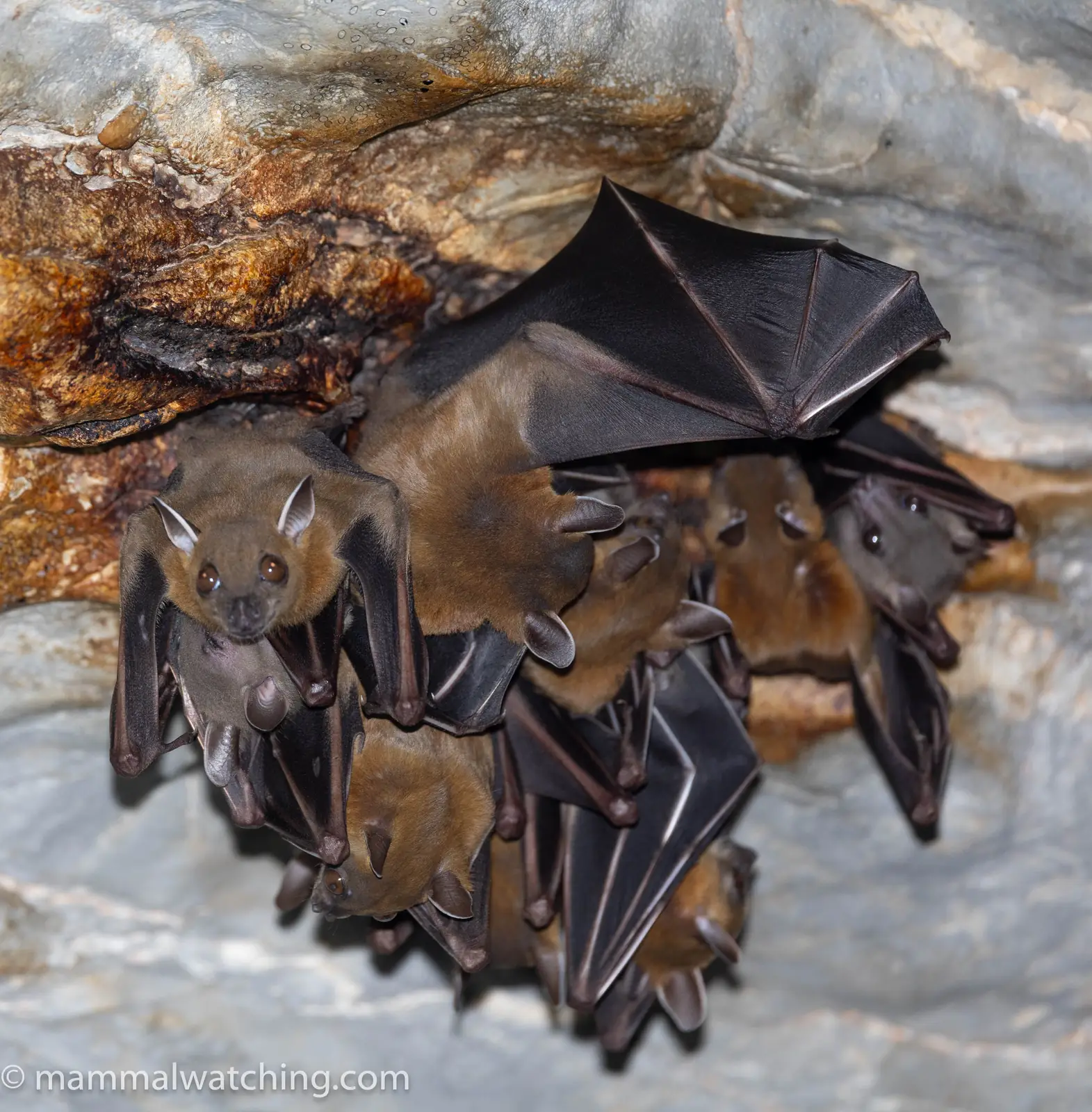
Apparently the park had recently installed floodlights, and the bats had either left or moved deeper into the system.
Urai Thong Cave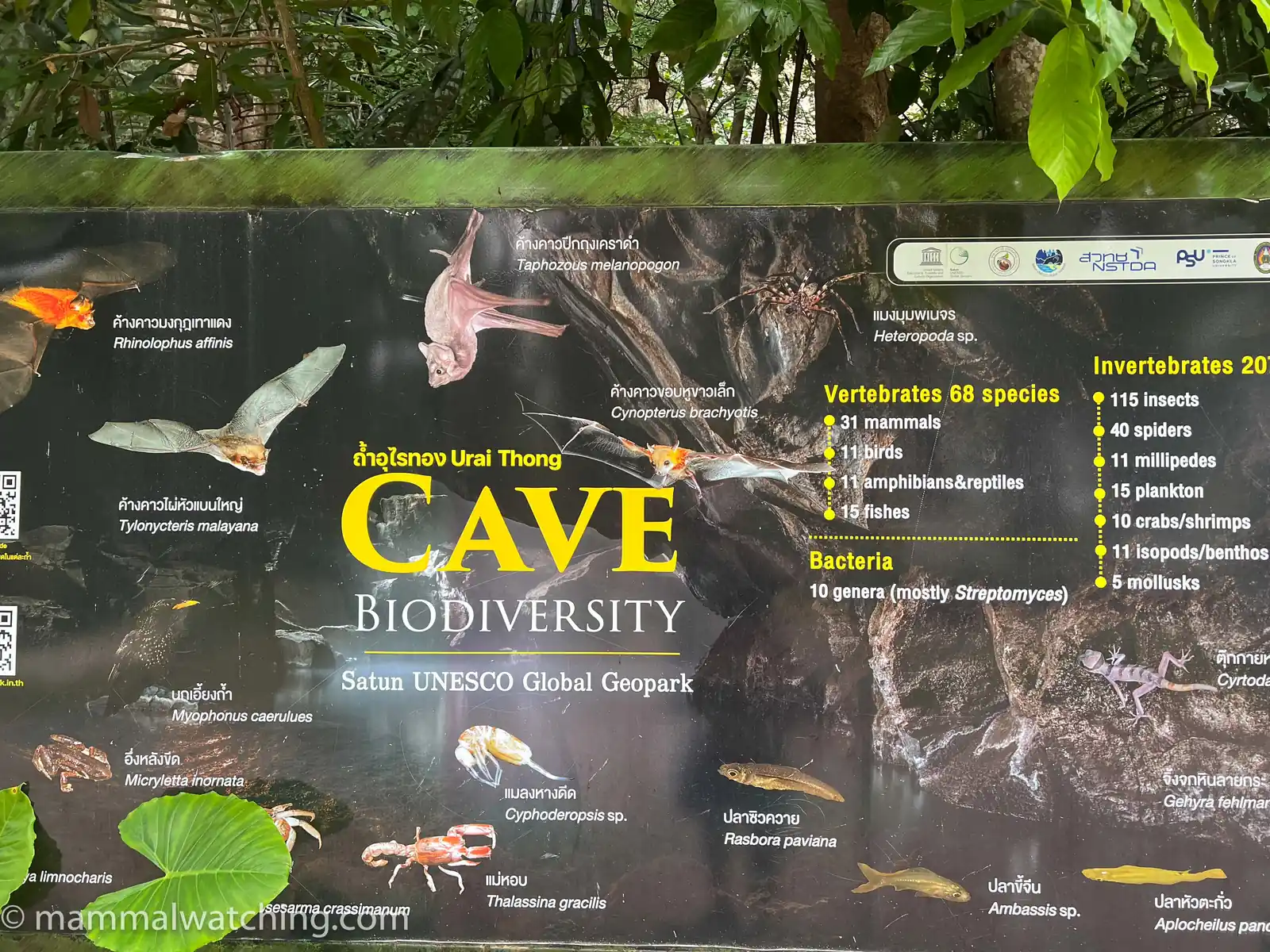
Urai Thong Cave was the polar opposite. It was small, didn’t require a guided tour and was full of bats. In 20 minutes we saw three species.
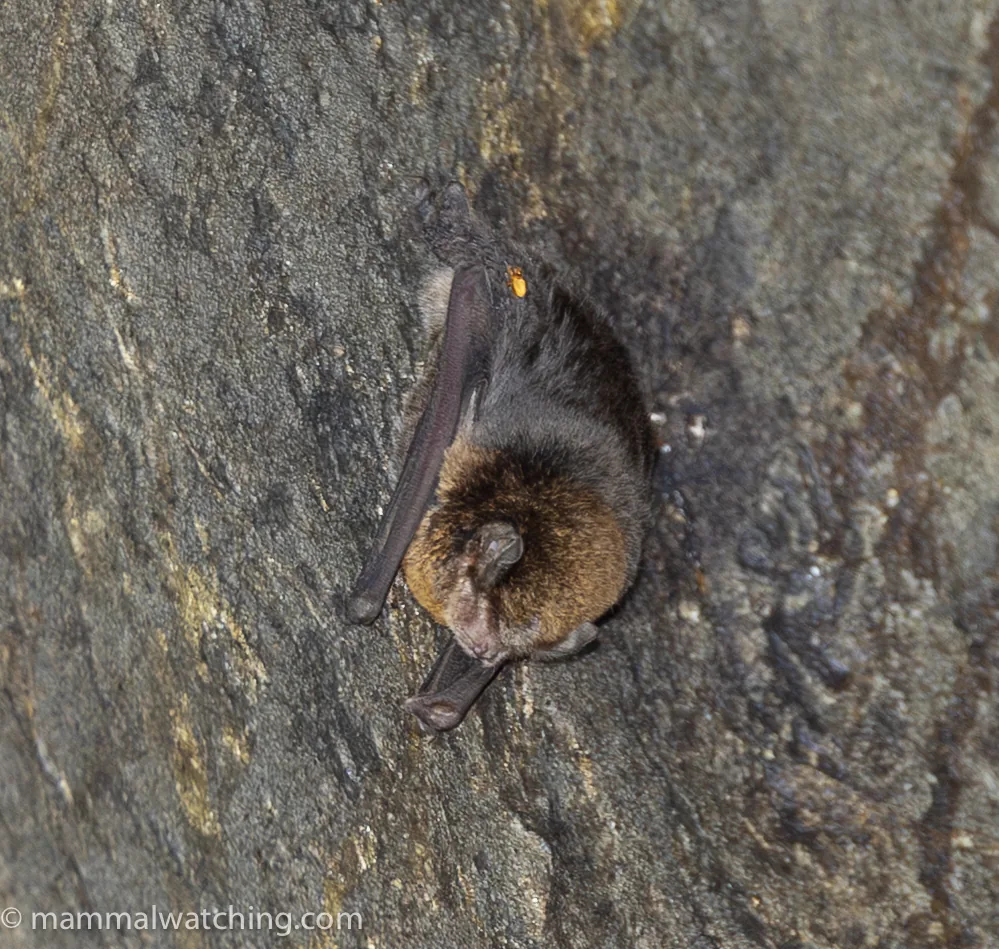
We thought at first that the large colony of small vespertilionids must be bamboo bats because that is the only vesper bat mentioned on the sign board. But, as I suspected, bamboo bats don’t use caves, and Pipat identified these as Intermediate Bentwing Bats. They didn’t feature on the sign because they didn’t have good pictures at the time.
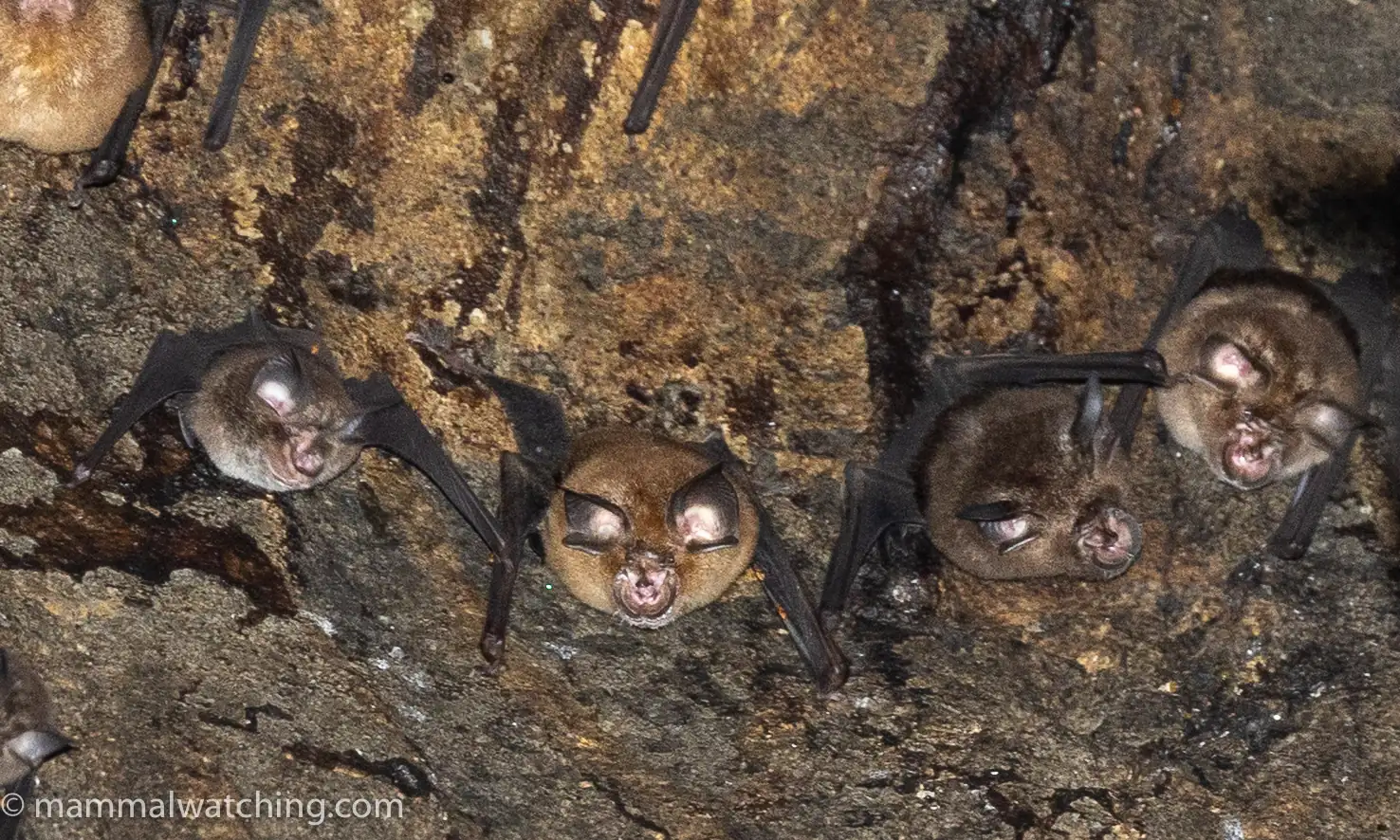
There were also plenty of Intermediate Horseshoe Bats, some Forest Short-nosed Fruit Bats and Black-bearded Tomb Bats.
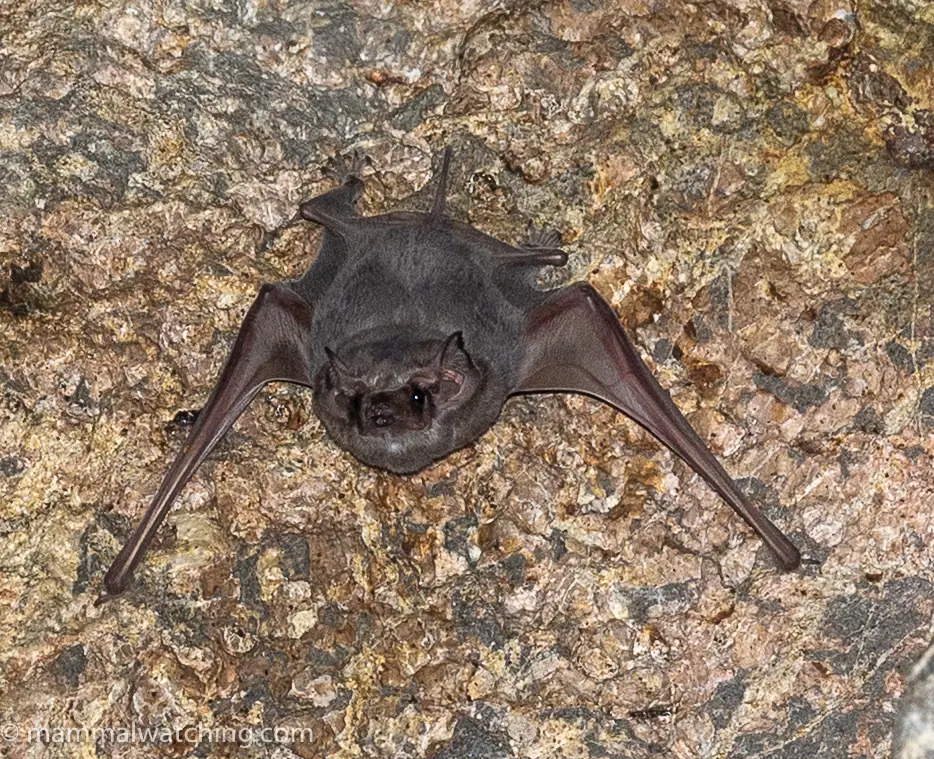
We returned to Hat Yai in time for a celebratory dinner, and to say our goodbyes after a very fun week. I still had one more lifer to find near Bangkok.
Chon Buri
Klet Kaeo
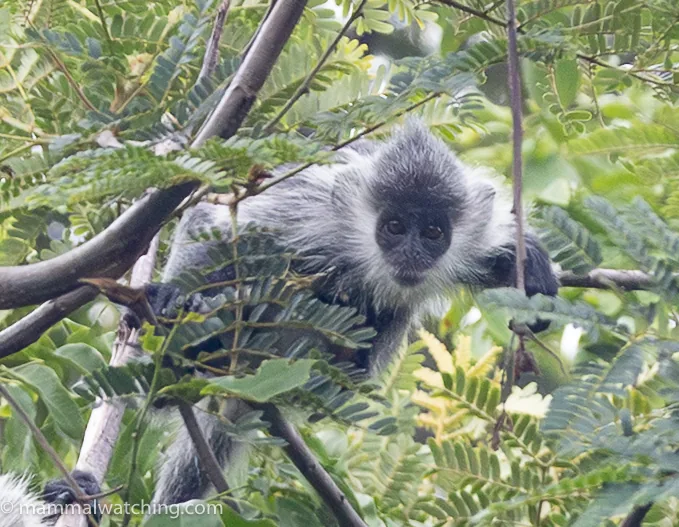
I had a day in Bangkok to kill before my flight home and halfway through the trip remembered Cheryl Antonucci had told me she had seen Germain’s Silver Langur at a beach close to Bangkok. So – in a hastily arranged add on – I took an earlier flight back to Bangkok, hired a car and driver at the airport – cheaper than renting my own car for the day – and drove 2.5 hours to Klet Kaeo beach. If you too want to take a car then you can contact Nuallor on WhatsApp at +66988932979. She now knows the sites and was an enthusiastic (and sharp) monkey spotter! Oh, I suppose I should mention – less importantly – that she is a safe driver too.
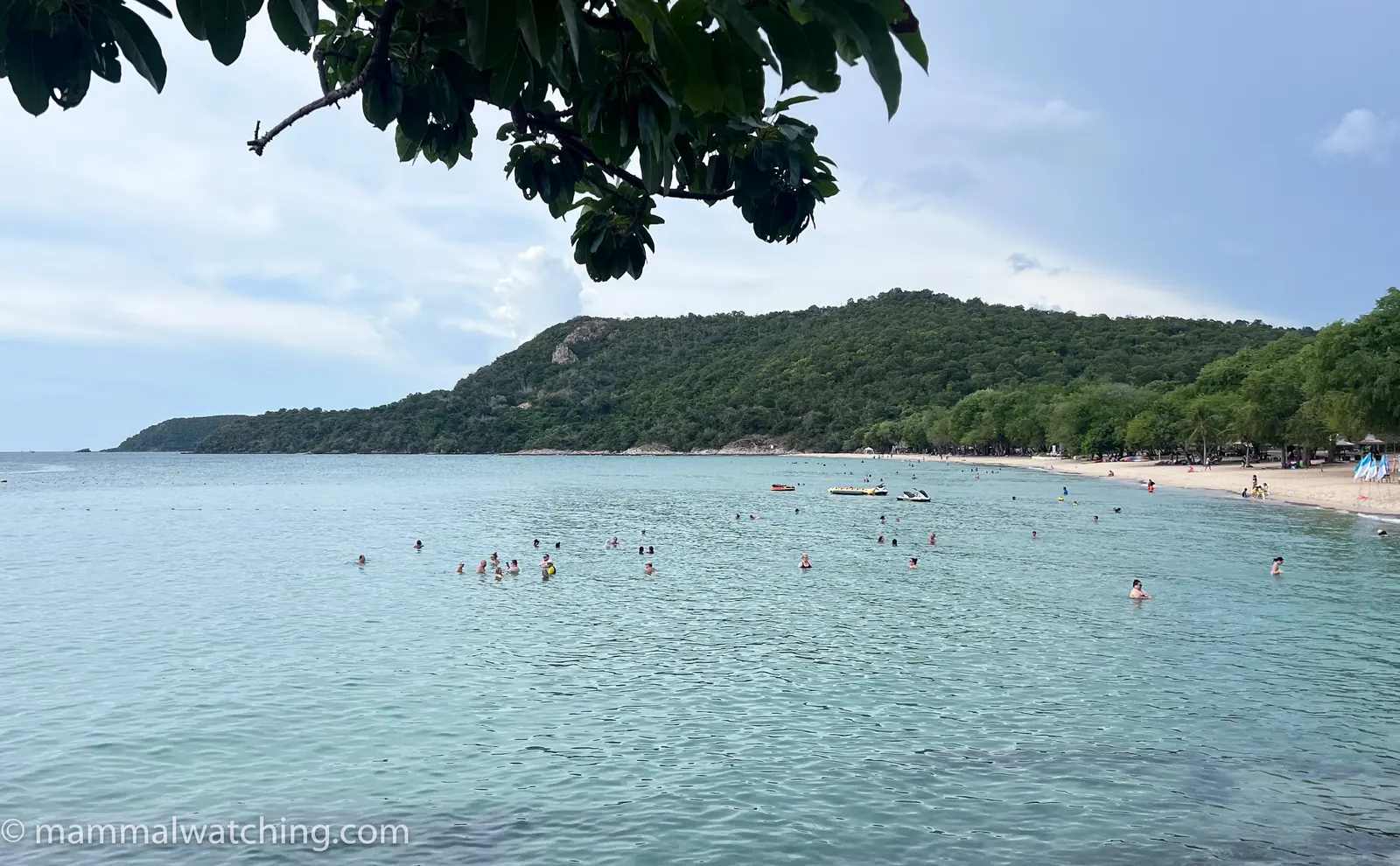
Jirayu recommended I focus on the forest around the Blue Sea Cafe at Sattahip where he had seen the monkeys with Cheryl. The forest is not particularly inspiring, and the area behind the cafe was full of trash. But the monkeys are surviving here because the area is part of a naval base and well-protected. To enter you need to leave your passport with the military at a checkpoint, though it is a popular beach with Russian tourists, and it took only a few seconds to get permission.
I arrived at lunchtime and started quizzing the cafe staff about the monkeys and showing them pictures. First, they corrected me, the langurs are not ‘monkeys’ or whatever word google translate came up with in Thai – ‘ling’, I think. The langurs are called ‘khang’. Several people confirmed they saw the langurs often but no one said they had seen any today, explaining that when the monkeys were down, the langurs were absent.
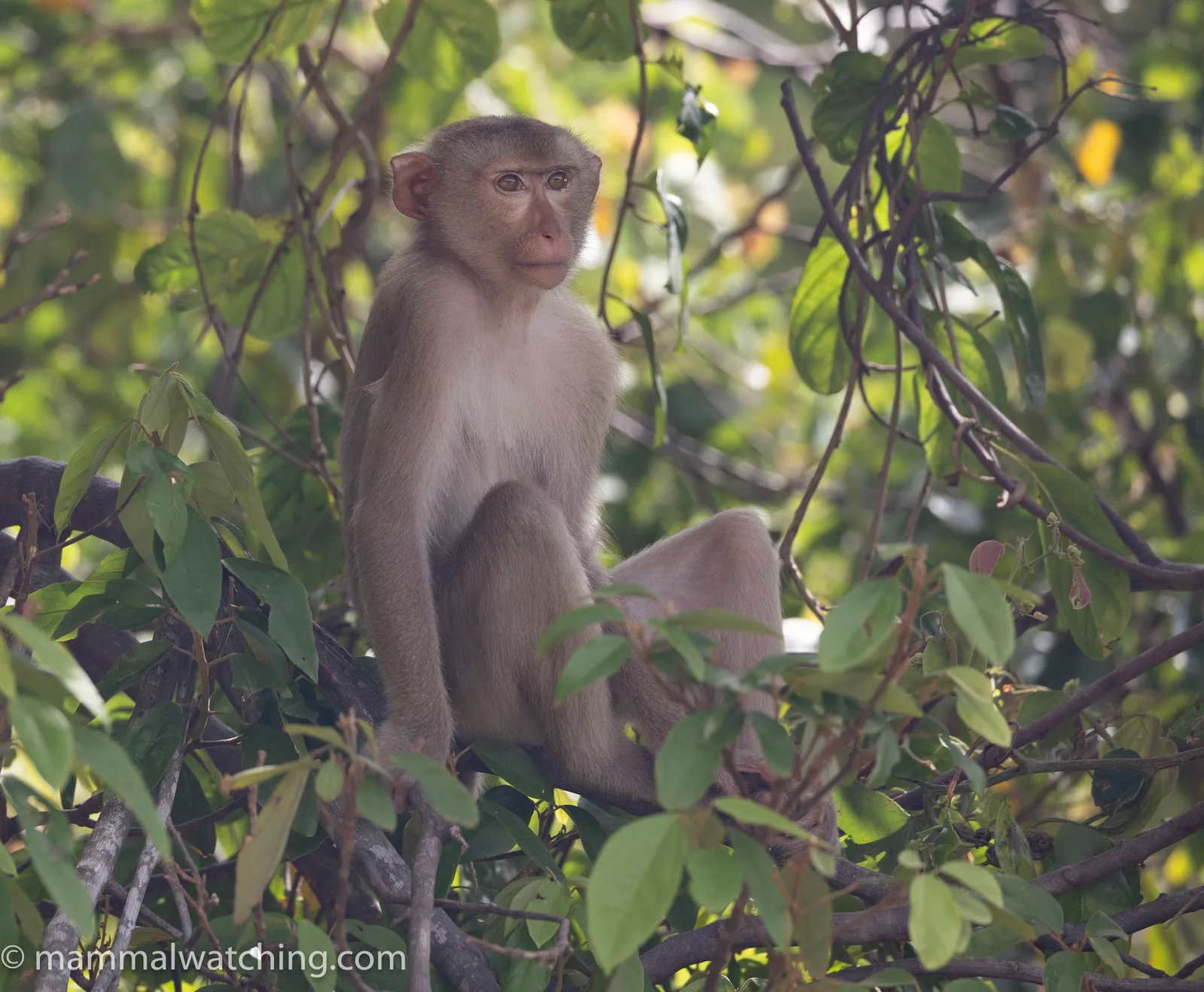
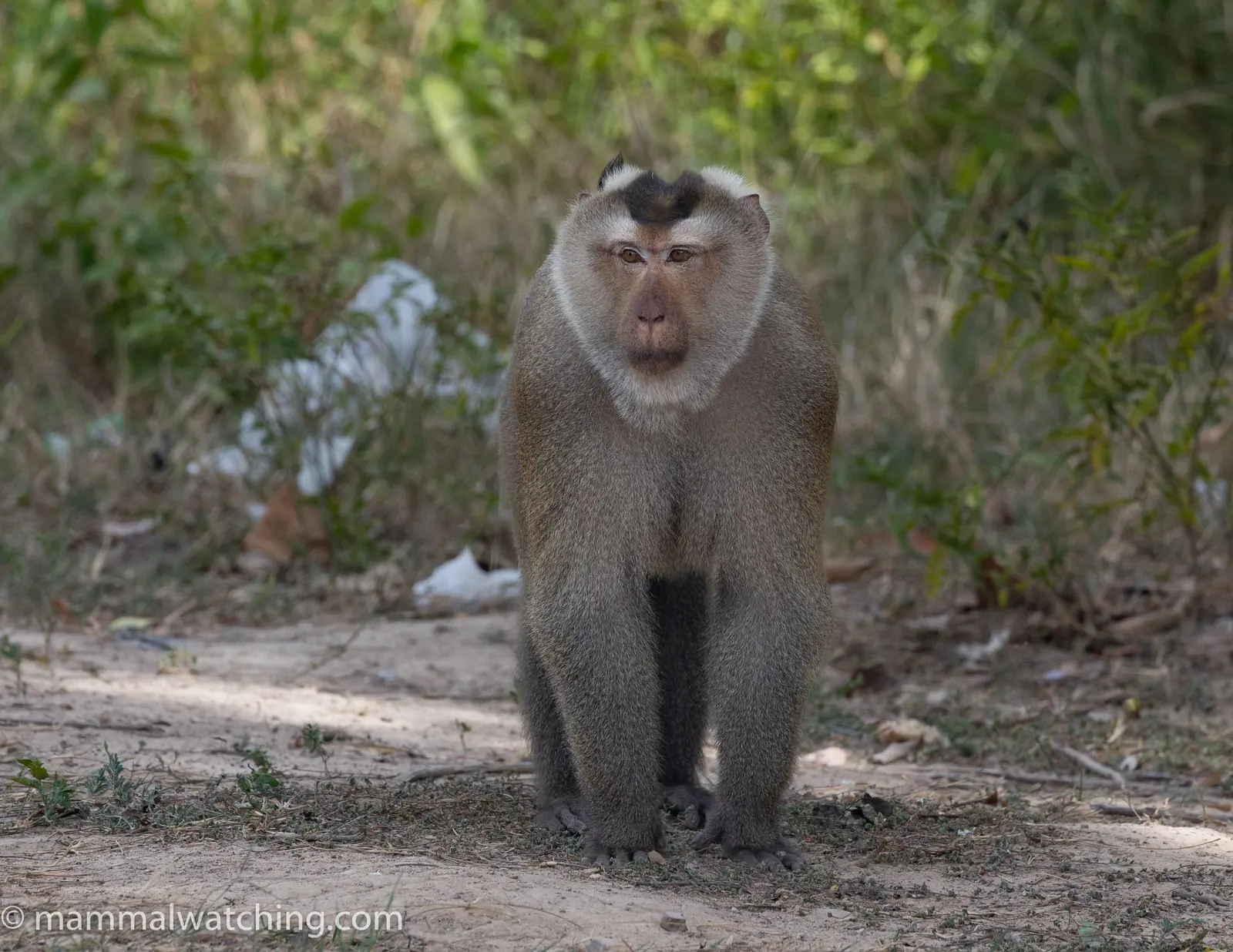
The monkeys were very much down. The car park was full of Long-tailed and Northern Pig-tailed Macacques.
But I wasn’t concerned. I knew that the cafe staff had not been searching for the langurs. So, after checking out a few other forest patches between the cafe and the military checkpoint, I returned to the bar to have a beer and wait for late afternoon.
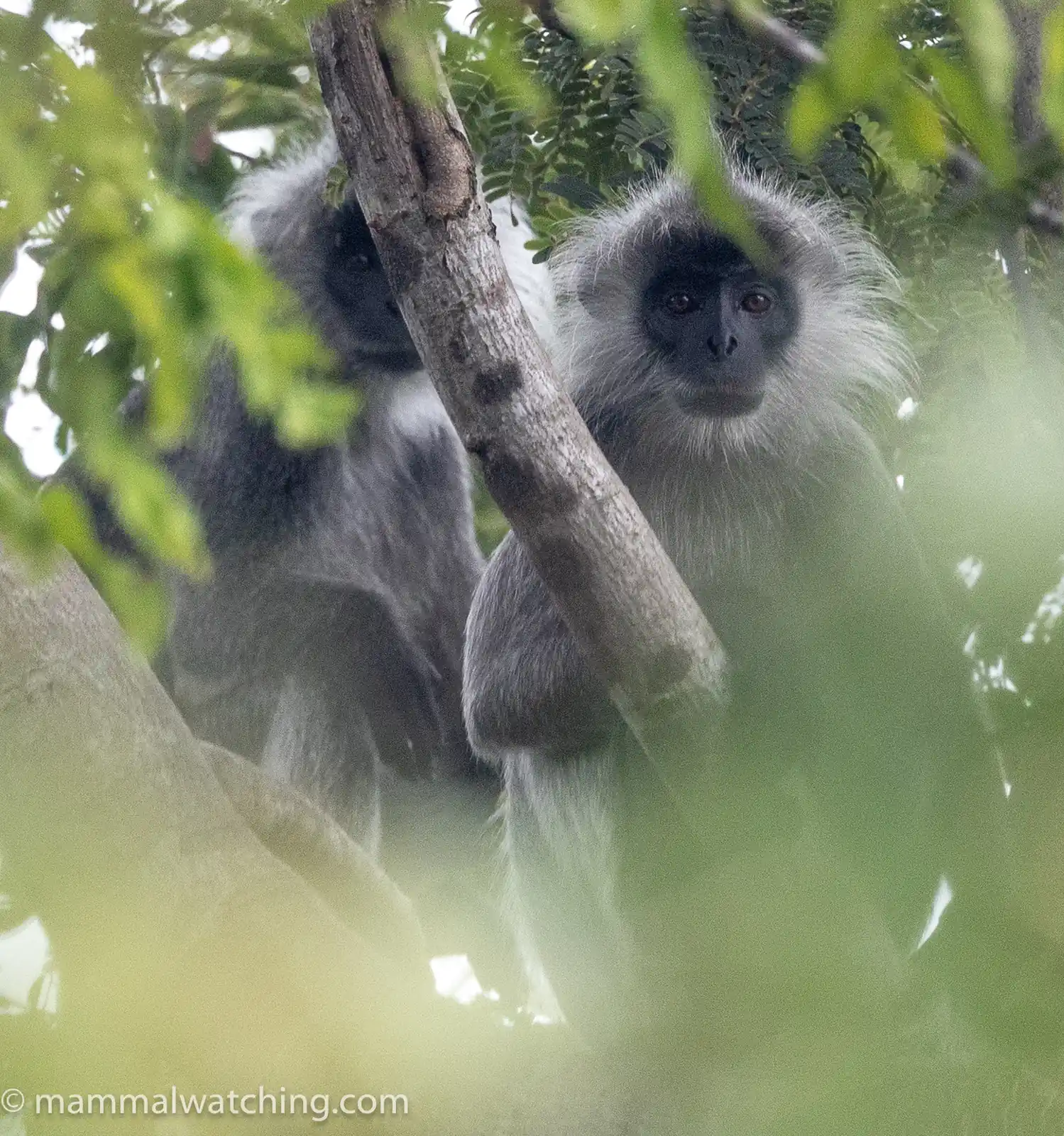
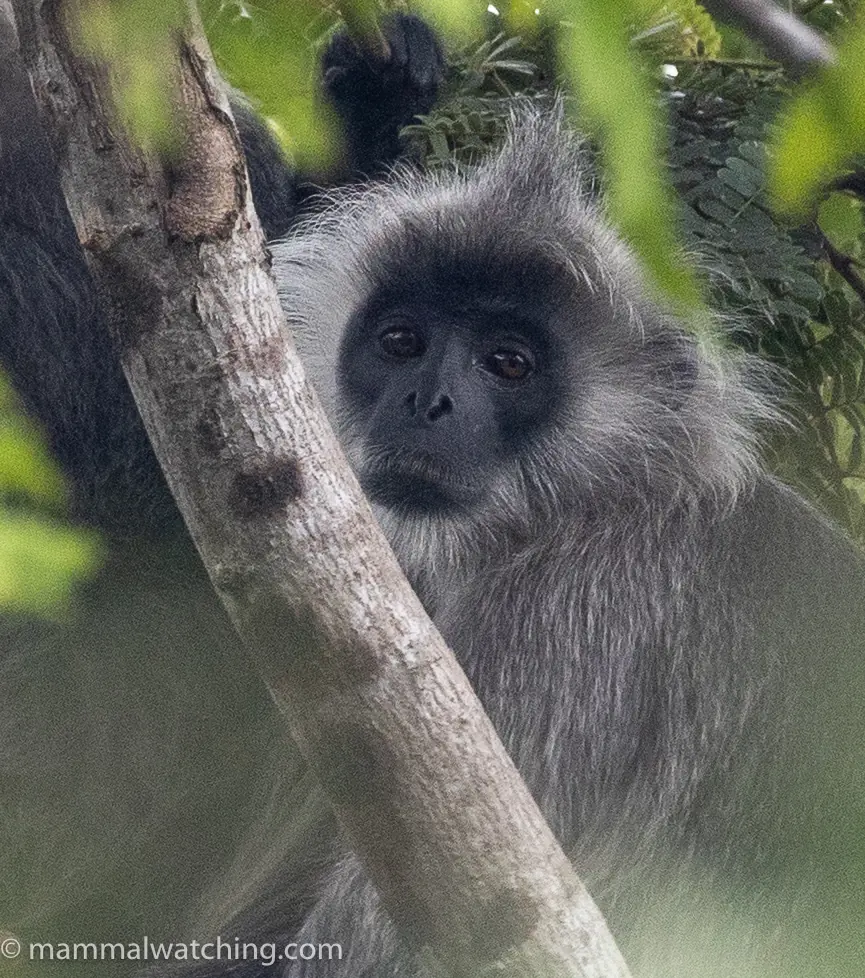
At 4pm I wandered into the forest behind the cafe and spotted a small troop of Germain’s Langurs. They were skittish – especially compared to the macaques – but I managed to get a few pictures, and made sure my enthusiastic driver saw them too. We were heading back to Bangkok Airport by 5pm.
A good end to a very enjoyable trip.
Thanks
Big big thanks for Jirayu and Fit for an excellent adventure and to Lip for patiently and safely driving us from culvert to culvert. It is pretty remarkable that Tour and his team have discovered a reliable place to find the elusive Banded Linsang. Tour of course is not finished there, and is already scouting for places in the north of Thailand to see Spotted Linsang, and has every other Thai mega-mammal on his radar. I am beginning to think that when they eventually find a relatively reliable spot for Mainland Clouded Leopard ,it will be in Thailand. The country’s mammalwatching is getting better and better: in part due to improved conservation; in part due to the growth in interest.
Thank you to my fellow mammalwatchers. We laughed a lot and were a good team. Great people to share a roti canai with or a bat cave. And if you want to spend hours searching culverts, then these are the people to do it with.
Finally, a sincere thanks to Pipat Soisook for looking at the many – probably a hundred – bat photos I bombarded him with and giving me solid IDs immediately. If it wasn’t for his work surveying the caves in the south – and then double checking my IDs – my lifer list would be greatly reduced!
Wild Encounter Thailand will be running more trips to the deep south in search of Banded Linsang. It seems that June – August is the very best time to look. It can get impossibly wet down there from November – March.
Trip List
Main Trip
Asian Elephant (Elephas maximus)
Sunda Colugo (Galeopterus variegatus)
Common Treeshrew (Tupaia glis) – not by me
Long-tailed Macaque (Macaca fascicularis)
Dusky Langur (T.obscurus)
Malayasian Slow Loris (Nycticebus coucang)
Burmese Hare (Lepus peguensis) (thermal only)
Black-striped Squirrel (C.nigrovittatus)
Slender Squirrel (Sundasciurus tenuis)
Indomalayan Pencil-tailed Tree Mouse (Chiropodomys gliroides)
Bowers’s White-toothed Rat (Berylmys bowersii)
Indochinese White-bellied Rat (Niviventer fulvescens) (uncertain ID)
Pacific Rat (Rattus exulans)
Muller’s Rat (Sundamys muelleri)
Sunda White-toothed Shrew (Crocidura monticola) – not by me
Malayan Spotted-winged Fruit Bat (Balionycteris seimundi)
Lesser Short-nosed Fruit Bat (Cynopterus brachyotis)
Leschenault’s Rousette (Rousettus leschenaulti)
Lesser Dawn Bat (Eonycteris spelaea)
Great Himalayan Leaf-nosed Bat (Hipposideros armiger)
Least Leaf-nosed Bat (H.cineraceus)
Diadem Leaf-nosed Bat (H.diadema)
Dayak Leaf-nosed Bat (H.dyacorum)
Kunz’s Leaf-nosed Bat (H.kunzi)
Large Asian Leaf-nosed Bat (H.lekaguli)
Pendlebury’s Leaf-nosed Bat (H.pendleburyi)
Lesser Asian False-vampire (Megaderma spasma)
Intermediate Horseshoe Bat (R.affinis)
Malayan Horseshoe Bat (R.malayanus)
Malaysian Woolly Horseshoe Bat (R.morio)
Trefoil Horseshoe Bat (R.trifoliatus)
Lesser Sheath-tailed Bat (E.monticola)
Black-bearded Tomb Bat (Taphozous melanopogon)
Intermediate Long-fingered Bat (Miniopterus medius)
Horsfield’s Myotis (Myotis horsfieldii)
Mainland Leopard Cat (Prionailurus bengalensis)
Banded Linsang (Prionodon linsang)
Southern Palm Civet (P.musanga)
Gaur (Bos gaurus)
39 species. 6 lifers
Chon Buri Trip
Long-tailed Macaque (Macaca fascicularis)
Northern Pig-tailed Macaque (M.leonina) (only by me in Chon Buri)
Germain’s Langur (Trachypithecus germaini) (only by me in Chon Buri)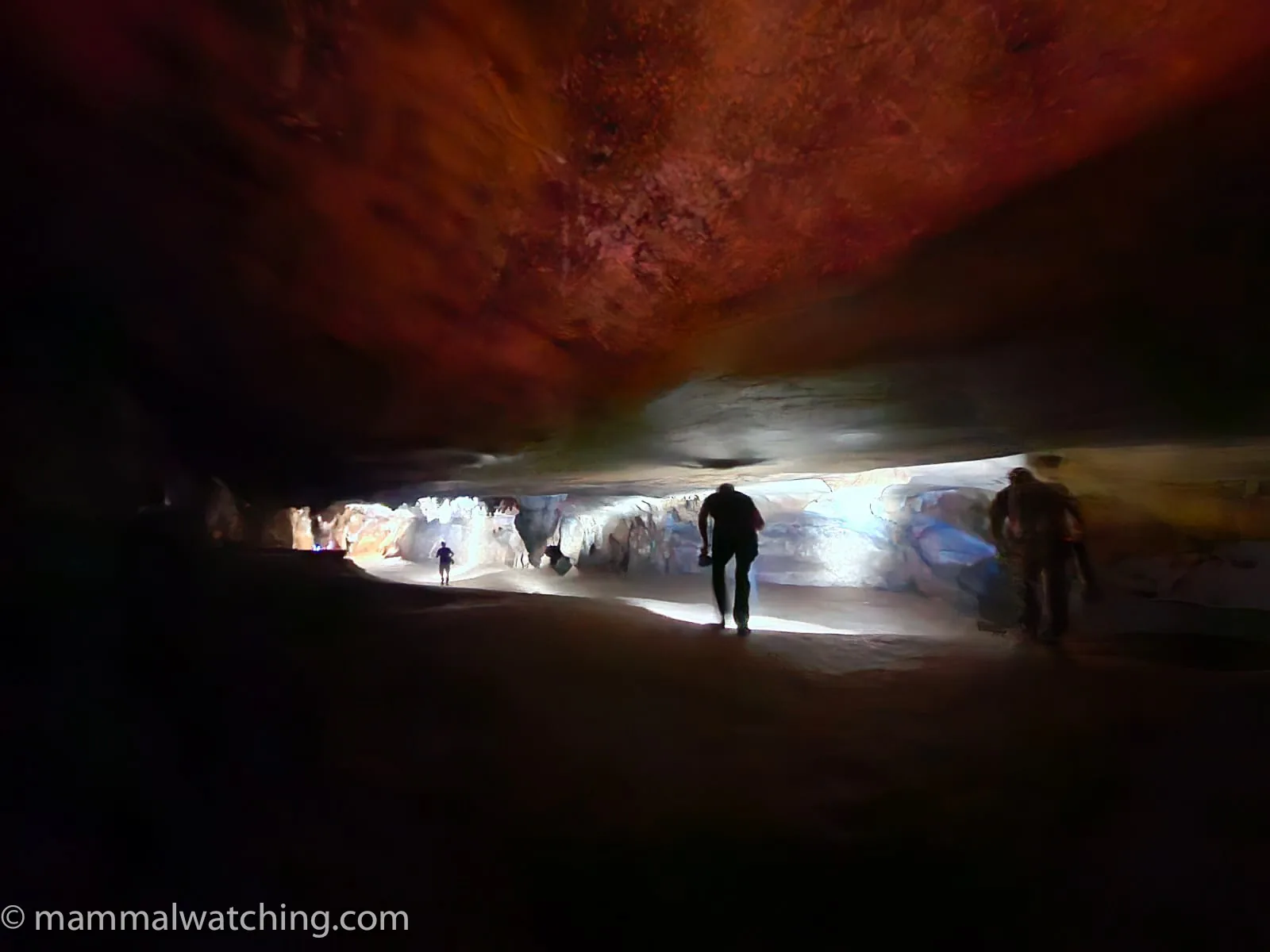
3 species. 1 lifer
Places visited in this report
This trip report was written by Jon Hall and first published on mammalwatching.com, the community site for people who watch wild mammals. All photographs are by Jon Hall. Back to resources.