 Wildlife
of Thailand
Greater Long-tongued Blossom Bat
Pteropodidae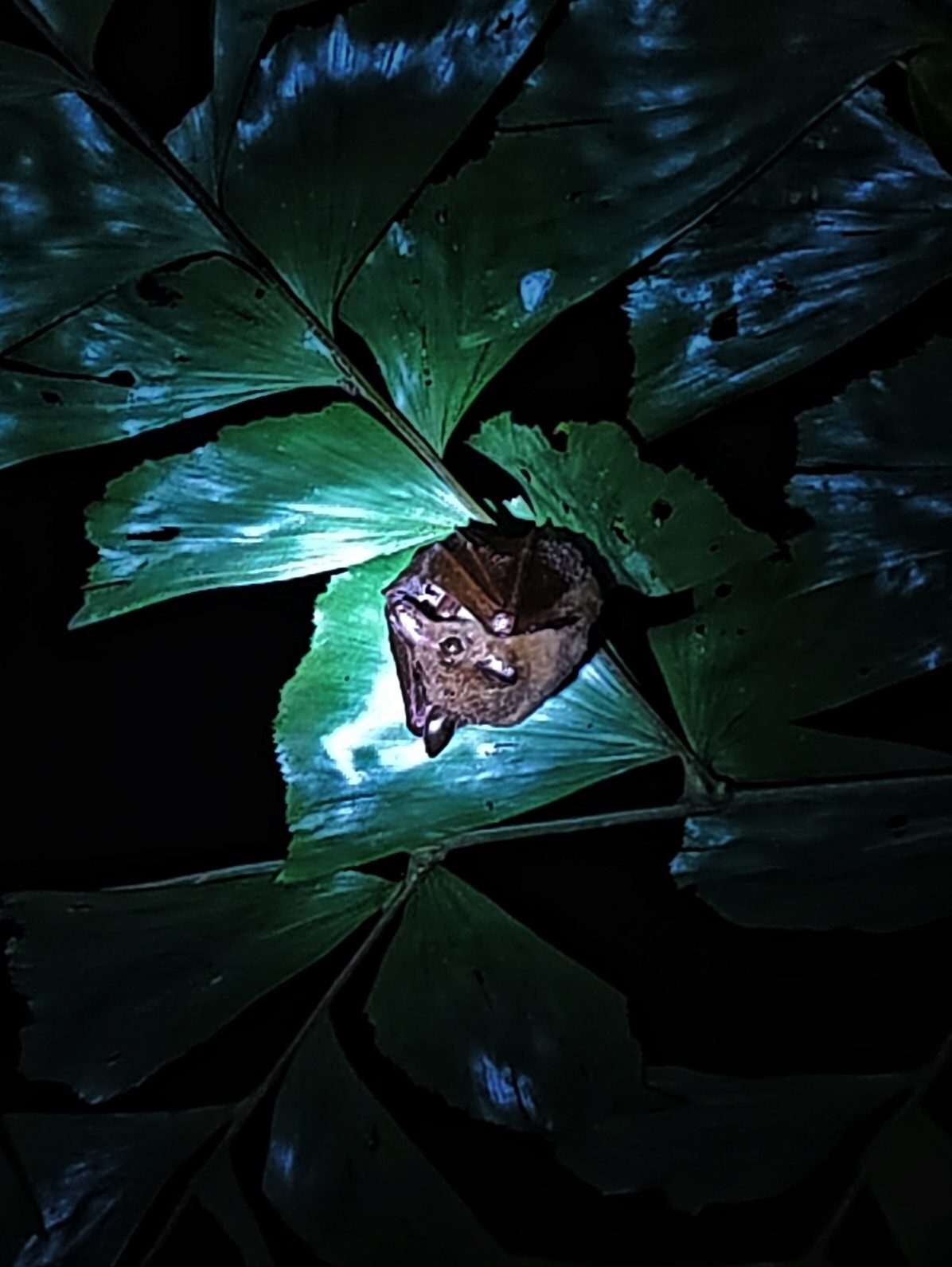
Photo: (c) Ankur Nandi, some rights reserved (CC BY) · CC-BY (May be cropped or resized)
Macroglossus sobrinus
Basic stats
Diet
Primarily pollen and nectar, with some soft fruit
Habitat
Lowland and montane forest, including evergreen forest below about 1,918m
Range
India through mainland Southeast Asia to Sumatra and Java
The greater long-tongued blossom bat has a slender skull, elongated muzzle and long protrusible tongue adapted to reaching nectar and pollen. It is larger than the lesser long-tongued blossom bat where their ranges overlap. Its distribution runs from India through Myanmar and Thailand to Sumatra, Java and nearby islands (Animal Diversity Web).
It uses mangrove, lowland and montane forest; a Thai study recorded it in evergreen forest below about 1,918 m where flowers were available year-round. Pollen and nectar, especially from wild bananas, dominate the diet, with soft fruit also taken. Individuals usually forage and roost alone or in small groups and may travel one to two kilometres nightly (Animal Diversity Web). No national category is stated because it is not listed in Thailand Red Data 2025.
Quick answers
- What does the Greater Long-tongued Blossom Bat eat?
- Primarily pollen and nectar, with some soft fruit
- What habitat does the Greater Long-tongued Blossom Bat live in?
- Lowland and montane forest, including evergreen forest below about 1,918m
- Where is the Greater Long-tongued Blossom Bat found?
- India through mainland Southeast Asia to Sumatra and Java