 Wildlife
of Thailand
Estuarine Crocodile
Crocodylidae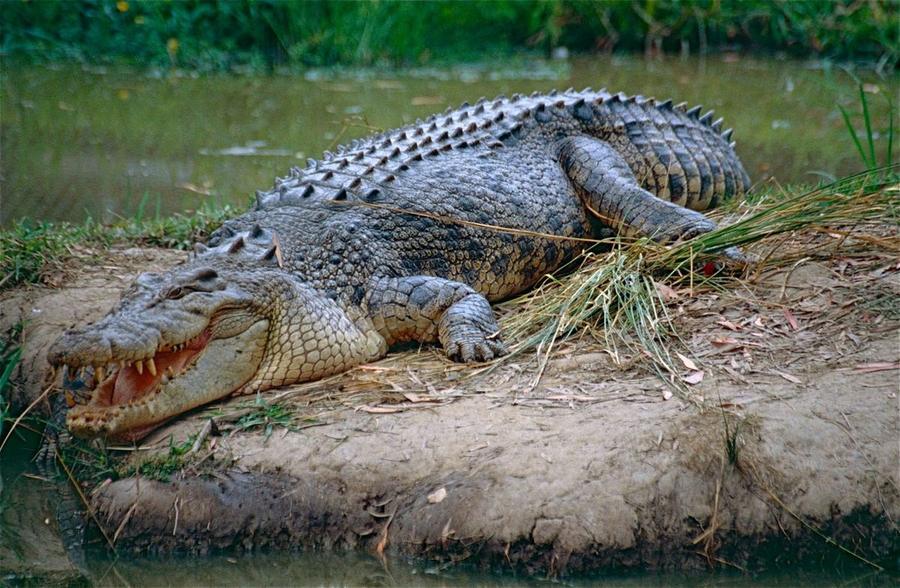
Photo: Bernard DUPONT · CC BY-SA 2.0 (May be cropped or resized)
Crocodylus porosus
Basic stats
Diet
Almost any animal that enters its territory: fish, crustaceans, amphibians, reptiles, birds and mammals
Habitat
Saltwater habitats, brackish wetlands and freshwater rivers
Range
East coast of India across Southeast Asia to northern Australia and Micronesia
Size
Males about 6m, rarely over 6.3m; females rarely over 3m
Weight
Males 1,000–1,500kg
The saltwater crocodile, also called the estuarine crocodile, is native to saltwater habitats, brackish wetlands and freshwater rivers from the east coast of India across Southeast Asia to northern Australia and Micronesia. It is the largest living reptile. Males can reach 1,000 to 1,500 kg and about 6 m in length, rarely exceeding 6.3 m, while females rarely surpass 3 m (Wikipedia, general species account).
It is a large, opportunistic apex predator that ambushes most of its prey and then drowns or swallows it whole, taking almost any animal that enters its territory, including sharks, fish, crustaceans, amphibians, reptiles, birds and mammals. It was hunted for its skin throughout its range until the 1970s and is regarded as dangerous to humans (Wikipedia, general species account).
Quick answers
- What does the Estuarine Crocodile eat?
- Almost any animal that enters its territory: fish, crustaceans, amphibians, reptiles, birds and mammals
- What habitat does the Estuarine Crocodile live in?
- Saltwater habitats, brackish wetlands and freshwater rivers
- Where is the Estuarine Crocodile found?
- East coast of India across Southeast Asia to northern Australia and Micronesia
- How big is the Estuarine Crocodile?
- Males about 6m, rarely over 6.3m; females rarely over 3m
- How much does the Estuarine Crocodile weigh?
- Males 1,000–1,500kg