
 Wildlife
of Thailand
Pectoral Sandpiper
Scolopacidae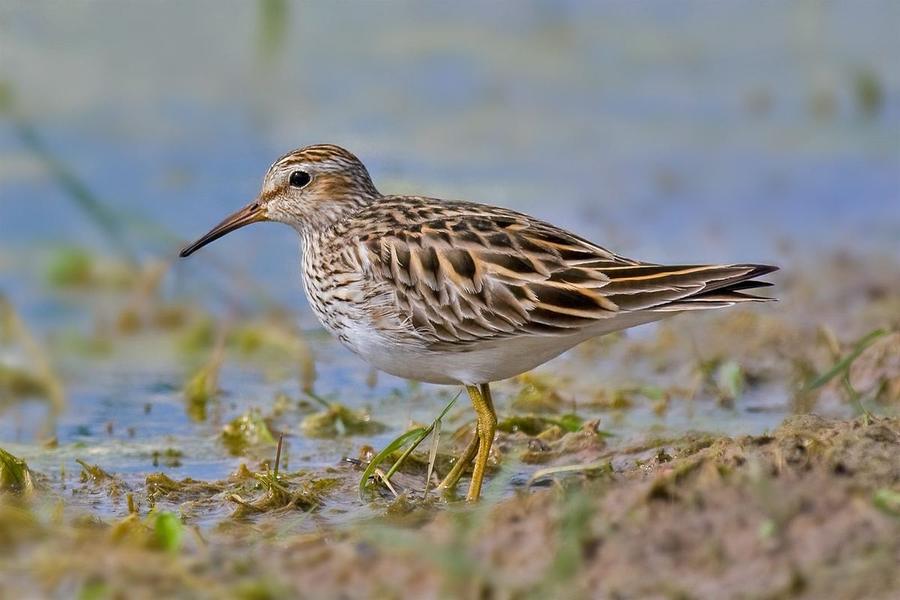
Photo: Andreas Trepte · CC BY-SA 2.5 (May be cropped or resized)
Calidris melanotos
Basic stats
Diet
Small invertebrates
Habitat
Boggy tundra when breeding
Range
Breeds in the Arctic of North America and Asia; winters in South America and Oceania
Clutch size
4 eggs
Size
19–23cm
Wingspan
37–46cm
The pectoral sandpiper, often shortened to pec, is a largish calidrid, 19–23 cm long with a wingspan of 37–46 cm, with a grey-brown back that is brownest in the summer male and greyest in winter. It looks like the sharp-tailed sandpiper, with which it often occurs. In breeding plumage males have a blacker breast spotted whitish, and males are on average heavier than females (Wikipedia, general species account).
It is a small migratory wader that breeds in the Arctic of North America and Asia and winters in South America and Oceania, a very long-distance migrant; about half breed in the boggy tundra of northern Asia and the rest from Alaska to central Canada. The nest is a deep, thickly lined hole scraped in the ground that shelters its four eggs from cool breezes. It eats small invertebrates (Wikipedia, general species account).
Quick answers
- What does the Pectoral Sandpiper eat?
- Small invertebrates
- What habitat does the Pectoral Sandpiper live in?
- Boggy tundra when breeding
- Where is the Pectoral Sandpiper found?
- Breeds in the Arctic of North America and Asia; winters in South America and Oceania
- How many eggs does the Pectoral Sandpiper lay?
- 4 eggs
- How big is the Pectoral Sandpiper?
- 19–23cm
- What is the wingspan of the Pectoral Sandpiper?
- 37–46cm